
Complete List of Actions Module How Tos
How To: Add A Budget Alert for an Action Group
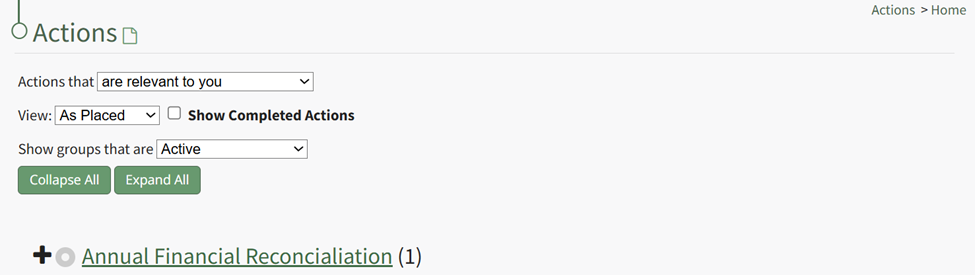
To add a budget alert for an action group, edit the group from the Groups Page, or go to the Actions Home Page and click the title of the action group you wish to create a budget alert for.
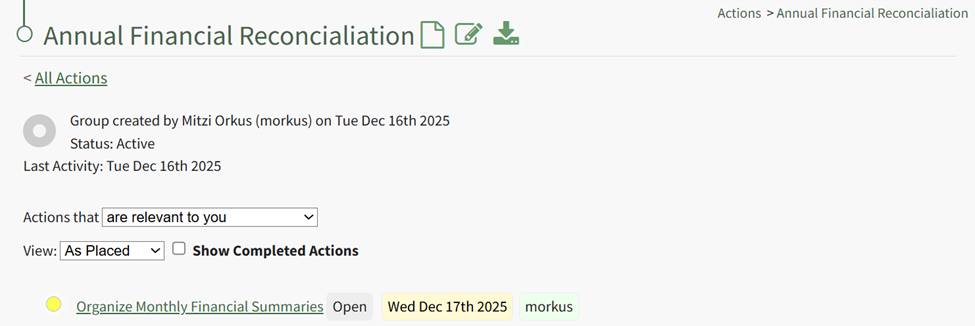
This opens the specific action group page. The second icon to the right of the action group header is the edit action group icon.
Select the Action Group Properties Icon, opening the Action Group Properties Modal.
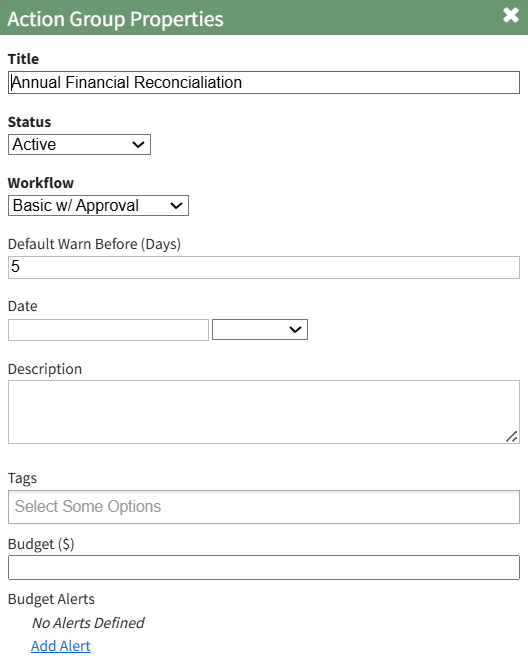
Select the clickable “Add Alert” link, expanding the modal to include new fields.

The alert can be triggered by the amount remaining in the budget falling below a specified amount, or if the percentage remaining falls before a specified percentage. Budget alerts can be sent to users or roles.
Input the preferred alert specifics and select add. The newly saved budget alert will show as saved in the modal.

Multiple budget alerts can be customized within the action group.
How To: Add a Budget Approver Group in the Actions Module
To create a new budget approver group in the action module, select Settings under the Action Module on the Main Menu. Open the Budget Approvers Tab.
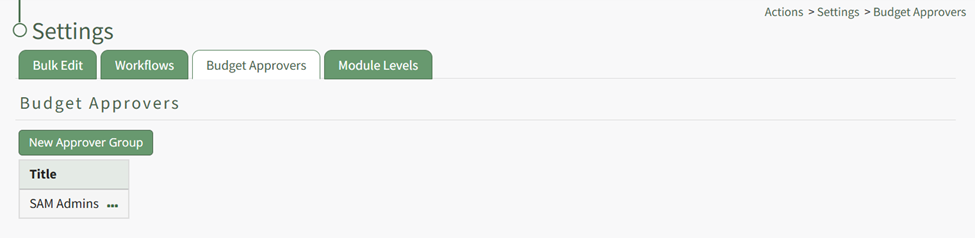
Click the “New Approver Group” button opening the New Budget Approver Modal.
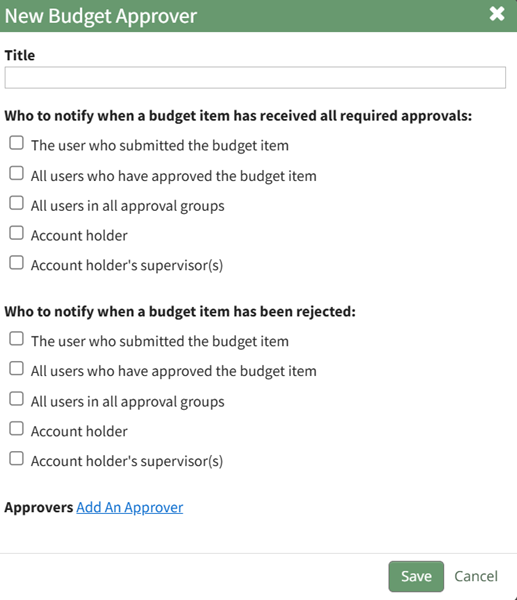
Input a title for the new budget approval group.
Use the checkboxes to identify who should be notified when a budget item has received all required approvals abd when a budget item has been rejected. Options for both fields include: The user who submitted the budget item, all users who have approved the budget item, all users in all approved groups, account holder, account holder’s supervisor(s).
Select the “Add an Approver” clickable link and the modal expands.
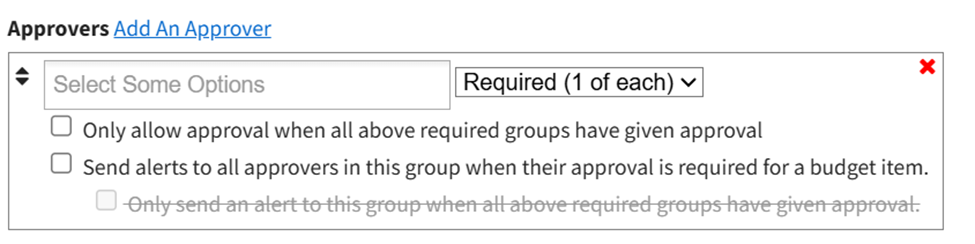
Users or roles can be selected as approvers, and approval can be optional or required for each individual. Multiple Approver Groups can be created and customized for your organizations preferences.
Checkboxes provide the option to “Only allow approval when all above required groups have given approval” or “Send alerts to all approvers in this group when their approval is required for a budget item”. If the option to send alerts when approval is required is selected, another checkbox is enabled to “Only send an alert to this group when all above required groups have given approval”.
Select “Save” and the new budget approvers groups will show in the Budget Approver Group Title Table.
How To: Add Action to Action Group
How To: Add Actions to an Action Group Template
To add actions to an action group template, select Templates from the Actions Module Main Menu, opening the Manage Templates Page. Selecting the three-dot icon to the right of the Action Group Template Title opens the Action Group Template Context Menu.
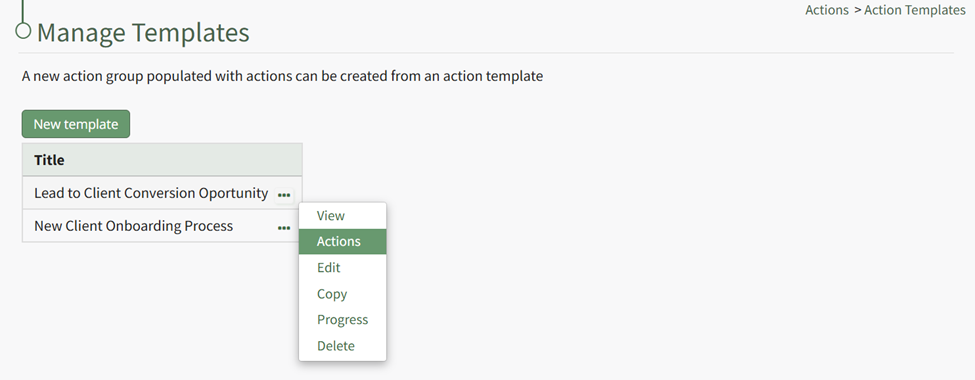
Select “Actions” from the context menu opening the Manage Actions for TEMPLATE TITLE Page.
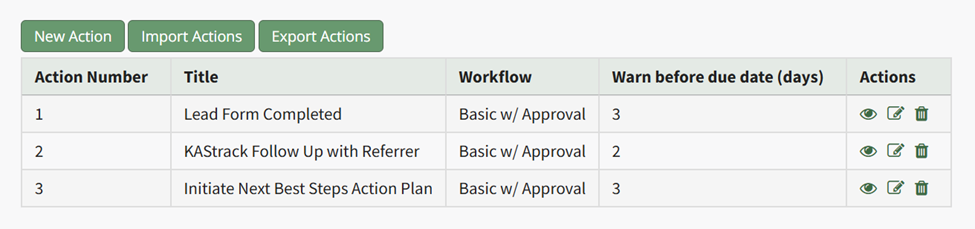
A new action can be added to the template by selecting the “New Action” button.
How To: Create a New Action
To create a new action from the Actions Home Page, hover your cursor over the page icon opening the home page context menu.
A new action can also be created from the context menu on the Groups Page via the three-dot icon, as well as the Bulk Edit Tab on the Actions Settings Page.
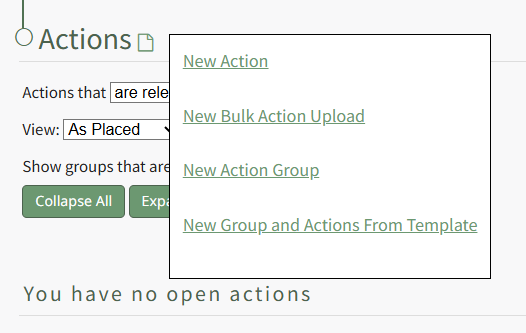
Select “New Action” opening the New Action Modal.
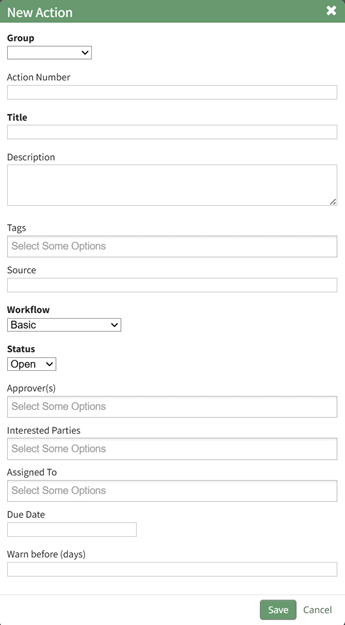
The fields in the New Action Modal are explained in the table below.
New Action Modal Field Explanations | |
Field | Explanation |
Group | Input the Title of the Action Group this action should be associated with. If the Action Group the action is to be associated with has already been created, it will be available on the Group dropdown menu. If the action group has not been created, see notes on how to add one below. |
Action Number | Action Numbers are used to differentiate each task in a chronological order. Actions within the same Action Group cannot have the same Action Number. You can leave the field blank. You can also input text if you wish to use the alphabet as a way to categorize actions. |
Title | Input the title of the action. |
Description | Input the description for the action. |
Tags | Open, Permissive, and Restrictive Tags can be applied to individual actions. |
Source | The Source field is intended to serve as an input for the source of the action. Source is a free text field, allowing you to input any desired response. Customer, Internal Request, a user’s name, role or department are all examples of potential Source field categories. |
Due Date | Input the date the action must be completed by. Relevant due dates cannot be imported. That feature is specific to Action Group Templates. |
Workflow | Select a default workflow (basic, basic with approval, complex) or a customized workflow specific to your organization. How To: Create New Workflow{{@619}} |
Status | The status of the action is based on the workflow selected. Basic with Approval: Open, Pending Approval, Completed Actions can be imported with any status and not just the first status of the workflow. |
Action Approvers | Input the users (by username or First and Last Name) that can approve an action. Only individual users can be added to this field. Multiple users can be designated as an action approver. When importing, use a semicolon to separate individuals assigned to an action. |
Interested Parties | Input the users (by username or First and Last Name) or Certification Roles that are identified as Interested Parties. Multiple users or roles can be designated as an Identified Party. When importing, use a semicolon to separate users/roles. |
Assigned To | Input the users (by username or First and Last Name) that you want to assign the action to. Actions cannot be assigned to roles or access levels. An Action can be assigned to multiple people. When importing, use a semicolon to separate individuals assigned to an action. |
Due Date | Input the date the action must be completed by. Action Group Templates allow additional control over due dates in the Relative Due Dates section when creating or editing a template. |
Warn Before (Days) | Input a numerical value for the number of days ahead of the due date you want users to get a system email alert reminder of the outstanding action (converting from blue to yellow status). |
Action Response | The information input into the Action Response field will add a comment to the action task when imported, prefaced with “The following response was imported.” |
If the action group the action is to be associated with has not been created, select “New Group…” from the Group dropdown menu
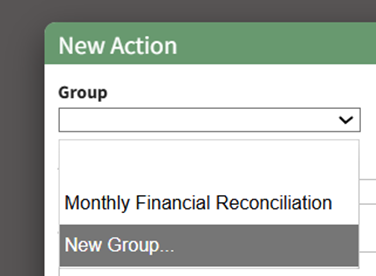
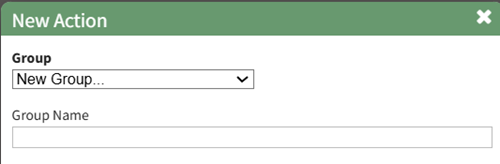
This expands the New Action Modal, allowing you to input the New Group Name.
After inputting all relevant information for the new action, select save. A green confirmation modal will appear, confirming the new action.
The action will only appear on the Actions Home Page if it applies to the currently applied filter.
The newly created action group can be edited to customize the action group preferences, or additional actions can be added.
How To: Edit An Action Group
{{@609}}
How To: Import Bulk Actions
{{@601}}
A group of bulk actions can be imported from a csv file by selecting the “Import Actions” button.
How To: Import Bulk Actions
To import new actions in bulk using a CSV file, go to the Actions Module Home Page and hover your cursor over the page icon opening the home page context menu.
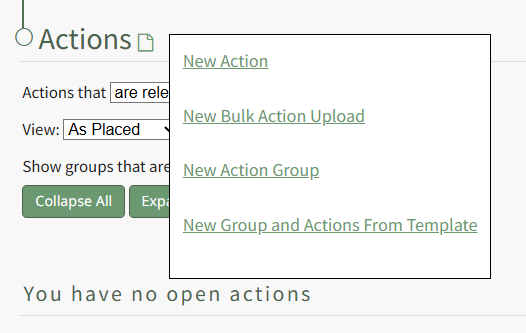
Click “New Bulk Action Upload” opening the Import Actions Page.
Clicking the “Download Template” clickable link will automatically download a CSV file to your personal device, with the fields to be filled in for each action, designated by the column headers. The table below explains each of the field inputs.
Import Actions Template Field Explanations | |
Field | Explanation |
Group | If importing actions from the Actions Home Page, input the Title of the Action Group this action should be associated with. If importing actions from within a group (by clicking on the group name), this cell can be left blank because the actions will automatically be added to the group you're uploading to. |
Group Date | The action group date is flexible and can be utilized by your organization as best fit. When action groups are duplicated or created from a template, the action group date can be used as the distinguishing feature. |
Action Number | Action Numbers are used to differentiate each task in a chronological order. Actions within the same Action Group cannot have the same Action Number. You can leave the field blank. You can also input text if you wish to use the alphabet as way to categorize actions. |
Title | Input the title of the action. |
Description | Input the description for the action. |
Source | The Source field is intended to serve as an input for the source of the action. Source is a free text field, allowing you to input any desired response. Customer, Internal Request, a user’s name, role or department are all examples of potential Source field categories. |
Due Date | Input the date the action must be completed by. Action Group Templates allow additional control regarding due dates in the Relative Due Dates section when creating or editing a template. |
Workflow | Select a default workflow (basic, basic with approval, complex) or a customized workflow specific to your organization. How To: Create New Workflow{{@619}} |
Status | The status of the action is based on the workflow selected. Basic with Approval: Open, Pending Approval, Completed Actions can be imported with any status and not just the first status of the workflow. |
Date Complete | This field should be blank unless the task is already complete. If the action is already completed, include the completion date here. |
Warn (Days) | Input a numerical value for the number of days ahead of the due date you want users to get a system email alert reminder of the outstanding action (converting from blue to yellow status). |
Assigned To | Input the users (by username or First and Last Name) that you want to assign the action to. Actions cannot be assigned to roles or access levels. An Action can be assigned to multiple people. Use a semicolon to separate individuals assigned to an action. |
Action Approvers | Input the users (by username or First and Last Name) that can approve an action. Action Approvers cannot be assigned to roles or access levels. Multiple users can be designated as an action approver. Use a semicolon to separate individuals assigned to an action. |
Interested Parties | Input the users (by username or First and Last Name) or Certification Roles that are identified as Interested Parties. Multiple users or roles can be designated as an Identified Party. Use a semicolon to separate users/roles. |
Action Response | The information input into the Action Response field will add a comment to the action task when imported, prefaced with “The following response was imported.” |
Before importing your bulk actions, save the file as a UTF 8.

Select the “Choose Files” button and select the saved UTF 8 CSV file to be imported.
Click the “Next Step >” button and confirm that your column headers match the new action form fields and complete the import.
How To: Add Comments to an Action
To add comments to an action, go to the Actions Home Page.
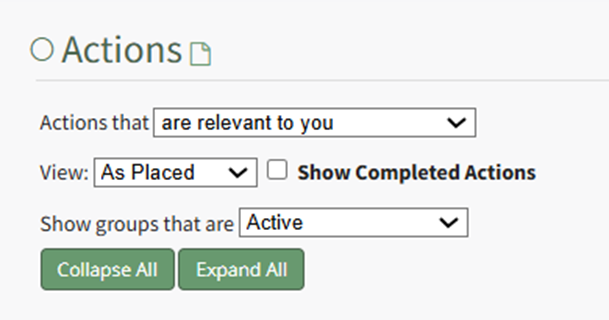
Use the filters to pull up the relevant action by Action Group (As Placed), Due Date, or User. If filtering by Action Group or Due Date, expand the section to display the actions.
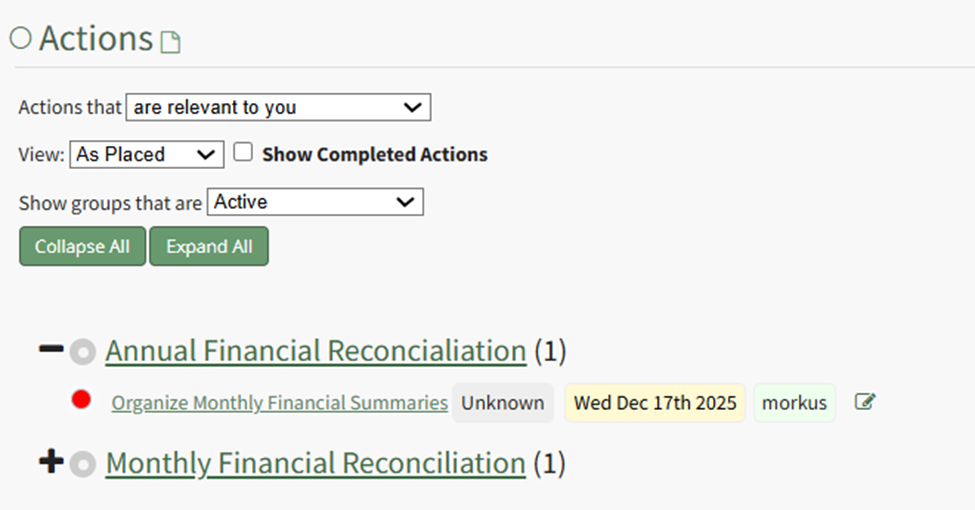
Click the Title of the action you wish to add comments too, opening the specific action.
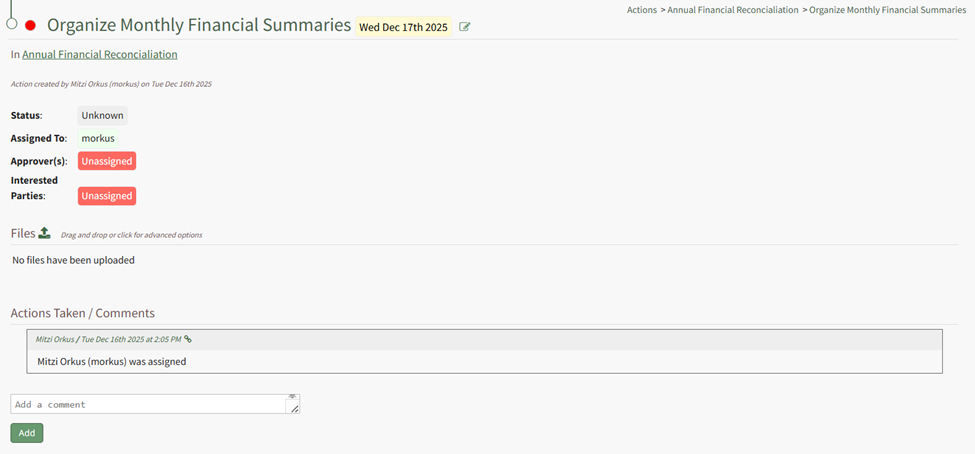
Input the desired information in the comment text box and select “Add”.
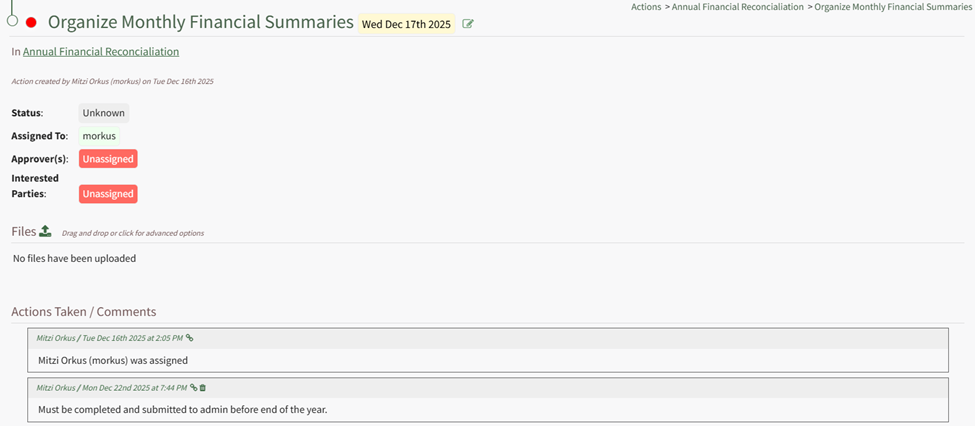
The comment, user who added it, and the date and time are recorded and now visible on the Action Page.
How To: Archive an Action Group
To archive an action group, click the edit icon next to the group's title on the Actions Home Page, or select the Groups Page on the Main Menu, opening the Manage Action Groups Page. Then click the three-dot icon to the right of the action group to open the Action Group Context Menu.
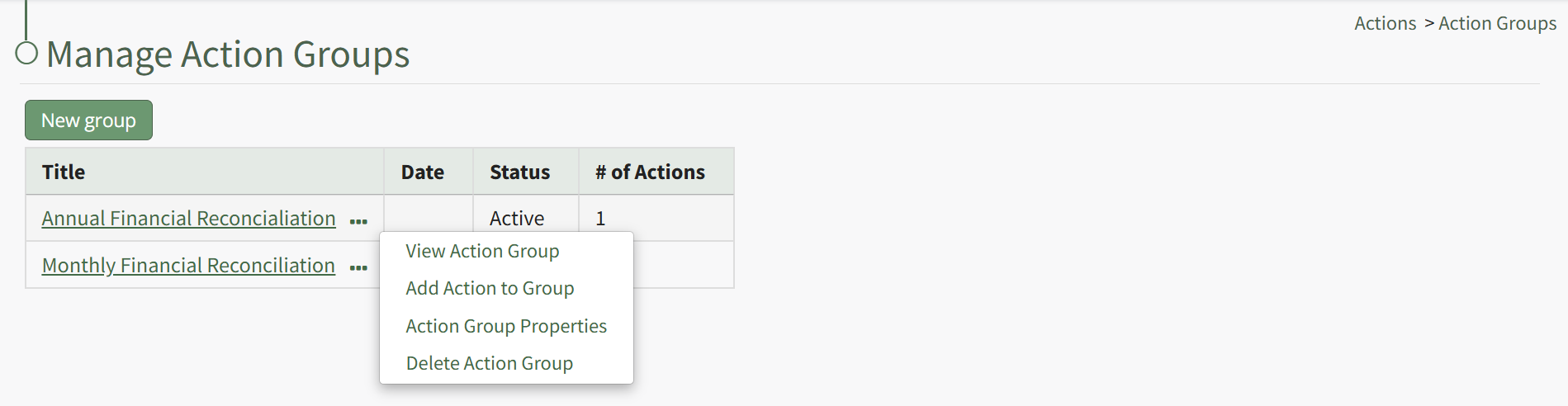
Select “Action Group Properties” from the context menu, opening the Action Group Properties Modal.
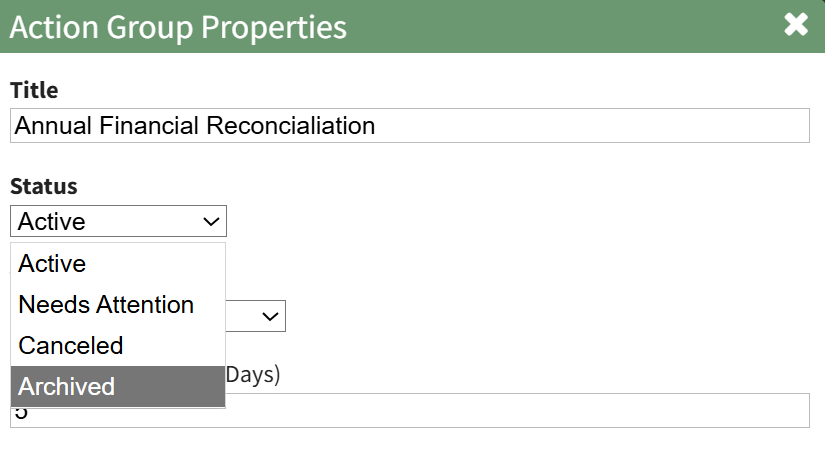
Select “Archived” from the Status dropdown menu. Then select “Save” at the bottom of the modal.
The action group is now archived.
How To: Assign an Action
Actions can be assigned to users through the Edit Action Modal.
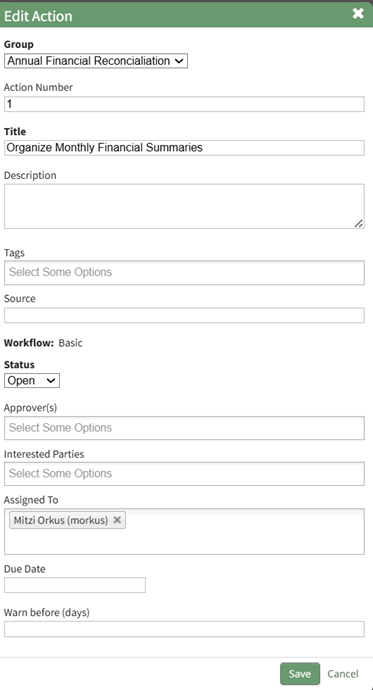
Edit the "Assigned To" field to assign users to the action.
How To: Edit an Existing Action
An Action can be edited through the Edit Action Modal or the specified action’s detail page.
To Edit Through the Edit Action Modal
Alter the filter on the Actions Module Action Home Page to see the action you wish to edit. If the actions are displayed by group or due date, expand the section containing the action. Hover your cursor over the individual action you wish to edit displaying the edit action icon to the right of the Action Title.

Click the edit action icon opening the Edit Action Modal.
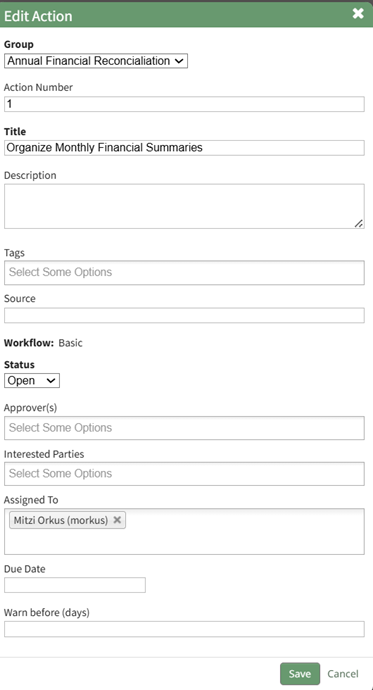
Make the necessary changes to the action and select save.
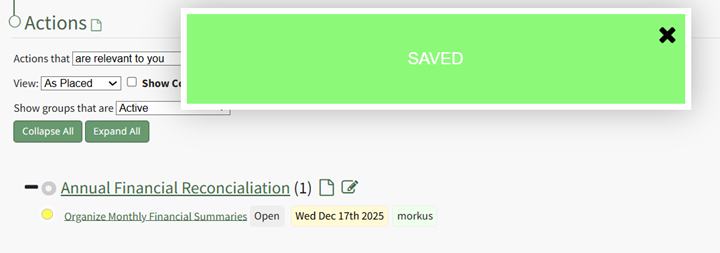
A confirmation modal stating “Saved” will appear, and the changes to the action will now be visible.
To Edit Through an Individual Action Page
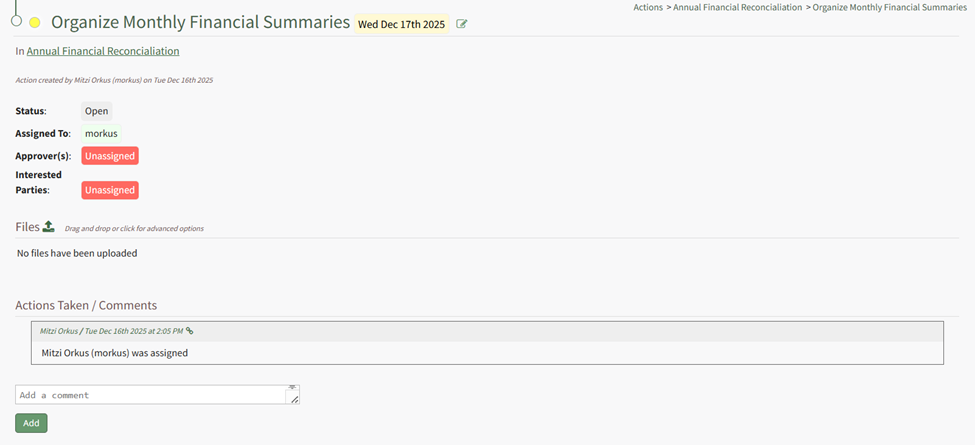
Clicking the Action Title will open the individual action’s Action Page.

The action can be edited by selecting the edit icon to the right of the action title.
How To: Assign an Action Approver
Action Approvers can be assigned to users through the Edit Action Modal.
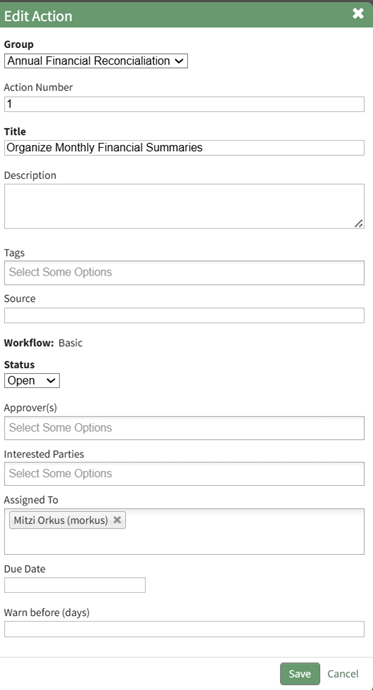
Edit the "Approver(s)" field to assign users as approvers for the action.
How To: Edit an Existing Action
An Action can be edited through the Edit Action Modal or the specified action’s detail page.
To Edit Through the Edit Action Modal
Alter the filter on the Actions Module Action Home Page to see the action you wish to edit. If the actions are displayed by group or due date, expand the section containing the action. Hover your cursor over the individual action you wish to edit displaying the edit action icon to the right of the Action Title.
Click the edit action icon opening the Edit Action Modal.
Make the necessary changes to the action and select save.
A confirmation modal stating “Saved” will appear, and the changes to the action will now be visible.
To Edit Through an Individual Action Page
Clicking the Action Title will open the individual action’s Action Page.
The action can be edited by selecting the edit icon to the right of the action title.
How To: Assign Interested Parties to an Action
Interested Parties can be assigned to an action through the Edit Action Modal.
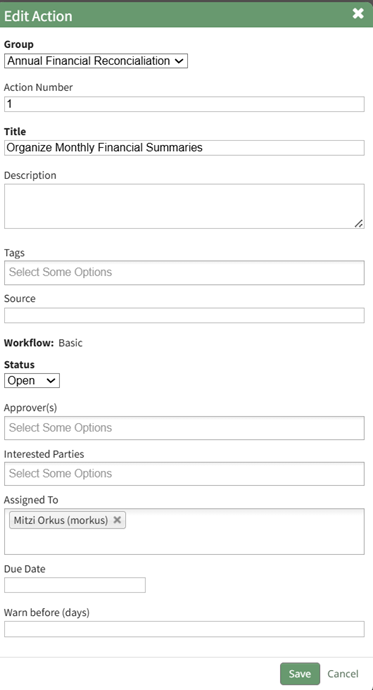
Edit the "Interested Parties" field to assign users or roles as interested parties for the action.
How To: Edit an Existing Action
An Action can be edited through the Edit Action Modal or the specified action’s detail page.
To Edit Through the Edit Action Modal
Alter the filter on the Actions Module Action Home Page to see the action you wish to edit. If the actions are displayed by group or due date, expand the section containing the action. Hover your cursor over the individual action you wish to edit displaying the edit action icon to the right of the Action Title.
Click the edit action icon opening the Edit Action Modal.
Make the necessary changes to the action and select save.
A confirmation modal stating “Saved” will appear, and the changes to the action will now be visible.
To Edit Through an Individual Action Page
Clicking the Action Title will open the individual action’s Action Page.
The action can be edited by selecting the edit icon to the right of the action title.
How To: Bulk Edit Selected Actions
To bulk edit selected actions, select Settings under the Action Module on the Main Menu. Open the Workflows Tab.
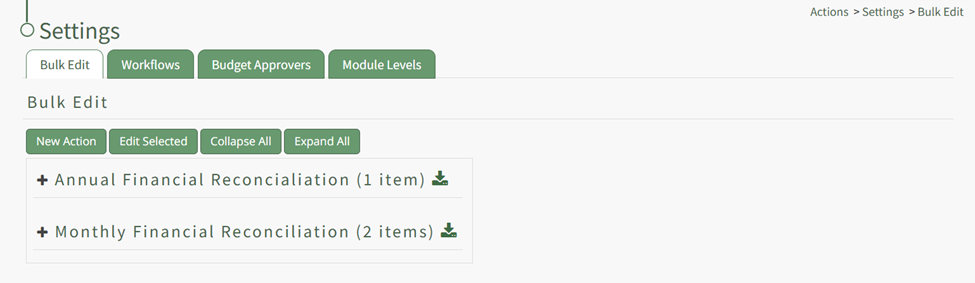
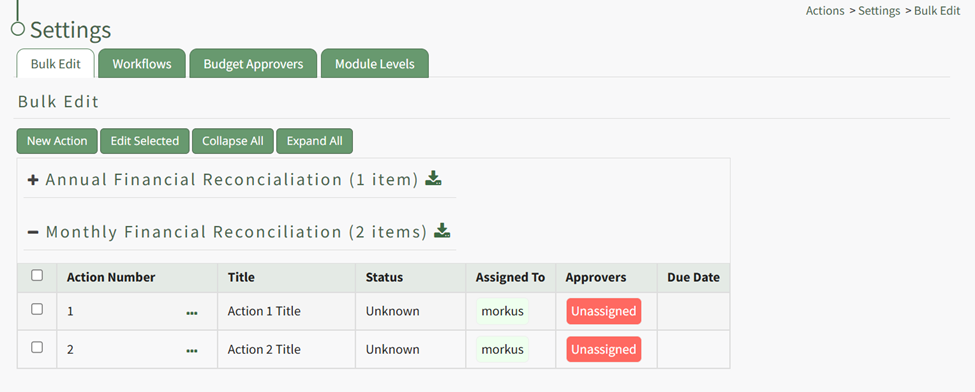
Clicking on the plus sign on the left of the action group name will expand to list all actions within the action group in tabular form. When expanded, clicking the minus sign will close the action group.
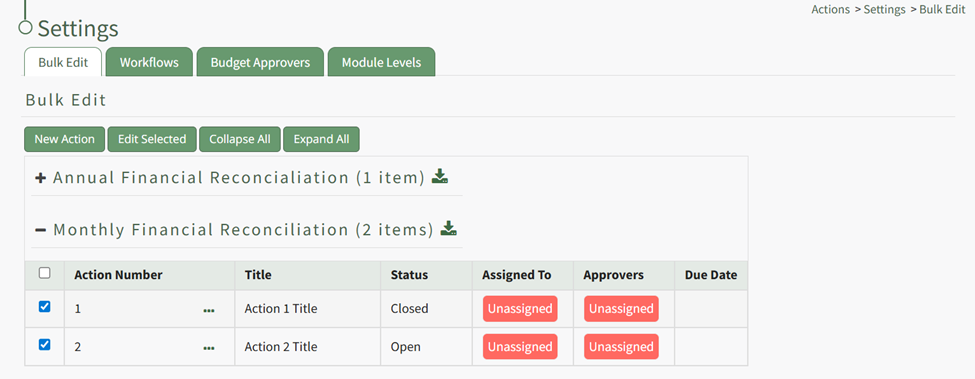
The “Collapse All” and “Expand All” buttons are useful for opening or closing all action groups simultaneously.
Click all the actions in any action action group that you would like to bulk edit simultaneously.
Note: Clicking the open box in the header row will select/de-select all checkboxes in the table.
Click the “Edit Selected” button opening the Action Bulk Edit Modal.
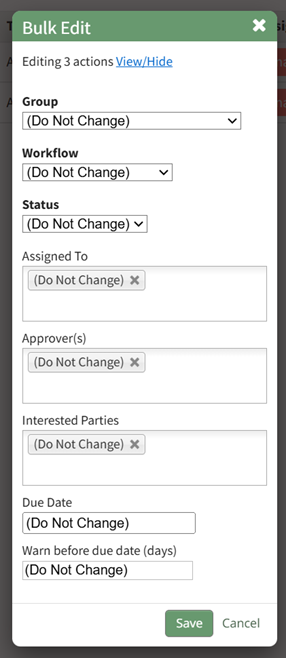
The top of the modal states the number of actions that will be impacted by the bulk edit. Selecting the “View/Hide” clickable link expands the modal to show the actions being impacted, organized by action group.
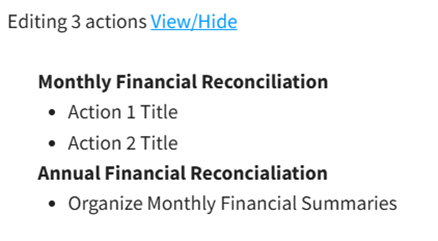
Make any edit to the Action Group regarding Workflow, Status, who the actions are assigned to, who the action approvers are, who the interested parties are, due date, or warn before due date days.
Select “Save” when done and the changes will be displayed.
How To: Copy a Workflow
To copy a workflow, open the Workflows Tab on the Settings Page of the Action Module. Click the three-dot icon to the right of the Workflow title you wish to copy, opening the Workflow Context Menu.
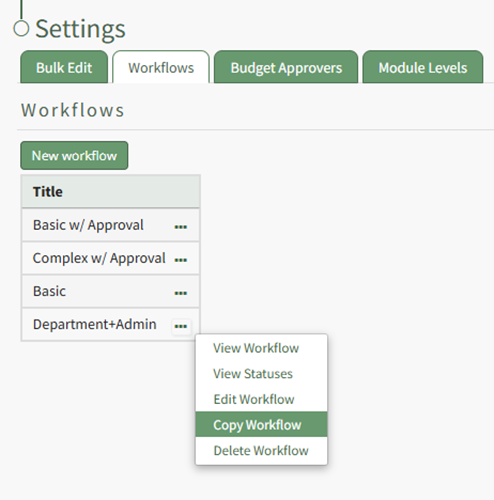
Select “Copy Workflow” from the context menu, opening the Copy Workflow Modal.
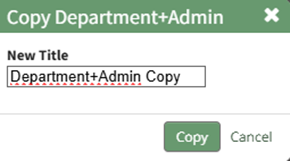
The word copy is inserted after the existing title, but the copied workflow can be renamed. Input the desired new title and select the “Copy” button
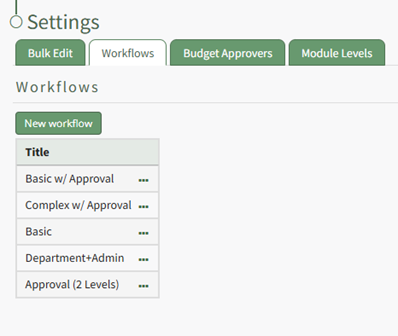
The copied workflow will now show in the Workflow Title Table and can be edited as needed.
How To: Copy an Action Group Template
To copy an action group template, select Templates from the Actions Module Main Menu, opening the Manage Templates Page. Selecting the three-dot icon to the right of the Action Group Template Title opens the Action Group Template Context Menu.
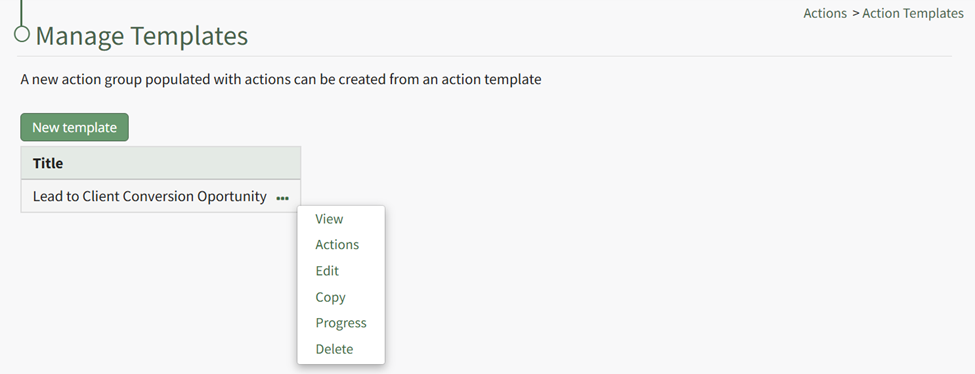
Select “Copy” and the Copy TEMPLATE NAME Modal opens.
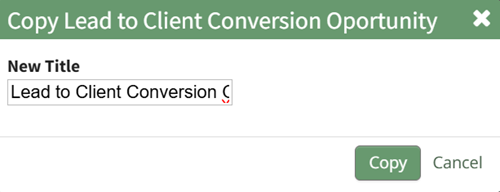
The modal allows for a new title to be given to newly created action group template. After inputting a new name, select the “Copy” button and the new Template will show on the Action Group Template Title Table.
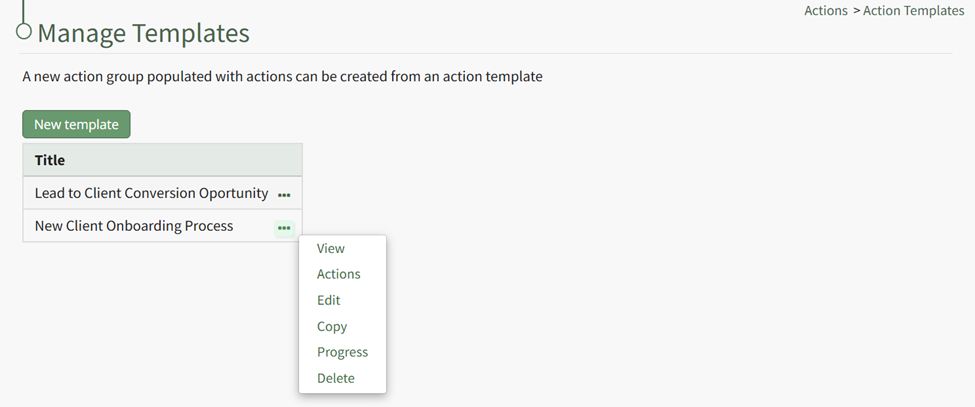
The Action Group Template Context Menu can be used to make any further adjustments as needed.
How To: Create a New Action
To create a new action from the Actions Home Page, hover your cursor over the page icon opening the home page context menu.
A new action can also be created from the context menu on the Groups Page via the three-dot icon, as well as the Bulk Edit Tab on the Actions Settings Page.
Select “New Action” opening the New Action Modal.
The fields in the New Action Modal are explained in the table below.
New Action Modal Field Explanations | |
Field | Explanation |
Group | Input the Title of the Action Group this action should be associated with. If the Action Group the action is to be associated with has already been created, it will be available on the Group dropdown menu. If the action group has not been created, see notes on how to add one below. |
Action Number | Action Numbers are used to differentiate each task in a chronological order. Actions within the same Action Group cannot have the same Action Number. You can leave the field blank. You can also input text if you wish to use the alphabet as a way to categorize actions. |
Title | Input the title of the action. |
Description | Input the description for the action. |
Tags | Open, Permissive, and Restrictive Tags can be applied to individual actions. |
Source | The Source field is intended to serve as an input for the source of the action. Source is a free text field, allowing you to input any desired response. Customer, Internal Request, a user’s name, role or department are all examples of potential Source field categories. |
Due Date | Input the date the action must be completed by. Relevant due dates cannot be imported. That feature is specific to Action Group Templates. |
Workflow | Select a default workflow (basic, basic with approval, complex) or a customized workflow specific to your organization. How To: Create New WorkflowTo create a new workflow, select Settings under the Action Module on the Main Menu. Open the Workflows tab.
Click the “New Workflow” button opening the New Workflow Title Modal.
Input the title of the new workflow and select the “Save” button.
The new workflow is now visible in the Workflow Title Table. Click the three dot icon to the right of the new workflow opening the Workflow Context Menu.
Select “View Statuses” opening the Manage Statuses Page for your workflow.
Click the “New Status” button opening the New Status Modal.
Input a title and description for the new workflow status. The Special Status dropdown menu displays: Close, Close and Repeat, and Opened. Select which if it applies and select the “Save” button. The status now shows on the Manage Status Page.
Repeat the process to create the next stage of your workflow.
The New Status Modal will now require you to repeat the process, now requiring you to select which step this status is to follow. Repeat the process until your customized workflow has been completed.
|
Status | The status of the action is based on the workflow selected. Basic with Approval: Open, Pending Approval, Completed Actions can be imported with any status and not just the first status of the workflow. |
Action Approvers | Input the users (by username or First and Last Name) that can approve an action. Only individual users can be added to this field. Multiple users can be designated as an action approver. When importing, use a semicolon to separate individuals assigned to an action. |
Interested Parties | Input the users (by username or First and Last Name) or Certification Roles that are identified as Interested Parties. Multiple users or roles can be designated as an Identified Party. When importing, use a semicolon to separate users/roles. |
Assigned To | Input the users (by username or First and Last Name) that you want to assign the action to. Actions cannot be assigned to roles or access levels. An Action can be assigned to multiple people. When importing, use a semicolon to separate individuals assigned to an action. |
Due Date | Input the date the action must be completed by. Action Group Templates allow additional control over due dates in the Relative Due Dates section when creating or editing a template. |
Warn Before (Days) | Input a numerical value for the number of days ahead of the due date you want users to get a system email alert reminder of the outstanding action (converting from blue to yellow status). |
Action Response | The information input into the Action Response field will add a comment to the action task when imported, prefaced with “The following response was imported.” |
If the action group the action is to be associated with has not been created, select “New Group…” from the Group dropdown menu
This expands the New Action Modal, allowing you to input the New Group Name.
After inputting all relevant information for the new action, select save. A green confirmation modal will appear, confirming the new action.
The action will only appear on the Actions Home Page if it applies to the currently applied filter.
The newly created action group can be edited to customize the action group preferences, or additional actions can be added.
How To: Edit An Action Group
To edit a specific action group, you can click the edit icon next to the group's title on the Actions Home Page, or select the Groups Page on the Main Menu, opening the Manage Action Groups Page. Then click the three-dot icon to the right of the action group to open the Action Group Context Menu.
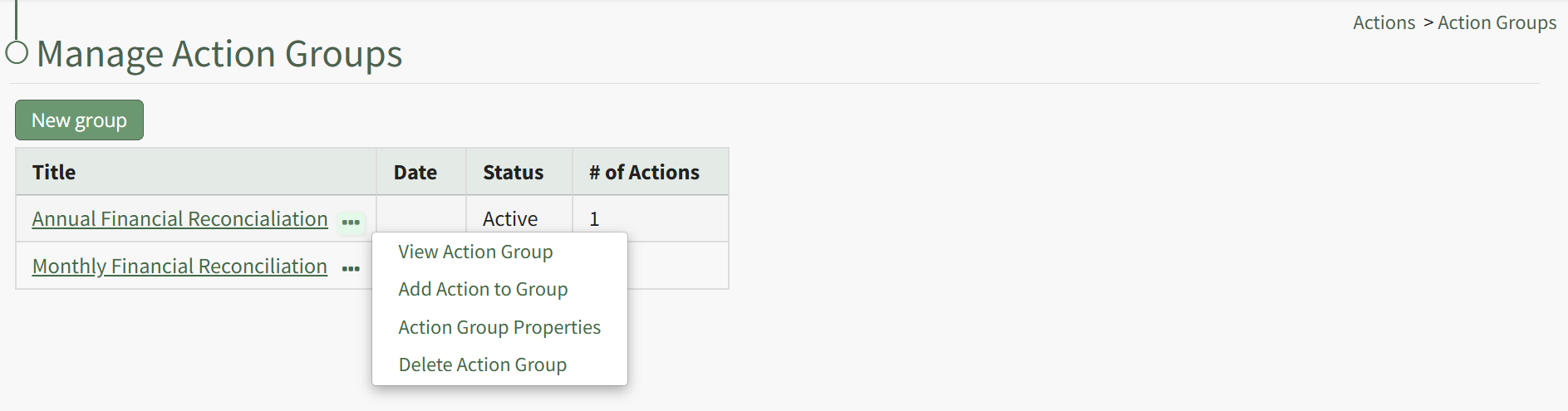
Select “Action Group Properties” from the context menu opening the Action Group Properties Modal.
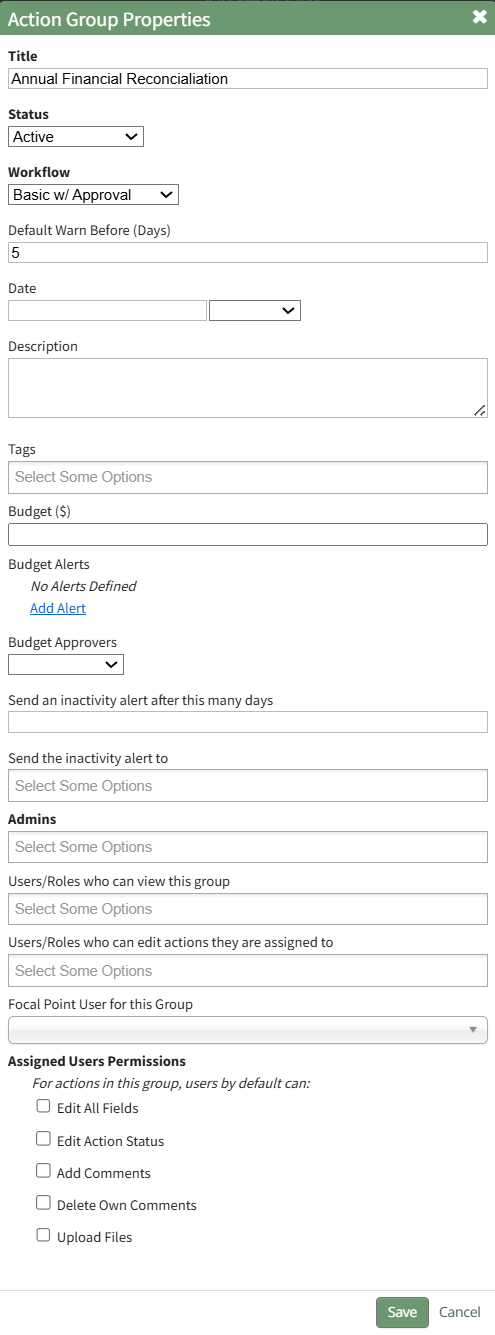
Make the desired changes to the action group. Use the Actions Group Field Input Explanations Table for information about individual field inputs.
Action Group Field Input Explanations | |
Field | Explanation |
Title | Input the title for the new action group. |
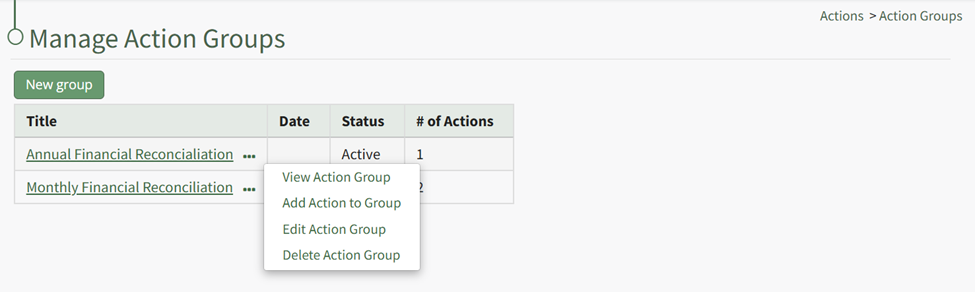
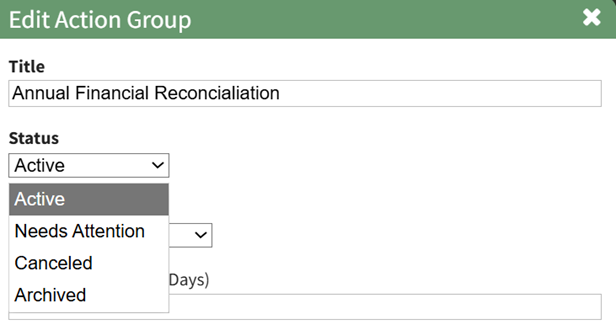
Status | An action group can be assigned a status of Active, Needs Attention, Canceled, or Archived. Select the appropriate status from the Status dropdown menu on the modal. The status of an action group is manually applied and edited. How To: Edit an Action Group StatusAction groups are manually assigned a group status than can be manually edited as needed for the action group. Default Group Status include Active, Needs Attention, Cancelled, and Archived. To change the action group status, select the Groups Page on the Main Menu, opening the Manage Action Groups Page. Clicking the three-dot icon to the right of the action group opens the Action Group Context Menu.
Select “Edit Action Group” from the context menu opening the Edit Action Group Modal.
Select the appropriate action group status from the dropdown menu provided, and select “Save”.
|
Workflow | The workflow dropdown menu will offer the system default workflows (Basic, Basic with Approval, Complex with Approval), as well as any workflows that have been created by your organization. |
Default Warn Before | Input a numerical value for the number of days a default warning will be sent. This input determines when action within the action group will turn from blue (the action is outstanding) to yellow (the action is nearing its due date). |
Date | The Action Group Date is flexible in concept and can be used as bet fit by your organization. |
Description | Input a description for the action group. |
Tags | Include any open, permissive, or restrictive tags as desired. |
Budget ($) | Leave this blank if you do not want to generate a new budget in the Finance Module for the Action Group. Input a dollar amount to create the budget. |
Budget Alerts | Click "Add Alert" in the Budget Alerts Section to create a budget alert to be associated with the action group budget. This will expand the modal displaying budget alert preferences. How To: Add a Budget Alert for an Action GroupTo add a budget alert for an action group, edit the group from the Groups Page, or go to the Actions Home Page and click the title of the action group you wish to create a budget alert for.
This opens the specific action group page. The second icon to the right of the action group header is the edit action group icon.
Select the Action Group Properties Icon, opening the Action Group Properties Modal.
Select the clickable “Add Alert” link, expanding the modal to include new fields.
The alert can be triggered by the amount remaining in the budget falling below a specified amount, or if the percentage remaining falls before a specified percentage. Budget alerts can be sent to users or roles. Input the preferred alert specifics and select add. The newly saved budget alert will show as saved in the modal.
Multiple budget alerts can be customized within the action group. |
Budget Approvers | Select the desired budget approver group from the dropdown menu. Budget approval groups at the Action Group level must be created on the Settings Page: Budget Approvers Tab. |
Send an Inactivity alert after # of days | An Action Group inactivity alert will be sent to the designated users / roles after a specified number of days of inactivity. Input a numerical value telling the system to send a notice after the specified days of inactivity. Within an action group, a workflow status change, creating or completing an action, a file upload, or action comment will reset the inactivity alert. Permission for comments to reset the inactivity alert is a customizable preference. |
Send the inactivity alert to | Input the users and roles you wish to receive the inactivity alert. |
Admins | Input the users who are to be identified as Admins for the Action Groups. |
Users / Roles who can view this group | Select the Users / Roles who can view this action group. The users / roles selected will have view only permissions for every action within the action group. |
Users / Roles who can edit their own actions | Select the Users / Roles who can edit their own actions. The users / roles selected will have the ability to edit any actions they created or are assigned to in the action group. |
Focal Point User For this Group | Identify the focal point user of the group. A group focal point will be able to see actions on the Action Group Summary page. Viewing an actions detail page will be dependent on their permissions. Organization can utilize this field to identify a key contact for an action group. If this action group is being utilized for certification or training processes, using the relevant individual’s name as the focal point provides a database reference that enables reports and organizational capabilities. Only one user can be designated as the focal point. |
Assigned User Permissions Section The permissions established in this section will be applied to all users in the group by default. | |
Edit All Fields | Selecting the "Edit All Fields" checkbox will remove all other checkboxes from the modal and will give all users in the action group the ability to edit action status, add comments, delete own comments, and upload files. |
Edit Action Status | Selecting the "Edit Action Status" checkbox will give all assigned users in the action group the ability to edit the action status. |
Add Comments | Selecting the "Add Comments" checkbox will give all users in the action group the ability to add comments to an action. |
Delete Own Comments | Selecting the "Delete Own Comments" checkbox will give all users in the action group the ability to delete their own comments made regarding an action. |
Upload Files | Selecting the "Upload Files" checkbox will give all users in the action group the ability to upload files to an action. |
Select the Save button when done making field changes, and the action group is now edited.
How To: Import Bulk Actions
To import new actions in bulk using a CSV file, go to the Actions Module Home Page and hover your cursor over the page icon opening the home page context menu.
Click “New Bulk Action Upload” opening the Import Actions Page.
Clicking the “Download Template” clickable link will automatically download a CSV file to your personal device, with the fields to be filled in for each action, designated by the column headers. The table below explains each of the field inputs.
Import Actions Template Field Explanations | |
Field | Explanation |
Group | If importing actions from the Actions Home Page, input the Title of the Action Group this action should be associated with. If importing actions from within a group (by clicking on the group name), this cell can be left blank because the actions will automatically be added to the group you're uploading to. |
Group Date | The action group date is flexible and can be utilized by your organization as best fit. When action groups are duplicated or created from a template, the action group date can be used as the distinguishing feature. |
Action Number | Action Numbers are used to differentiate each task in a chronological order. Actions within the same Action Group cannot have the same Action Number. You can leave the field blank. You can also input text if you wish to use the alphabet as way to categorize actions. |
Title | Input the title of the action. |
Description | Input the description for the action. |
Source | The Source field is intended to serve as an input for the source of the action. Source is a free text field, allowing you to input any desired response. Customer, Internal Request, a user’s name, role or department are all examples of potential Source field categories. |
Due Date | Input the date the action must be completed by. Action Group Templates allow additional control regarding due dates in the Relative Due Dates section when creating or editing a template. |
Workflow | Select a default workflow (basic, basic with approval, complex) or a customized workflow specific to your organization. How To: Create New Workflow{{@619}} |
Status | The status of the action is based on the workflow selected. Basic with Approval: Open, Pending Approval, Completed Actions can be imported with any status and not just the first status of the workflow. |
Date Complete | This field should be blank unless the task is already complete. If the action is already completed, include the completion date here. |
Warn (Days) | Input a numerical value for the number of days ahead of the due date you want users to get a system email alert reminder of the outstanding action (converting from blue to yellow status). |
Assigned To | Input the users (by username or First and Last Name) that you want to assign the action to. Actions cannot be assigned to roles or access levels. An Action can be assigned to multiple people. Use a semicolon to separate individuals assigned to an action. |
Action Approvers | Input the users (by username or First and Last Name) that can approve an action. Action Approvers cannot be assigned to roles or access levels. Multiple users can be designated as an action approver. Use a semicolon to separate individuals assigned to an action. |
Interested Parties | Input the users (by username or First and Last Name) or Certification Roles that are identified as Interested Parties. Multiple users or roles can be designated as an Identified Party. Use a semicolon to separate users/roles. |
Action Response | The information input into the Action Response field will add a comment to the action task when imported, prefaced with “The following response was imported.” |
Before importing your bulk actions, save the file as a UTF 8.
Select the “Choose Files” button and select the saved UTF 8 CSV file to be imported.
Click the “Next Step >” button and confirm that your column headers match the new action form fields and complete the import.
How To: Create a New Action Group Template
To create a New Action Group Template, select Templates from the Actions Module Main Menu, opening the Manage Templates Page.
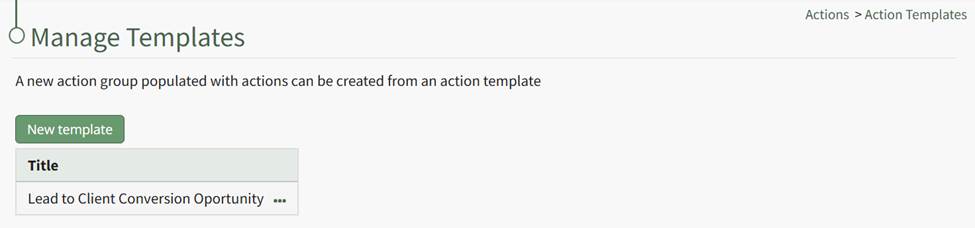
Select the “New Template” button, opening the New Template Modal.
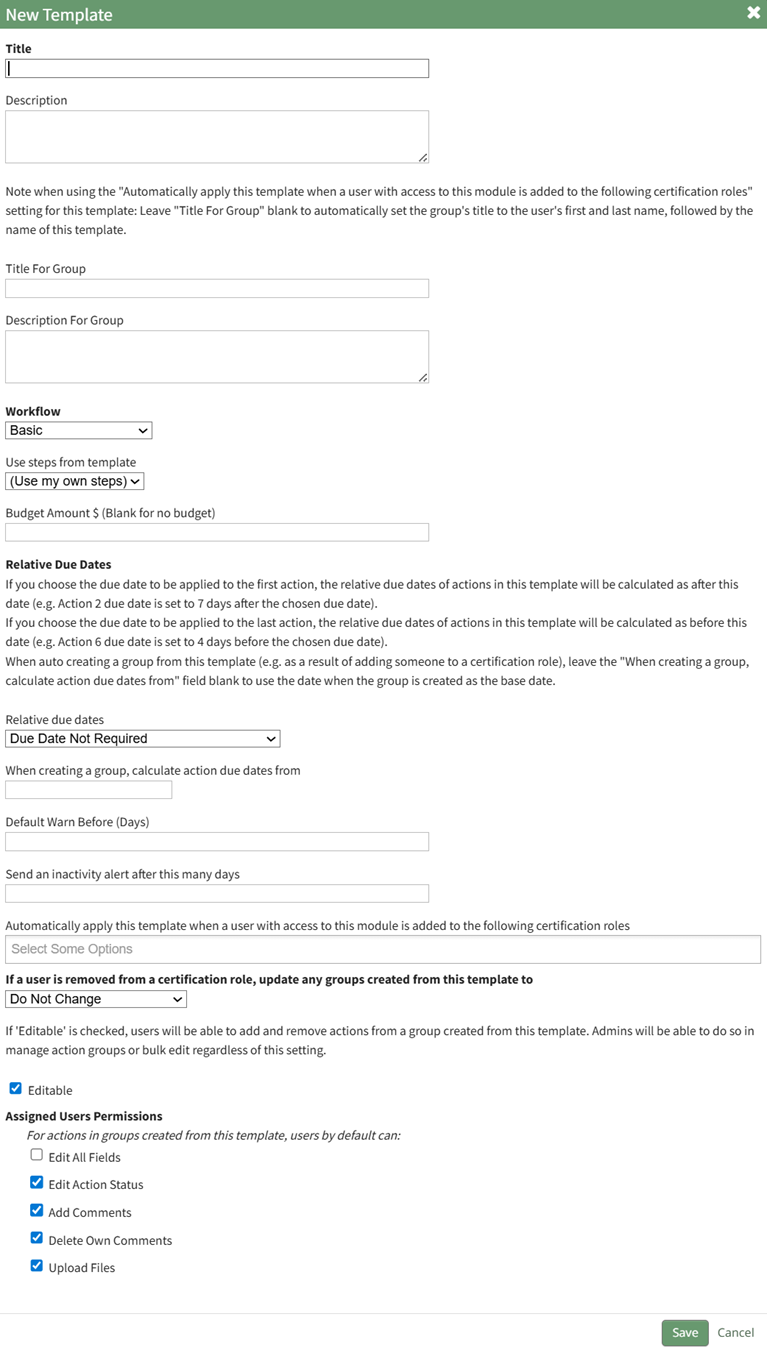
There are several fields associated with the creation of an action group template.
Action Group Field Input Explanations | |
Field | Explanation |
Title | Input the title for the new action group. |
Status | An action group can be assigned a status of Active, Needs Attention, Canceled, or Archived. Select the appropriate status from the Status dropdown menu on the modal. The status of an action group is manually applied and edited. How To: Edit an Action Group StatusAction groups are manually assigned a group status that can be manually edited as needed for the action group. The default Group Statuses include Active, Needs Attention, Cancelled, and Archived. To change the action group status, click the edit icon next to the group's title on the Actions Home Page, or select the Groups Page on the Main Menu, opening the Manage Action Groups Page. Then click the three-dot icon to the right of the action group to open the Action Group Context Menu.
Select “Action Group Properties” from the context menu opening the Action Group Properties Modal.
Select the appropriate action group status from the dropdown menu provided and select “Save”. |
Workflow | The workflow dropdown menu will offer the system default workflows (Basic, Basic with Approval, Complex with Approval), as well as any workflows that have been created by your organization. |
Default Warn Before | Input a numerical value for the number of days a default warning will be sent. This input determines when action within the action group will turn from blue (the action is outstanding) to yellow (the action is nearing its due date). |
Date | The Action Group Date is flexible in concept and can be used as bet fit by your organization. |
Description | Input a description for the action group. |
Tags | Include any open, permissive, or restrictive tags as desired. |
Budget ($) | Leave this blank if you do not want to generate a new budget in the Finance Module for the Action Group. Input a dollar amount to create the budget. |
Budget Alerts | Click "Add Alert" in the Budget Alerts Section to create a budget alert to be associated with the action group budget. This will expand the modal displaying budget alert preferences. How To: Add A Budget Alert for an Action GroupTo add a budget alert for an action group, edit the group from the Groups Page, or go to the Actions Home Page and click the title of the action group you wish to create a budget alert for.
This opens the specific action group page. The second icon to the right of the action group header is the edit action group icon.
Select the Action Group Properties Icon, opening the Action Group Properties Modal.
Select the clickable “Add Alert” link, expanding the modal to include new fields.
The alert can be triggered by the amount remaining in the budget falling below a specified amount, or if the percentage remaining falls before a specified percentage. Budget alerts can be sent to users or roles. Input the preferred alert specifics and select add. The newly saved budget alert will show as saved in the modal.
Multiple budget alerts can be customized within the action group. |
Budget Approvers | Select the desired budget approver group from the dropdown menu. Note: Budget approval groups at the Action Group level must be created on the Settings Page: Budget Approvers Tab. |
Send an Inactivity alert after # of days | An Action Group inactivity alert will be sent to the designated users / roles after a specified number of days of inactivity. Input a numerical value telling the system to send a notice after the specified days of inactivity. Within an action group, a workflow status change, creating or completing an action, a file upload, or action comment will reset the inactivity alert. Permission for comments to reset the inactivity alert is a customizable preference. |
Send the inactivity alert to | Input the users and roles you wish to receive the inactivity alert. |
Admins | Input the users who are to be identified as Admins for the Action Groups. |
Users / Roles who can view this group | Select the Users / Roles who can view this action group. The users / roles selected will have view only permissions for every action within the action group. |
Users / Roles who can edit their own actions | Select the Users / Roles who can edit their own actions. The users / roles selected will have the ability to edit any actions they created or are assigned to in the action group. |
Focal Point User For this Group | Identify the focal point user of the group. This field is purely informational. There are no permissions associated with the focal point designation. Organization can utilize this field to identify a key contact for an action group. If this action group is being utilized for certification or training processes, using the relevant individual’s name as the focal point provides a database reference that enables reports and organizational capabilities. Only one user can be designated as the focal point. |
Assigned User Permissions Section The permissions established in this section will be applied to all users in the group by default. | |
Edit All Fields | Selecting the "Edit All Fields" checkbox will remove all other checkboxes from the modal and will give all users in the action group the ability to edit action status, add comments, delete own comments, and upload files. |
Edit Action Status | Selecting the "Edit Action Status" checkbox will give all assigned users in the action group the ability to edit the action status. |
Add Comments | Selecting the "Add Comments" checkbox will give all users in the action group the ability to add comments to an action. |
Delete Own Comments | Selecting the "Delete Own Comments" checkbox will give all users in the action group the ability to delete their own comments made regarding an action. |
Upload Files | Selecting the "Upload Files" checkbox will give all users in the action group the ability to upload files to an action. |
After inputting the appropriate information into the modal, select “Save”.
The new Action Group Template will be displayed on the Templates Page in the Action Group Templates Table.
How To: Create a New Actions Group
New Action Groups can be created from both the Home Actions Page as well as the Groups Page, both accessible from the Main Menu.
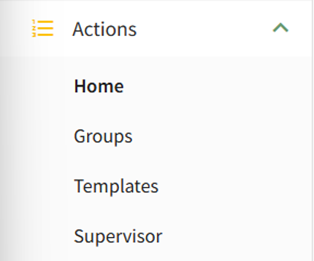
To create a new action group from the Actions Home Page, hover your icon over the page icon to the right of the Actions page header, displaying the Home Page Context Menu. Click “New Action Group” to open the New Action Group Modal.
To create a new action group from the Groups Page, select Groups on the Main Menu opening the Manage Action Groups Page.
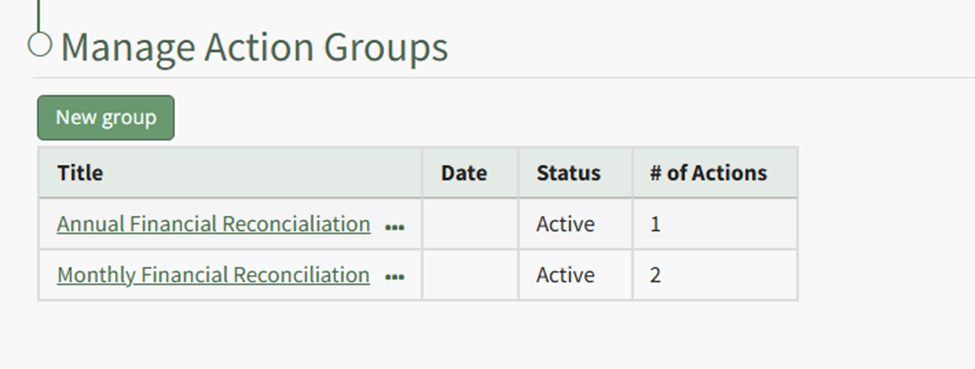
Select the “New Group” button to open the New Action Group Modal.
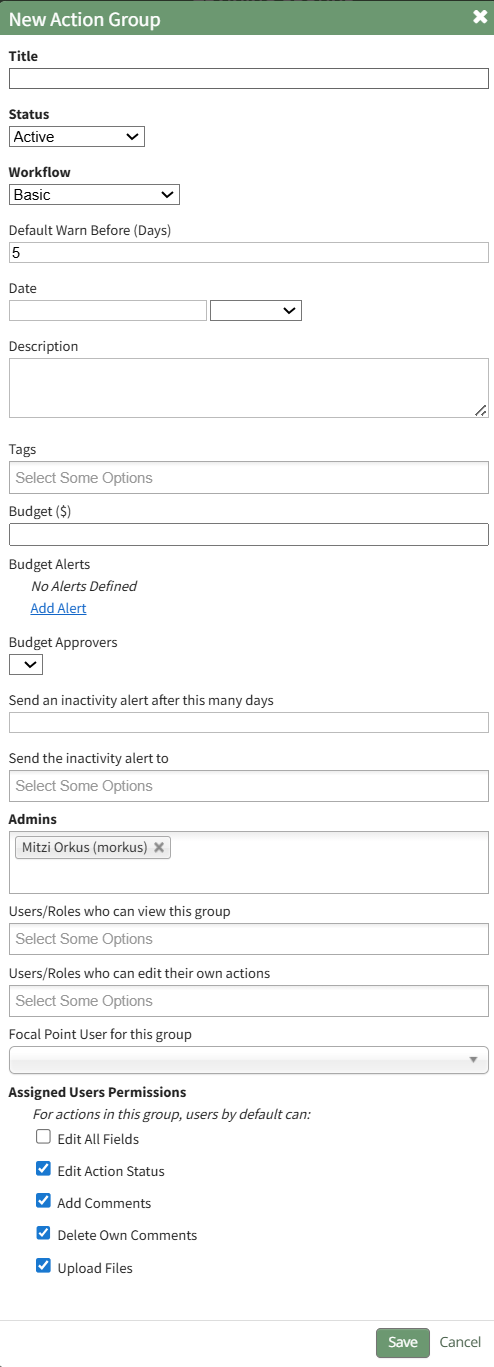
The Action Group Field Input Explanation Table below explains the fields on the New Action Group Modal so that you can customize the action group.
Action Group Field Input Explanations | |
Field | Explanation |
Title | Input the title for the new action group. |
Status | An action group can be assigned a status of Active, Needs Attention, Canceled, or Archived. Select the appropriate status from the Status dropdown menu on the modal. The status of an action group is manually applied and can be edited. How To: Edit an Action Group StatusAction groups are manually assigned a group status that can be manually edited as needed for the action group. The default Group Statuses include Active, Needs Attention, Cancelled, and Archived. To change the action group status, click the edit icon next to the group's title on the Actions Home Page, or select the Groups Page on the Main Menu, opening the Manage Action Groups Page. Then click the three-dot icon to the right of the action group to open the Action Group Context Menu.
Select “Action Group Properties” from the context menu opening the Action Group Properties Modal.
Select the appropriate action group status from the dropdown menu provided and select “Save”. |
Workflow | The workflow dropdown menu will offer the system default workflows (Basic, Basic with Approval, Complex with Approval), as well as any workflows that have been created by your organization. |
Default Warn Before | To send a warning prior to the due date, input a numerical value for the default number of days. This input determines when the action within the action group will turn from blue (the action is outstanding) to yellow (the action is nearing its due date). |
Date | The Action Group Date is flexible in concept and can be used as bet fit by your organization. |
Description | Input a description for the action group. |
Tags | Include any open, permissive, or restrictive tags as desired. |
Budget ($) | Leave this blank if you do not want to generate a new budget in the Finance Module for the Action Group. Input a dollar amount to create the budget. |
Budget Alerts | Click "Add Alert" in the Budget Alerts Section to create a budget alert to be associated with the action group budget. This will expand the modal displaying budget alert preferences. How To: Add A Budget Alert for an Action GroupTo add a budget alert for an action group, edit the group from the Groups Page, or go to the Actions Home Page and click the title of the action group you wish to create a budget alert for.
This opens the specific action group page. The second icon to the right of the action group header is the edit action group icon.
Select the Action Group Properties Icon, opening the Action Group Properties Modal.
Select the clickable “Add Alert” link, expanding the modal to include new fields.
The alert can be triggered by the amount remaining in the budget falling below a specified amount, or if the percentage remaining falls before a specified percentage. Budget alerts can be sent to users or roles. Input the preferred alert specifics and select add. The newly saved budget alert will show as saved in the modal.
Multiple budget alerts can be customized within the action group. |
Budget Approvers | Select the desired budget approver group from the dropdown menu. Note: Budget approval groups at the Action Group level must be created on the Settings Page: Budget Approvers Tab. |
Send an Inactivity alert after # of days | An Action Group inactivity alert will be sent to the designated users / roles after a specified number of days of inactivity. Input a numerical value telling the system to send a notice after the specified days of inactivity. Within an action group, a status change, creating or completing an action, a file upload, or action comment will reset inactivity. Permission for comments to reset the inactivity alert is a customizable preference. |
Send the inactivity alert to | Input the users and roles you wish to receive the inactivity alert. |
Admins | Input the users who are to be identified as Admins for the Action Groups. Establishing a user as an Action Group Admin grants the ability to edit the group, plus view, and edit actions in the action group. Action Group Admins also have the ability to delete files associated with action in the action group. |
Users / Roles who can view this group | Select the Users / Roles who can view this action group. The users / roles selected will have view-only permissions for every action within the action group. |
Users / Roles who can edit their own actions | Select the Users / Roles who can edit their own actions. The users / roles selected will have the ability to edit any actions they are assigned to in the action group. |
Focal Point User For this Group | Identify the focal point user of the group. This field is purely informational. There are no permissions associated with the focal point designation. Organization can utilize this field to identify a key contact for an action group. If this action group is being utilized for certification or training processes, using the relevant individual’s name as the focal point provides a database reference that enables reports and organizational capabilities. Only one user can be designated as the focal point. |
Assigned User Permissions Section The permissions established in this section will be applied to all assigned users in the group by default. | |
Edit All Fields | Selecting the "Edit All Fields" checkbox will remove all other checkboxes from the modal and will give all assigned users in the action group the ability to edit action status, add comments, delete own comments, and upload files. |
Edit Action Status | Selecting the "Edit Action Status" checkbox will give all assigned users in the action group the ability to edit the action status. |
Add Comments | Selecting the "Add Comments" checkbox will give all users in the action group the ability to add comments to an action. |
Delete Own Comments | Selecting the "Delete Own Comments" checkbox will give all users in the action group the ability to delete their own comments made regarding an action. |
Upload Files | Selecting the "Upload Files" checkbox will give all users in the action group the ability to upload files to an action. |
After making the appropriate selections in the New Action Group Modal, click the “Save” button to complete new group creation. The group is now created and has been added to the Groups Table on Groups Page.
Clicking on the group title will display the action group page which displays the associated actions in the action group in list format.
How To: Create a New Budget Approver Group
To create a new budget approver group, open the Budget Approvers Tab on the Settings Page in the Actions Module from the Main Menu.
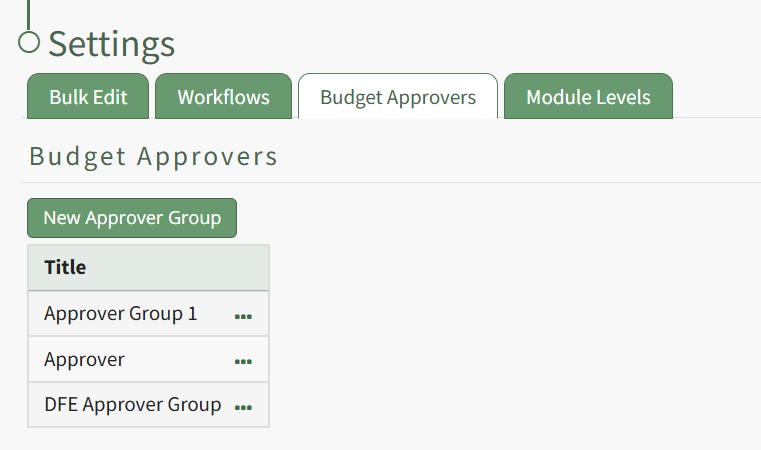
Click the New Approver Group button opening the New Budget Approver Modal.
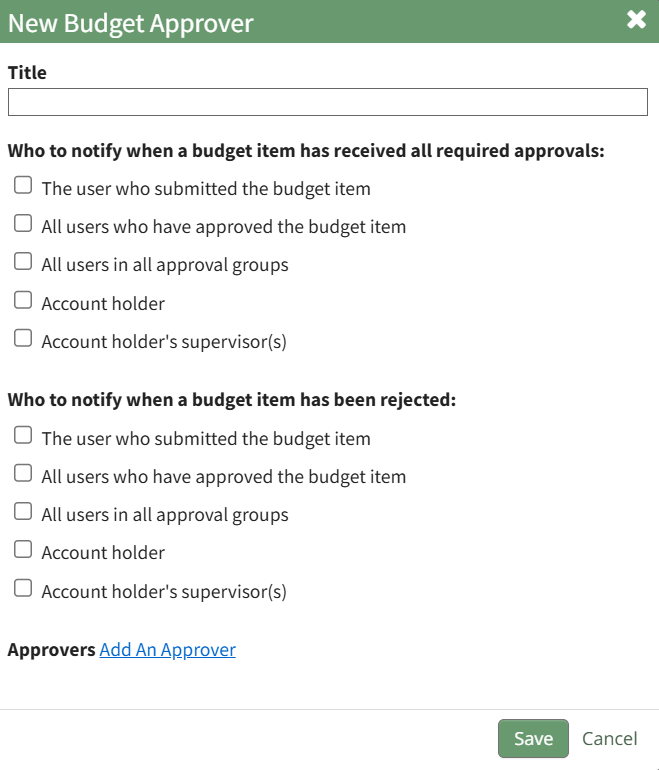
Input a title for the budget approver group.
There are five options of who the system should notify when a budget has received all required approvals or when it has been rejected: the user who submitted the budget item, the users who have approved the budget item, all users in all approval groups, the account holder, and the account holder’s supervisor(s). Multiple, all, or no checkboxes can be selected.
To add an approver, click the “+ Add An Approver” button and the modal expands.
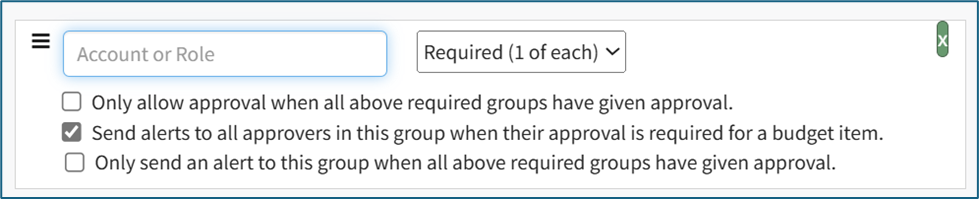
Add an individual account or a certification role and identify if their approval is required or optional. Multiple approvers can be added in this expansion, or you can click “+Add an Approver” again if the permissions/requirements need to be different for the different approvers.
There are two checkboxes associated with adding an approver. The first is in regard to when approval will be given. The “Only allow approval when all above required groups have been given approval” checkbox will not mark a budget item as approved until all required groups have been approved.
The second checkbox impacts when alerts regarding a budget will be sent. The “Send alerts to all approvers in this group when their approval is required for a budget item” opens an additional checkbox when selected. Select the “Only send an alert to this group when all above required groups have been given approval” to send an alert when a required signatures have been received.
After making the appropriate selections, the modal will state how many budget items will be affected by the changes being made.

You have the choice to “Mark as Approved any budget items that will become fully approved when this form is saved” or to “Clear existing approvals for any budget items that will become fully approved when this form is saved.” You cannot select both.
Once all changes to approvers and approval notifications for the budget have been made, select the “Save” button and you will return to the Budget Approvers Tab of the Budgets Page.
How To: Create a New Module Level (Actions Module)
Select the Module Levels Tab on the Settings Page in the Action Module.
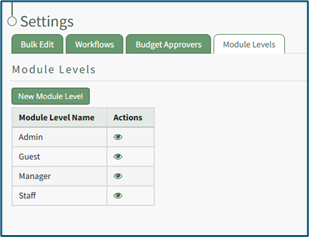
Select the “New Module Level” button, opening the New Module Level Modal.
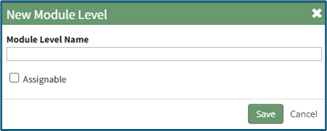
Input the new module level name. Select “Save” and the new module level will show in alphabetical order in the module level table. Click “Cancel” to return to the Module Levels Tab without saving changes.
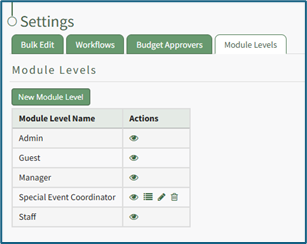
Selecting the bullet list icon will open the Permissions for (Module Level) Modal. A comprehensive list of permissions has been included in the Module Level Tab section.
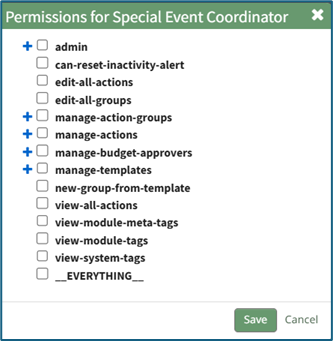
Select the “Save” button after selecting the appropriate permissions, setting the new module level with the customized permissions. Click “Cancel” to return to the Module Level Tab without saving any changes.
How To: Create New Actions from a Template
How To: Create New Workflow
To create a new workflow, select Settings under the Action Module on the Main Menu. Open the Workflows tab.
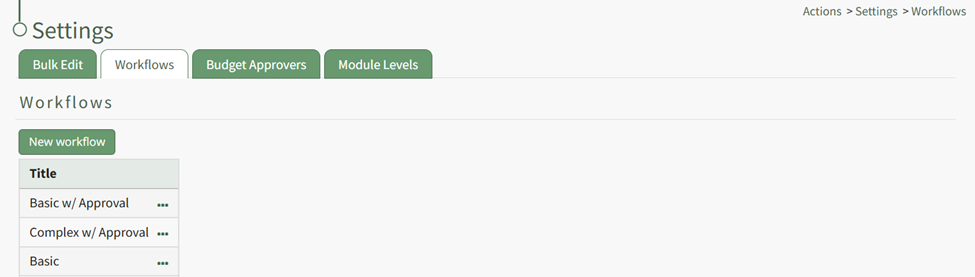
Click the “New Workflow” button opening the New Workflow Title Modal.
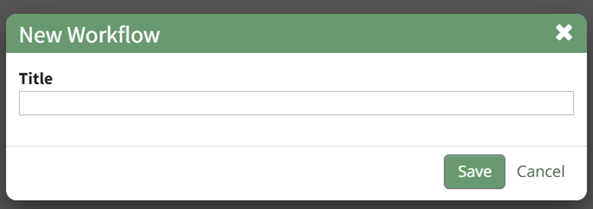
Input the title of the new workflow and select the “Save” button.
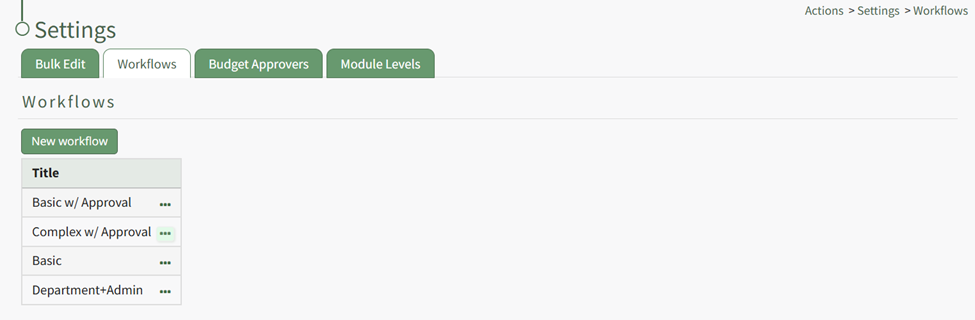
The new workflow is now visible in the Workflow Title Table. Click the three dot icon to the right of the new workflow opening the Workflow Context Menu.
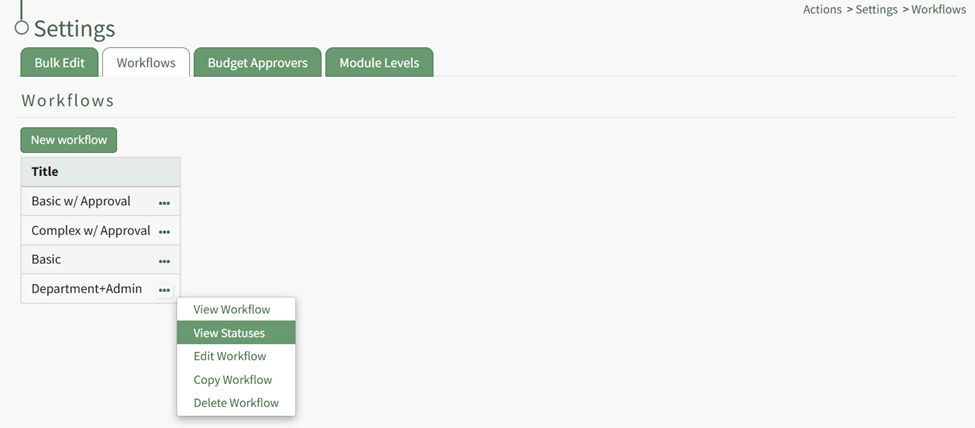
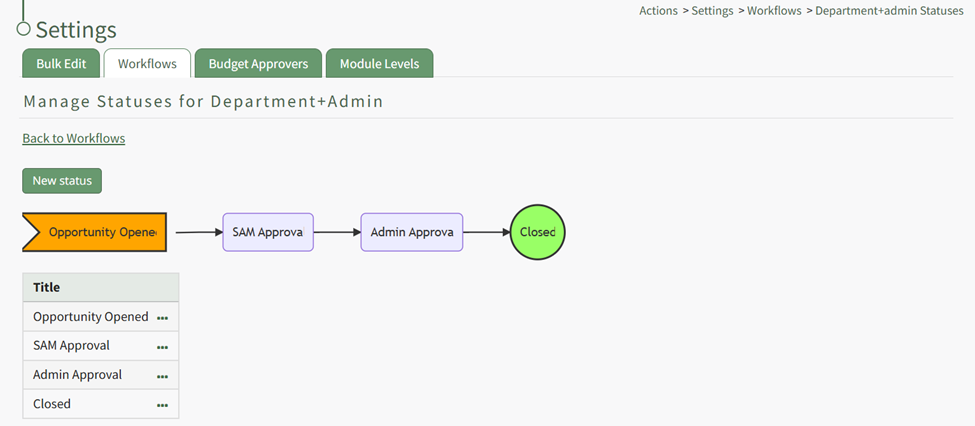
Select “View Statuses” opening the Manage Statuses Page for your workflow.
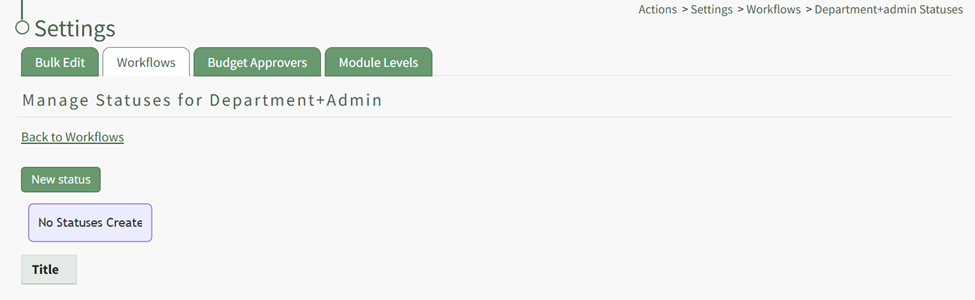
Click the “New Status” button opening the New Status Modal.
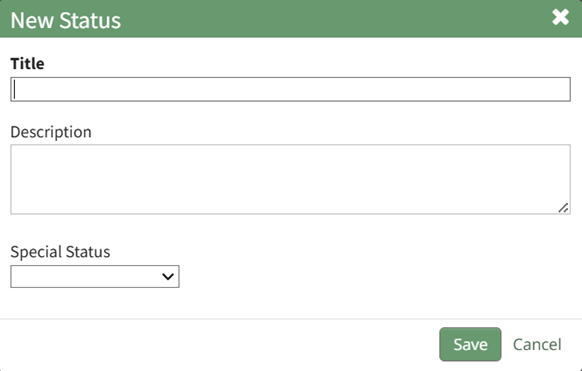
Input a title and description for the new workflow status.
The Special Status dropdown menu displays: Close, Close and Repeat, and Opened. Select which if it applies and select the “Save” button. The status now shows on the Manage Status Page.
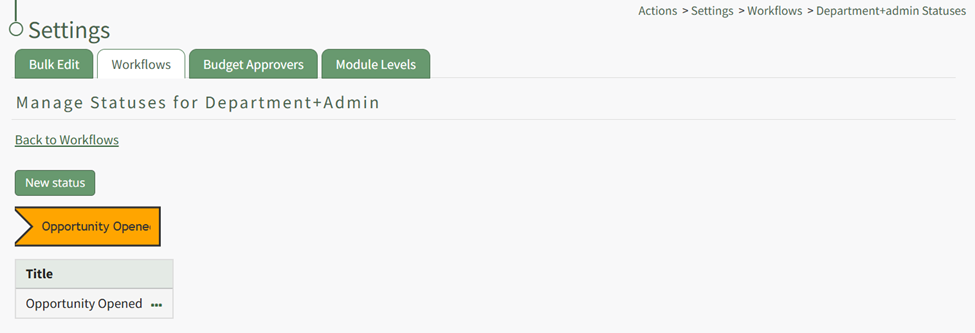
Repeat the process to create the next stage of your workflow.
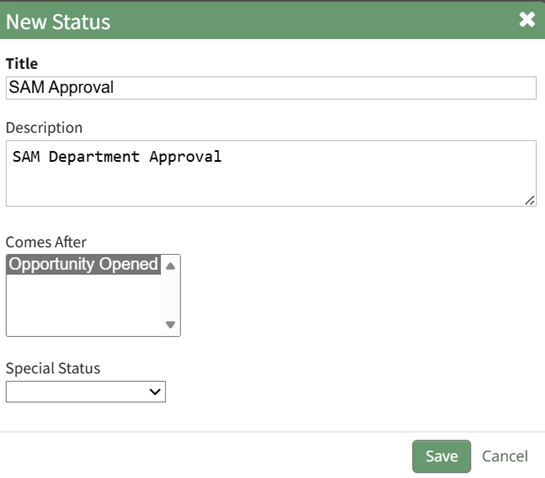
The New Status Modal will now require you to repeat the process, now requiring you to select which step this status is to follow. Repeat the process until your customized workflow has been completed.
How To: Delete a Budget Approver Group
To delete a budget approver group, go to the Budget Approver Tab on the Settings Page of the Actions Module. Click the three dot icon to the right of the Budget Approver Group Title opening the Budget Approver Table Context Menu.
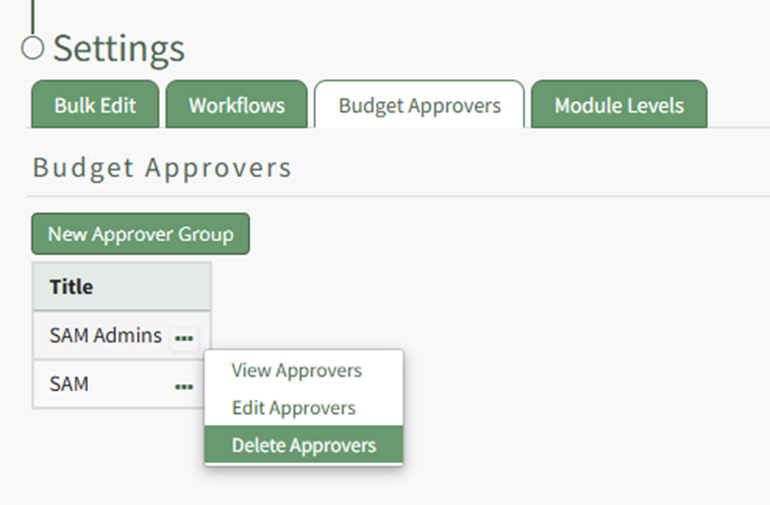
Select the option to “Delete Approvers” opening the Delete Budget Approver Confirmation Modal which states that title of the budget approver group being deleted and asks “Are you sure you want to delete this budget approver?”
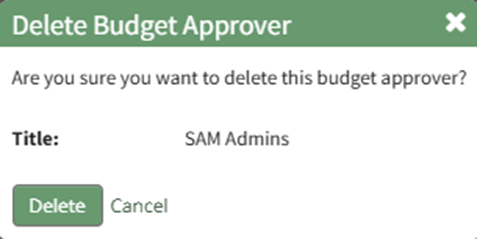
Click the “Delete” button and the modal changes to confirm that the budget approver group has been deleted.
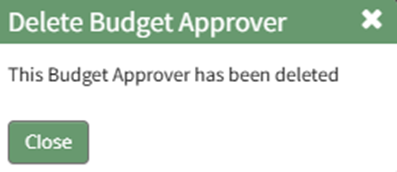
Select the “Close” button and return to the Budget Approver Tab of the Settings Page.
How To: Delete a Workflow
To delete a workflow, open the Workflows Tab on the Settings Page of the Action Module. Click the three-dot icon to the right of the Workflow title you wish to delete, opening the Workflow Context Menu.
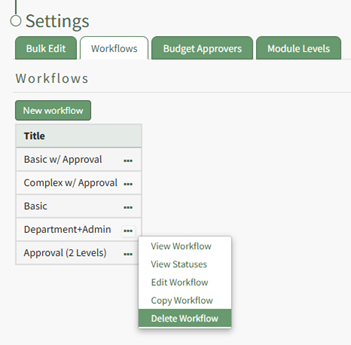
Select “Delete Workflow” from the context menu opening the Delete Workflow Confirmation Modal, which states the title of the workflow to be deleted with the question, “Are you sure you want to delete this workflow?”
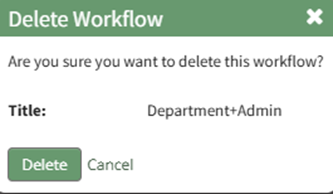
Select the “Delete” button.
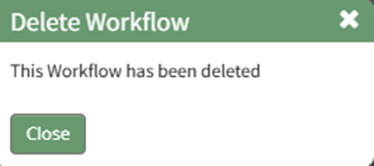
The modal changes to confirm that the workflow has been deleted. Select the “Close” button. The workflow is no longer visible on the Workflow Title Table.
How To: Delete an Action
To delete an individual action, go to the Bulk Edit Tab of the Settings Page in the Actions Module.
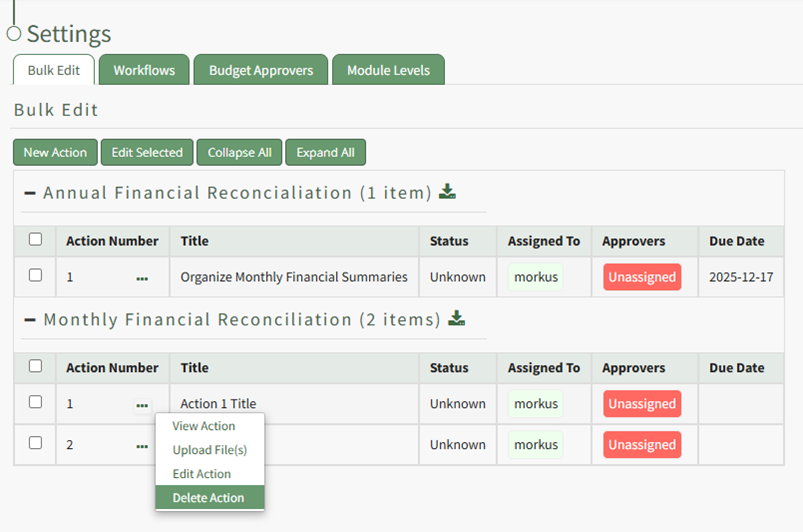
Identify the action you wish to delete and click the three dot icon to the right of the action title, opening the Bulk Edit Action Context Menu.
Select the option to “Delete Action” opening the Delete Action Confirmation Modal which states the title of the action to be deleted and asks the question, “Are you sure you want to delete this action?”
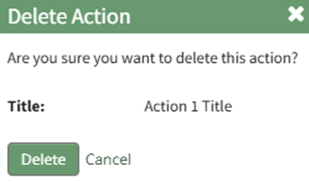
Clicking the “Delete” button changes the modal, which now states that the action has been deleted.
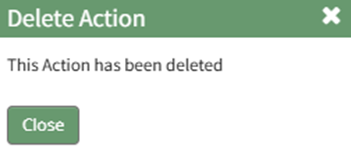
Select “Close” and return to the Bulk Edit Tab of the Settings Page. The action is no longer visible.
The assigned action numbers do not automatically update when an action is deleted. Be sure to edit the action group to correct the order after deleting an action.
How To: Delete an Action Comment
To delete a comment associated with an action, go to the Actions Home Page.
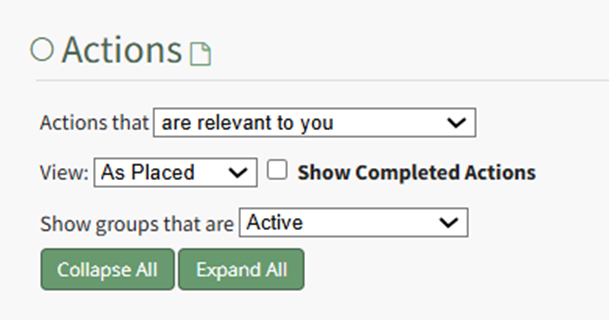
If filtering by user, select the action title. If filtering by due date or groups ("As Placed"), use the filters to pull up the relevant due date or Action Group and expand them to display the actions.
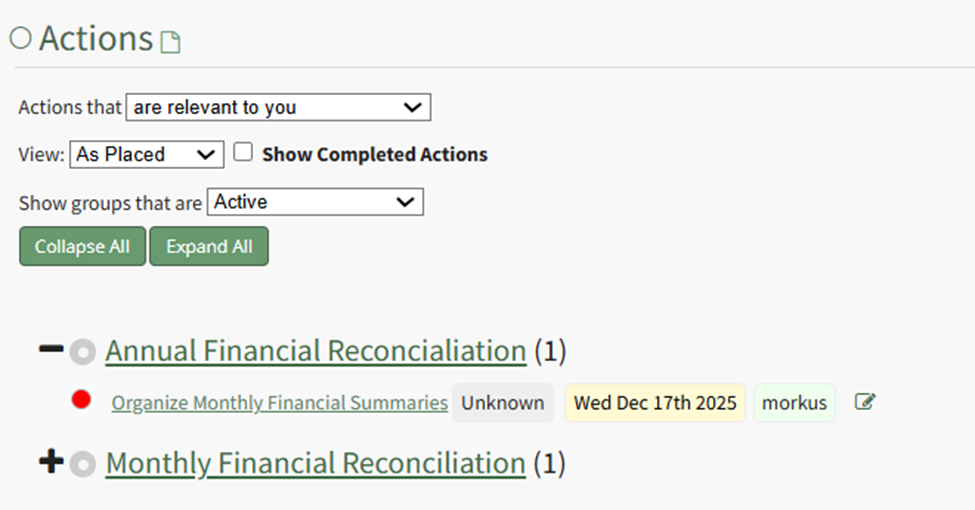
Click the Title Link of the action you wish to delete comments from, opening the specific action.
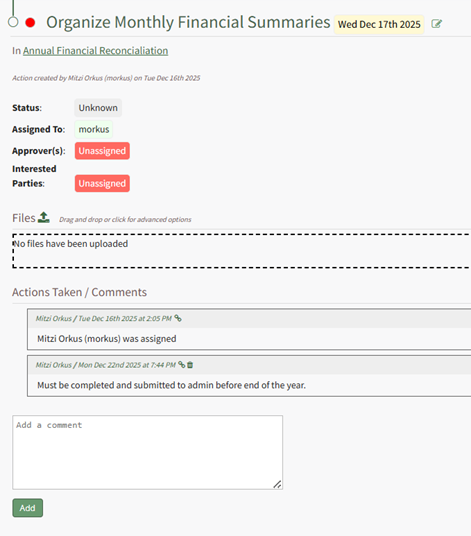
To delete a comment, click the trash can icon on the header row of the specific comment.

This opens the Delete Comment Modal. You have the option to include a reason for the deletion.
The deletion confirmation modal asks, “Are you sure you wish to delete this comment?” Select “Confirm” and an error appears.

This is a software bug the development team is aware and will be changed soon.
The Delete Comment Modal remains. Input any reasons for deleting the comment.
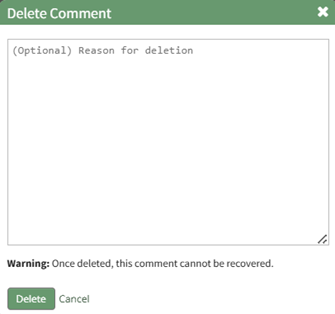
Click delete and a popup confirms that the comment was deleted. (There is no deletion confirmation modal.)

The comment is now permanently deleted. The comment box is still visible, and the reason for the deletion now shows instead of the original comment.

How To: Delete an Action Group
To delete an action group, select the Groups Page on the Main Menu, opening the Manage Action Groups Page. Clicking the three-dot icon to the right of the action group opens the Action Group Context Menu.

Select “Delete Action Group” from the context menu opening the Delete Action Group Confirmation Modal.
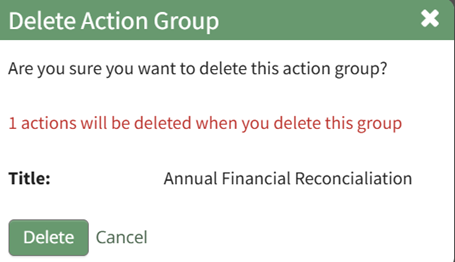
The modal displays the title of the action group that will be deleted, as well as the number of actions that will be deleted when you delete the group.
Select the “Delete” button and the action group will no longer be visible on the Action Groups Table.
How To: Delete an Action Group Template
To delete an action group template, select Templates from the Actions Module Main Menu, opening the Manage Templates Page. Selecting the three-dot icon to the right of the Action Group Template Title opens the Action Group Template Context Menu.
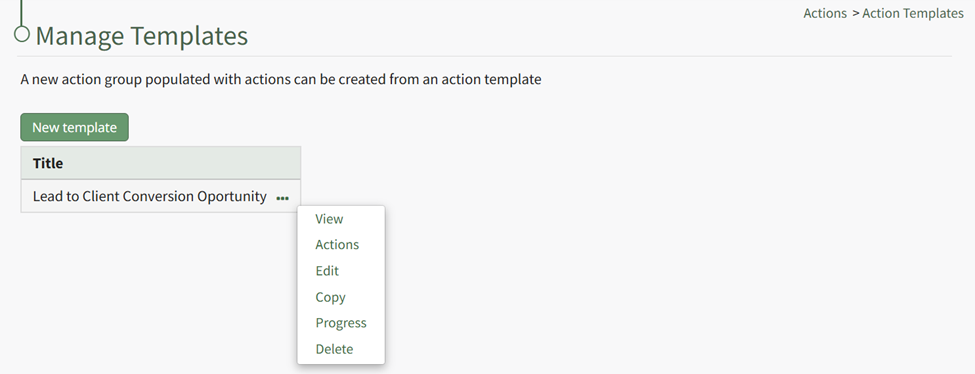
Select “Delete” and a Delete Template Confirmation Modal appears. The modal states the title of the action group template to be deleted and asks, “Are you sure you want to delete this template?”
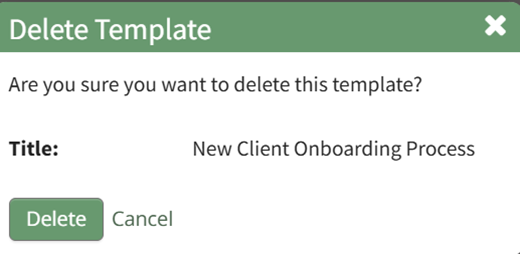
Select “Delete” and the template will no longer show in the Actions Group Templates Title Table.
How To: Edit a Workflow
The default workflows (Basic, Basic with Approval, and Complex with Approval) cannot be edited.
To edit a workflow, open the Workflows Tab on the Settings Page of the Action Module. Click the three-dot icon to the right of the Workflow title you wish to edit, opening the Workflow Context Menu.
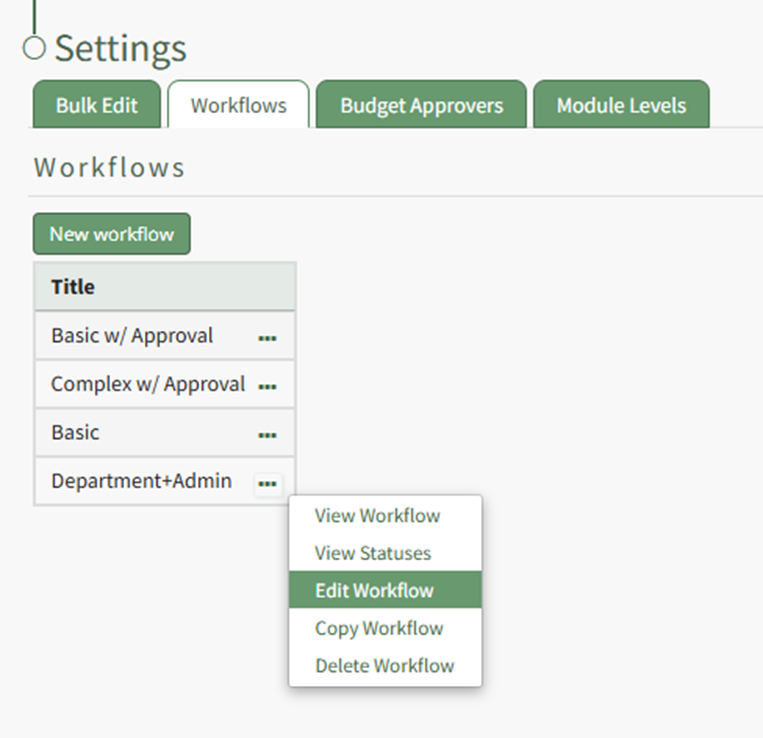
Select “Edit Workflow”. This opens the Edit Workflow Modal.
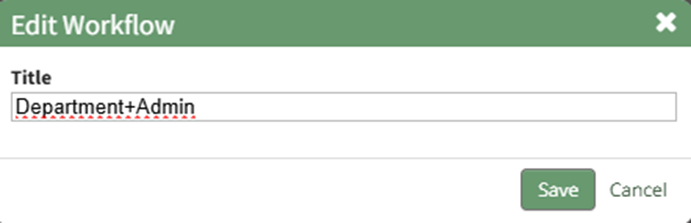
Make any desired changes to the title of the workflow, and select the “Save” button.
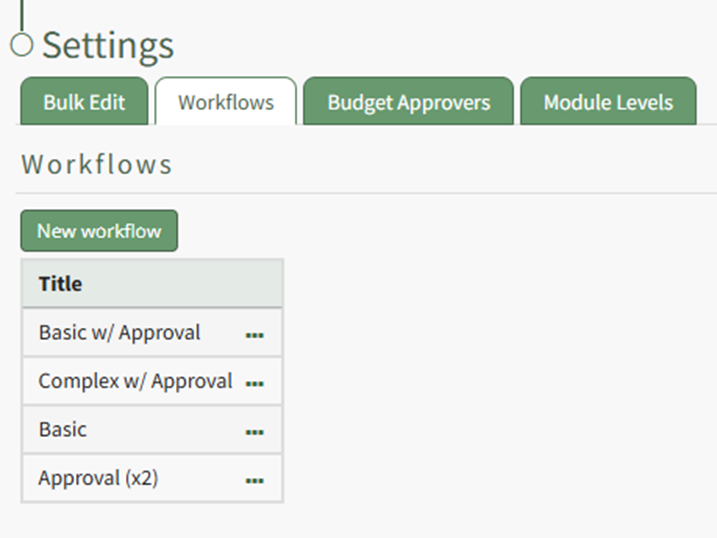
Your title changes will now be reflected in the Workflow Title Table visible on the Workflows tab.
How To: Edit An Action Group
To edit a specific action group, you can click the edit icon next to the group's title on the Actions Home Page, or select the Groups Page on the Main Menu, opening the Manage Action Groups Page. Then click the three-dot icon to the right of the action group to open the Action Group Context Menu.
Select “Action Group Properties” from the context menu opening the Action Group Properties Modal.
Make the desired changes to the action group. Use the Actions Group Field Input Explanations Table for information about individual field inputs.
Action Group Field Input Explanations | |
Field | Explanation |
Title | Input the title for the new action group. |
Status | An action group can be assigned a status of Active, Needs Attention, Canceled, or Archived. Select the appropriate status from the Status dropdown menu on the modal. The status of an action group is manually applied and edited. How To: Edit an Action Group StatusAction groups are manually assigned a group status than can be manually edited as needed for the action group. Default Group Status include Active, Needs Attention, Cancelled, and Archived. To change the action group status, select the Groups Page on the Main Menu, opening the Manage Action Groups Page. Clicking the three-dot icon to the right of the action group opens the Action Group Context Menu.
Select “Edit Action Group” from the context menu opening the Edit Action Group Modal.
Select the appropriate action group status from the dropdown menu provided, and select “Save”.
|
Workflow | The workflow dropdown menu will offer the system default workflows (Basic, Basic with Approval, Complex with Approval), as well as any workflows that have been created by your organization. |
Default Warn Before | Input a numerical value for the number of days a default warning will be sent. This input determines when action within the action group will turn from blue (the action is outstanding) to yellow (the action is nearing its due date). |
Date | The Action Group Date is flexible in concept and can be used as bet fit by your organization. |
Description | Input a description for the action group. |
Tags | Include any open, permissive, or restrictive tags as desired. |
Budget ($) | Leave this blank if you do not want to generate a new budget in the Finance Module for the Action Group. Input a dollar amount to create the budget. |
Budget Alerts | Click "Add Alert" in the Budget Alerts Section to create a budget alert to be associated with the action group budget. This will expand the modal displaying budget alert preferences. How To: Add a Budget Alert for an Action GroupTo add a budget alert for an action group, edit the group from the Groups Page, or go to the Actions Home Page and click the title of the action group you wish to create a budget alert for.
This opens the specific action group page. The second icon to the right of the action group header is the edit action group icon.
Select the Action Group Properties Icon, opening the Action Group Properties Modal.
Select the clickable “Add Alert” link, expanding the modal to include new fields.
The alert can be triggered by the amount remaining in the budget falling below a specified amount, or if the percentage remaining falls before a specified percentage. Budget alerts can be sent to users or roles. Input the preferred alert specifics and select add. The newly saved budget alert will show as saved in the modal.
Multiple budget alerts can be customized within the action group. |
Budget Approvers | Select the desired budget approver group from the dropdown menu. Budget approval groups at the Action Group level must be created on the Settings Page: Budget Approvers Tab. |
Send an Inactivity alert after # of days | An Action Group inactivity alert will be sent to the designated users / roles after a specified number of days of inactivity. Input a numerical value telling the system to send a notice after the specified days of inactivity. Within an action group, a workflow status change, creating or completing an action, a file upload, or action comment will reset the inactivity alert. Permission for comments to reset the inactivity alert is a customizable preference. |
Send the inactivity alert to | Input the users and roles you wish to receive the inactivity alert. |
Admins | Input the users who are to be identified as Admins for the Action Groups. |
Users / Roles who can view this group | Select the Users / Roles who can view this action group. The users / roles selected will have view only permissions for every action within the action group. |
Users / Roles who can edit their own actions | Select the Users / Roles who can edit their own actions. The users / roles selected will have the ability to edit any actions they created or are assigned to in the action group. |
Focal Point User For this Group | Identify the focal point user of the group. A group focal point will be able to see actions on the Action Group Summary page. Viewing an actions detail page will be dependent on their permissions. Organization can utilize this field to identify a key contact for an action group. If this action group is being utilized for certification or training processes, using the relevant individual’s name as the focal point provides a database reference that enables reports and organizational capabilities. Only one user can be designated as the focal point. |
Assigned User Permissions Section The permissions established in this section will be applied to all users in the group by default. | |
Edit All Fields | Selecting the "Edit All Fields" checkbox will remove all other checkboxes from the modal and will give all users in the action group the ability to edit action status, add comments, delete own comments, and upload files. |
Edit Action Status | Selecting the "Edit Action Status" checkbox will give all assigned users in the action group the ability to edit the action status. |
Add Comments | Selecting the "Add Comments" checkbox will give all users in the action group the ability to add comments to an action. |
Delete Own Comments | Selecting the "Delete Own Comments" checkbox will give all users in the action group the ability to delete their own comments made regarding an action. |
Upload Files | Selecting the "Upload Files" checkbox will give all users in the action group the ability to upload files to an action. |
Select the Save button when done making field changes, and the action group is now edited.
How To: Edit an Action Group Status
Action groups are manually assigned a group status that can be manually edited as needed for the action group. The default Group Statuses include Active, Needs Attention, Cancelled, and Archived.
To change the action group status, click the edit icon next to the group's title on the Actions Home Page, or select the Groups Page on the Main Menu, opening the Manage Action Groups Page. Then click the three-dot icon to the right of the action group to open the Action Group Context Menu.
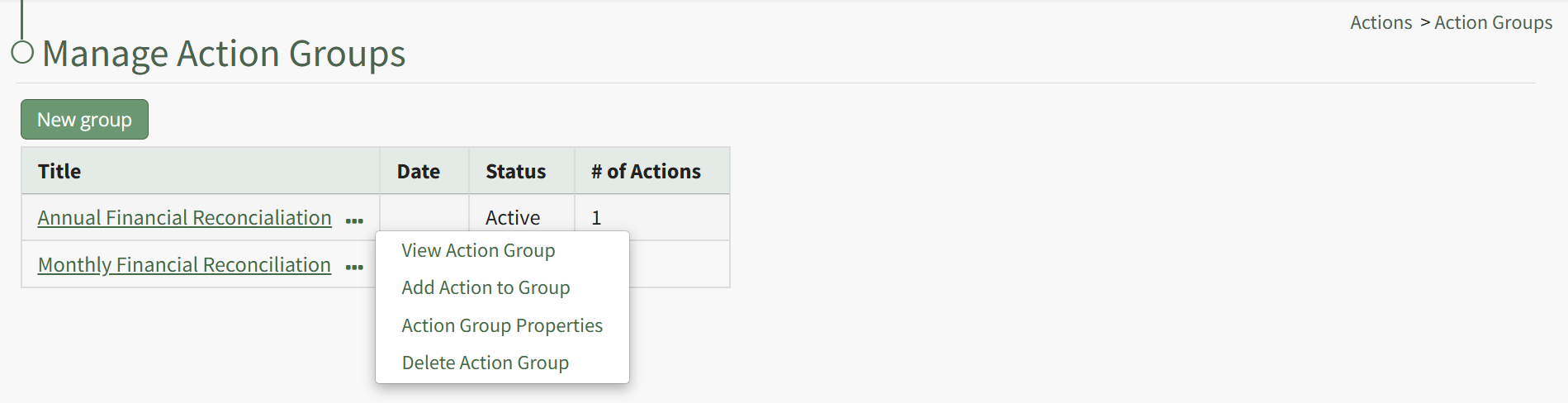
Select “Action Group Properties” from the context menu opening the Action Group Properties Modal.
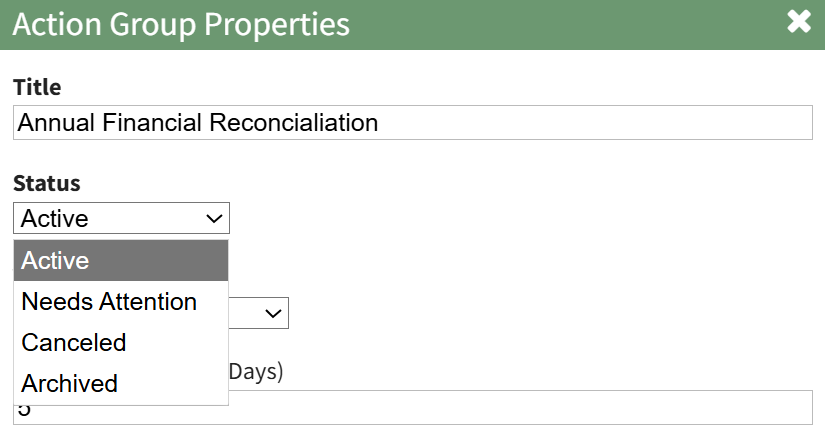
Select the appropriate action group status from the dropdown menu provided and select “Save”.
How To: Edit an Action Group Template
To edit an action group template, select Templates from the Actions Module Main Menu, opening the Manage Templates Page. Selecting the three dot icon to the right of the Action Group Template Title opens the Action Group Template Context Menu.
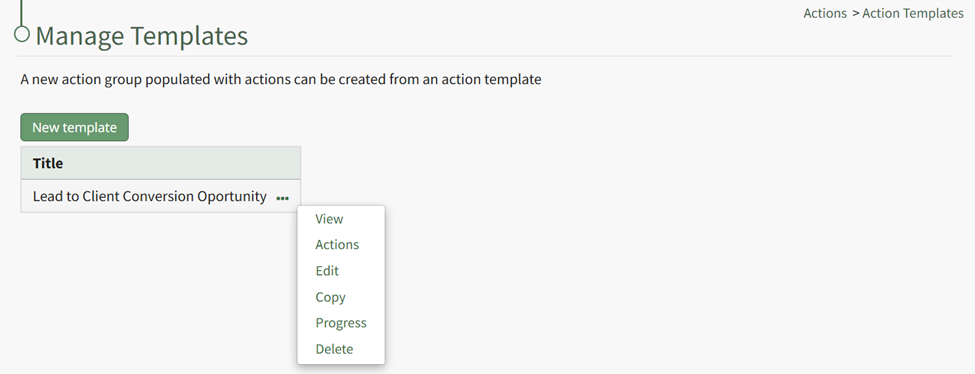
Select “Edit” on the context menu, opening the Edit Template Modal.
Make the desired changes to the action group template fields and select the “Save” button at the bottom of the modal when you are finished so that those changes will be reflected in the system.
How To: Edit an Existing Action
An Action can be edited through the Edit Action Modal or the specified action’s detail page.
To Edit Through the Edit Action Modal
Alter the filter on the Actions Module Action Home Page to see the action you wish to edit. If the actions are displayed by group or due date, expand the section containing the action. Hover your cursor over the individual action you wish to edit displaying the edit action icon to the right of the Action Title.
Click the edit action icon opening the Edit Action Modal.
Make the necessary changes to the action and select save.
A confirmation modal stating “Saved” will appear, and the changes to the action will now be visible.
To Edit Through an Individual Action Page
Clicking the Action Title will open the individual action’s Action Page.
The action can be edited by selecting the edit icon to the right of the action title.
How To: Export Action Groups in a CSV File
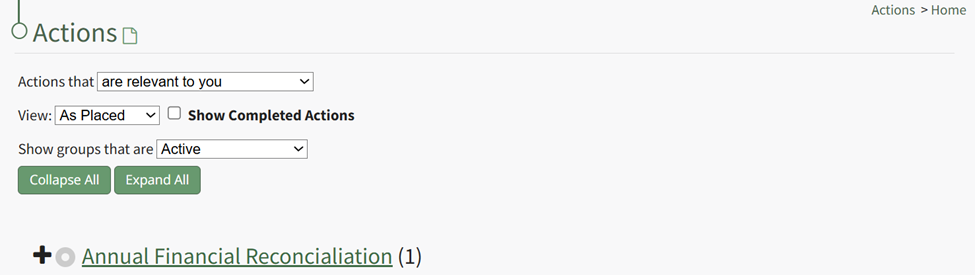
To export all actions within an action group, go to the Actions Home Page and click the title of the action group whose actions you want to export in a .csv file.
This opens the specific action group page. The third icon to the right of the header is the export icon.
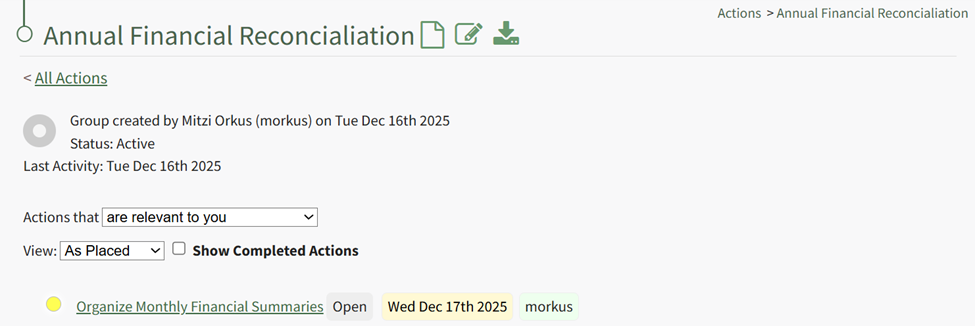
Select the export icon, and the associated actions will be downloaded as a .csv file on your personal device.
How To: Import Bulk Actions
To import new actions in bulk using a CSV file, go to the Actions Module Home Page and hover your cursor over the page icon opening the home page context menu.
Click “New Bulk Action Upload” opening the Import Actions Page.
Clicking the “Download Template” clickable link will automatically download a CSV file to your personal device, with the fields to be filled in for each action, designated by the column headers. The table below explains each of the field inputs.
Import Actions Template Field Explanations | |
Field | Explanation |
Group | If importing actions from the Actions Home Page, input the Title of the Action Group this action should be associated with. If importing actions from within a group (by clicking on the group name), this cell can be left blank because the actions will automatically be added to the group you're uploading to. |
Group Date | The action group date is flexible and can be utilized by your organization as best fit. When action groups are duplicated or created from a template, the action group date can be used as the distinguishing feature. |
Action Number | Action Numbers are used to differentiate each task in a chronological order. Actions within the same Action Group cannot have the same Action Number. You can leave the field blank. You can also input text if you wish to use the alphabet as way to categorize actions. |
Title | Input the title of the action. |
Description | Input the description for the action. |
Source | The Source field is intended to serve as an input for the source of the action. Source is a free text field, allowing you to input any desired response. Customer, Internal Request, a user’s name, role or department are all examples of potential Source field categories. |
Due Date | Input the date the action must be completed by. Action Group Templates allow additional control regarding due dates in the Relative Due Dates section when creating or editing a template. |
Workflow | Select a default workflow (basic, basic with approval, complex) or a customized workflow specific to your organization. How To: Create New WorkflowTo create a new workflow, select Settings under the Action Module on the Main Menu. Open the Workflows tab.
Click the “New Workflow” button opening the New Workflow Title Modal.
Input the title of the new workflow and select the “Save” button.
The new workflow is now visible in the Workflow Title Table. Click the three dot icon to the right of the new workflow opening the Workflow Context Menu.
Select “View Statuses” opening the Manage Statuses Page for your workflow.
Click the “New Status” button opening the New Status Modal.
Input a title and description for the new workflow status. The Special Status dropdown menu displays: Close, Close and Repeat, and Opened. Select which if it applies and select the “Save” button. The status now shows on the Manage Status Page.
Repeat the process to create the next stage of your workflow.
The New Status Modal will now require you to repeat the process, now requiring you to select which step this status is to follow. Repeat the process until your customized workflow has been completed.
|
Status | The status of the action is based on the workflow selected. Basic with Approval: Open, Pending Approval, Completed Actions can be imported with any status and not just the first status of the workflow. |
Date Complete | This field should be blank unless the task is already complete. If the action is already completed, include the completion date here. |
Warn (Days) | Input a numerical value for the number of days ahead of the due date you want users to get a system email alert reminder of the outstanding action (converting from blue to yellow status). |
Assigned To | Input the users (by username or First and Last Name) that you want to assign the action to. Actions cannot be assigned to roles or access levels. An Action can be assigned to multiple people. Use a semicolon to separate individuals assigned to an action. |
Action Approvers | Input the users (by username or First and Last Name) that can approve an action. Action Approvers cannot be assigned to roles or access levels. Multiple users can be designated as an action approver. Use a semicolon to separate individuals assigned to an action. |
Interested Parties | Input the users (by username or First and Last Name) or Certification Roles that are identified as Interested Parties. Multiple users or roles can be designated as an Identified Party. Use a semicolon to separate users/roles. |
Action Response | The information input into the Action Response field will add a comment to the action task when imported, prefaced with “The following response was imported.” |
Before importing your bulk actions, save the file as a UTF 8.
Select the “Choose Files” button and select the saved UTF 8 CSV file to be imported.
Click the “Next Step >” button and confirm that your column headers match the new action form fields and complete the import.
How To: Upload Files to an Action
Files cannot be uploaded through the Edit Action Modal.
To upload a file to an action, click on an action title opening the individual action’s summary page.
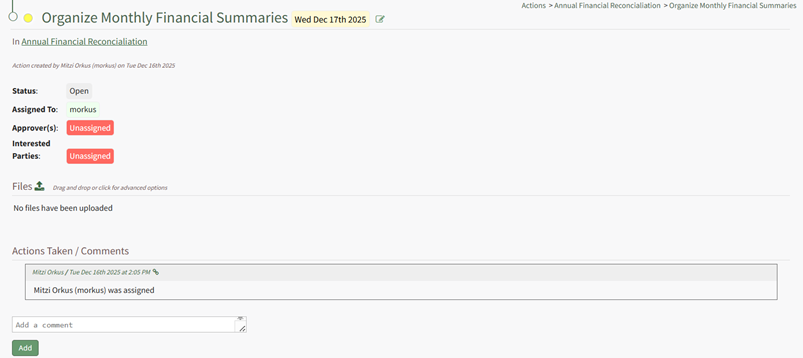
Clicking on the upload icon to the right of the Files Section header opens the Upload File modal.
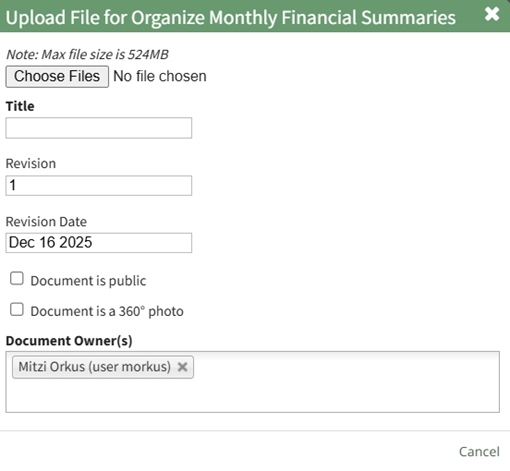
Select the file to be uploaded to the action by clicking the “Choose Files” button and selecting the desired file. Create a Title for the file or click "Use Filename", change the revision number, revision date if needed, and select the checkbox if the document is to be public or if it is a 360-degree photo. Edit document owners if needed.
Select “Save” and the file will now show on the individual action page.
No comments to display
No comments to display