
An Asset's History Page
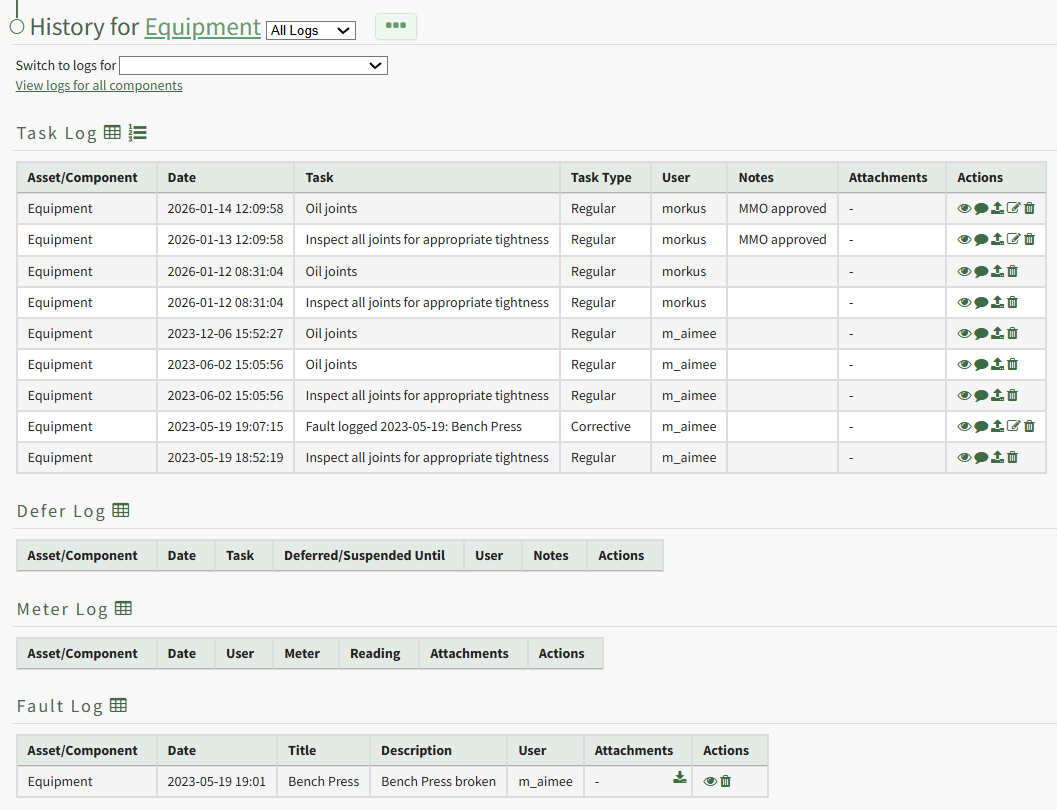
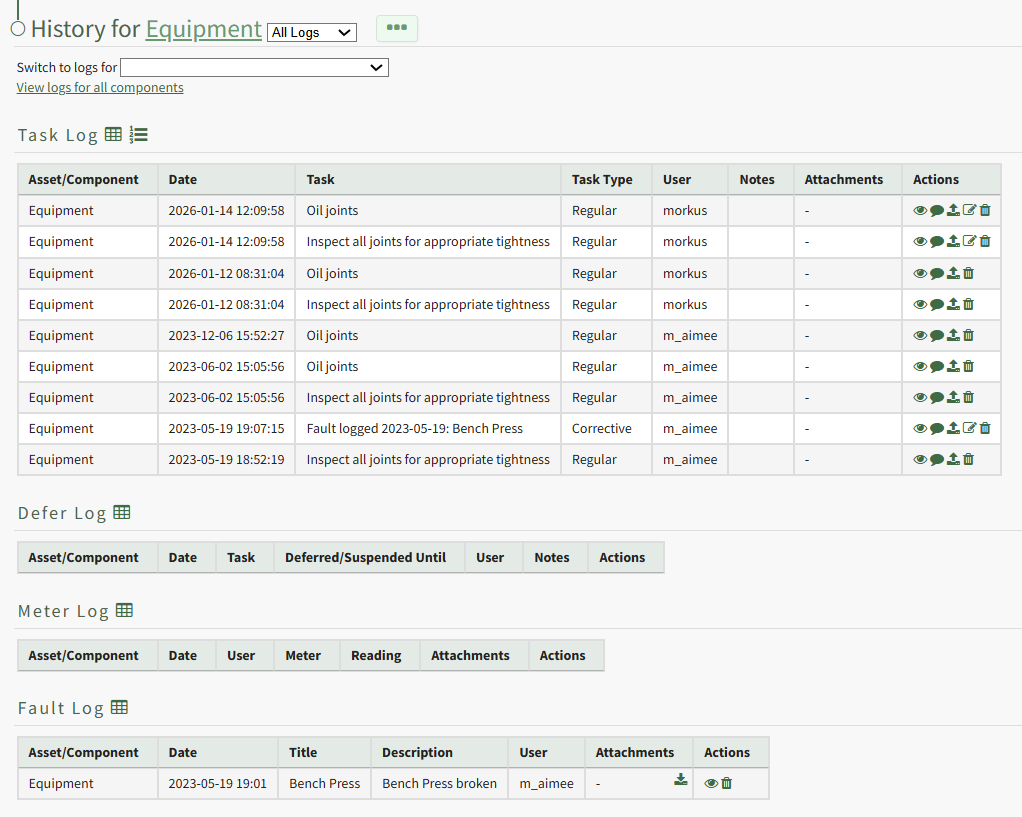
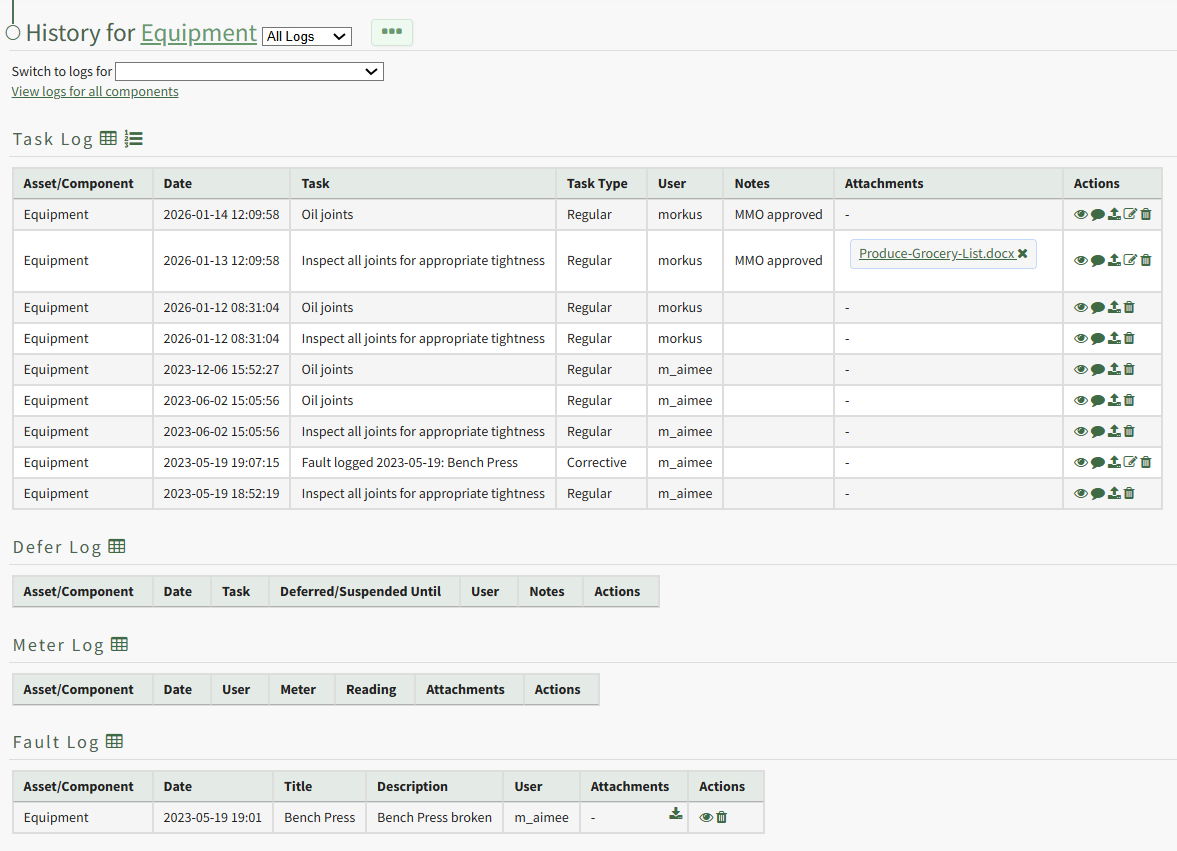
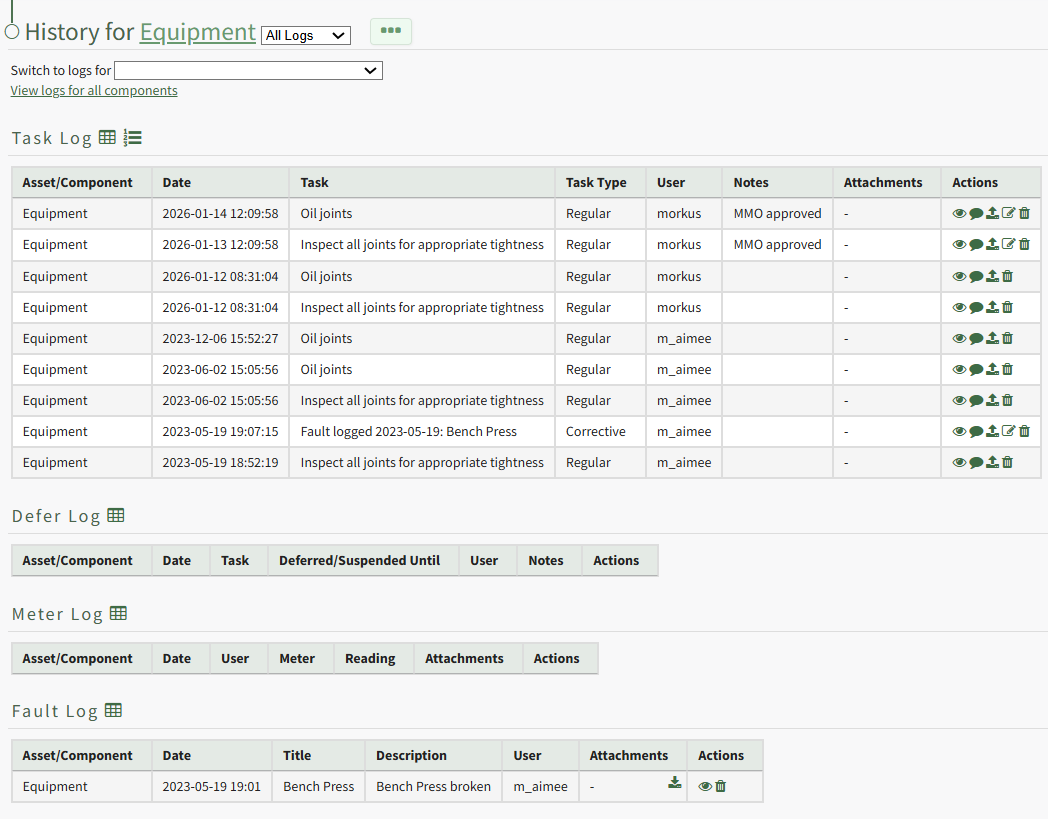
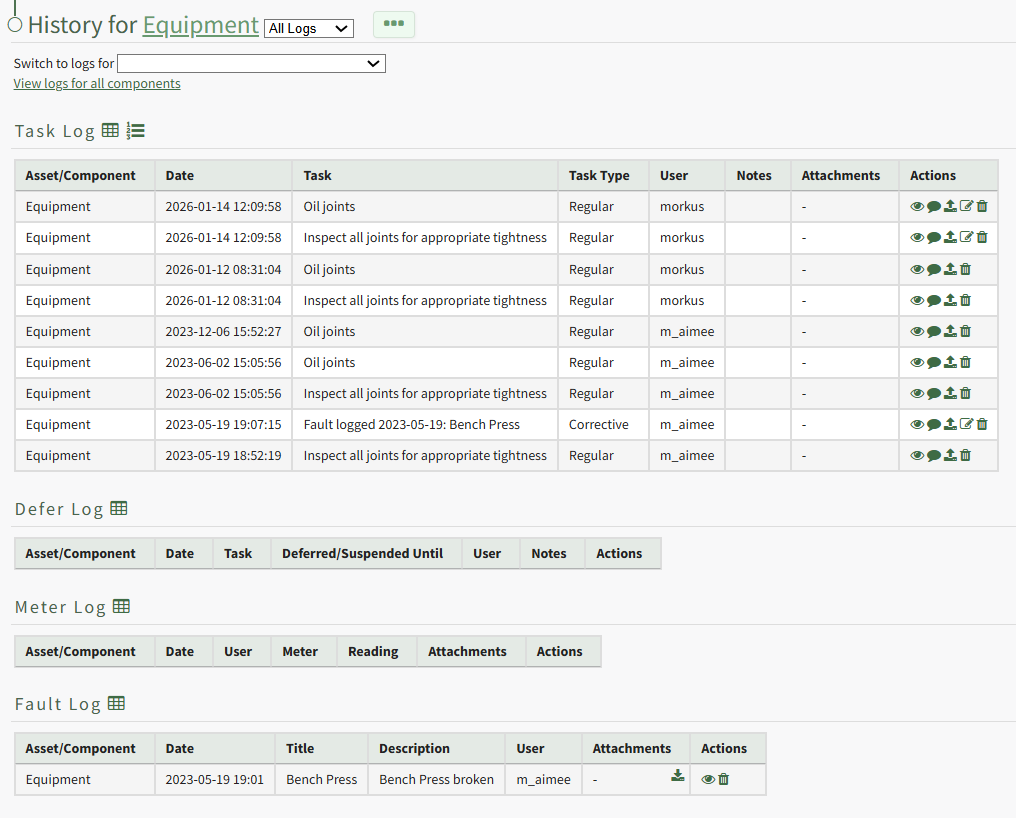
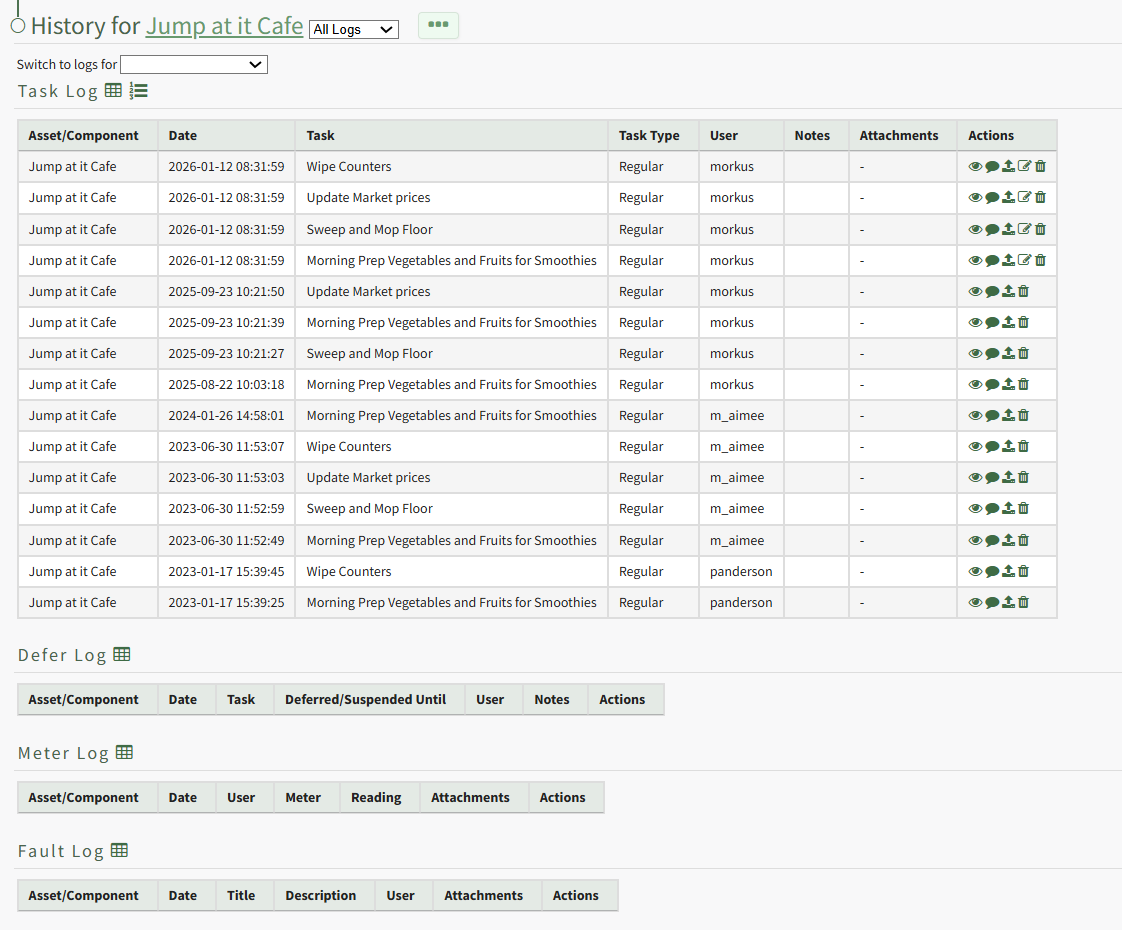
Each asset created in KAStrack will have it's own Asset History Page that contains a task log, defer log, meter log and fault log which can be used to track, access, and manage historical data gained through the use of KAStrack's Asset Module.
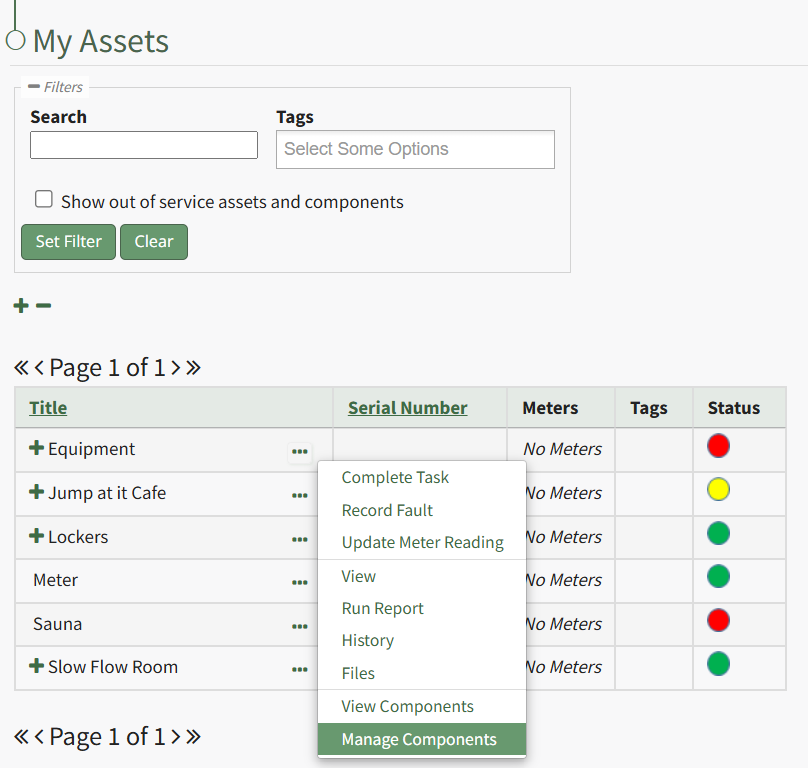
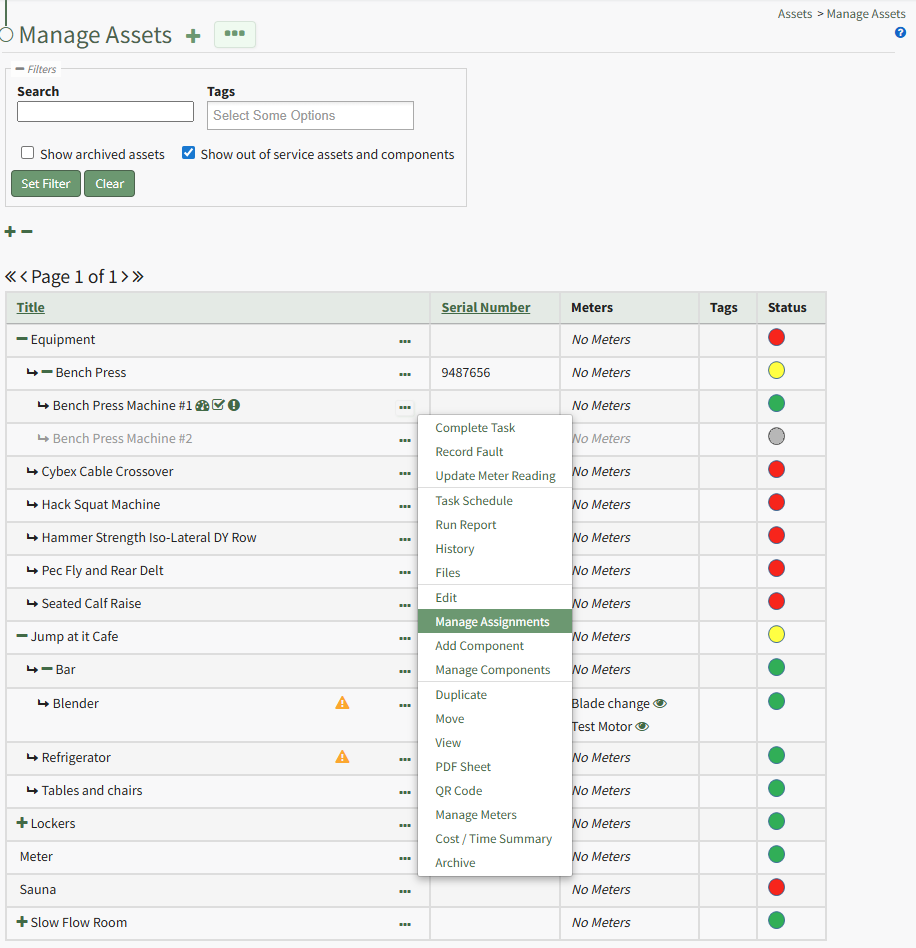
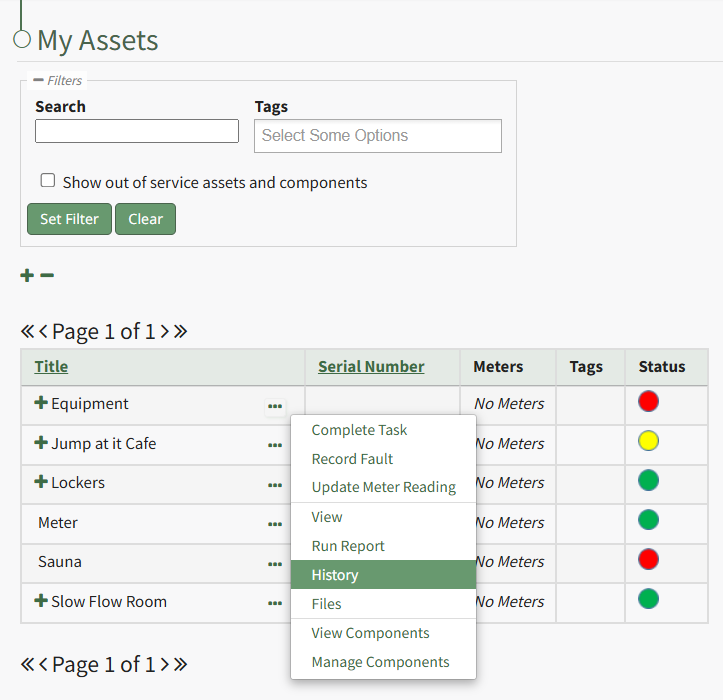
To access the Asset History Page, click the three-dot icon to the right of the asset title whose history you want to view opening the Asset Management Context Menu and select History.
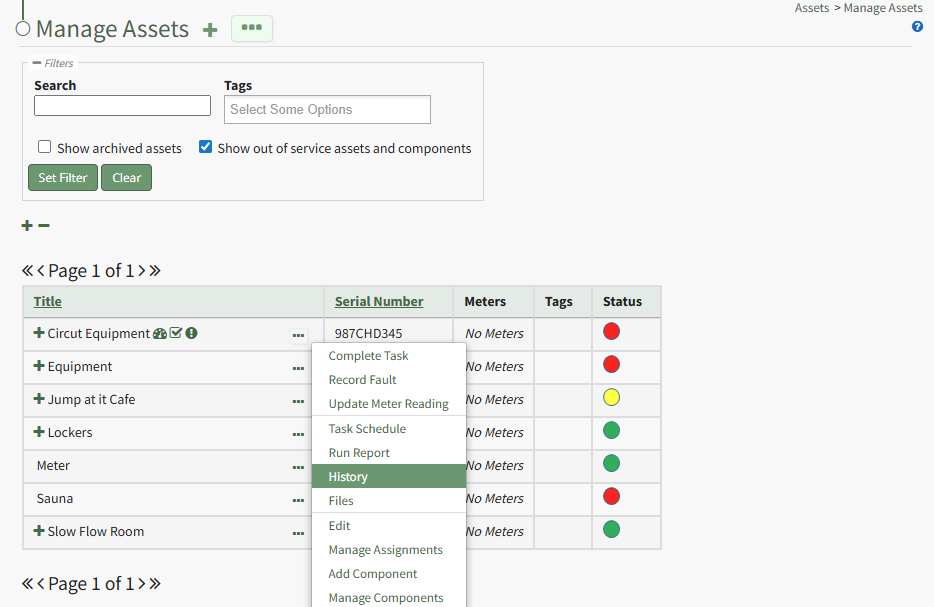
The asset title in the History Page is a clickable link that, when selected, will review back to the Manage Assets Table showing just the specified asset and its components.
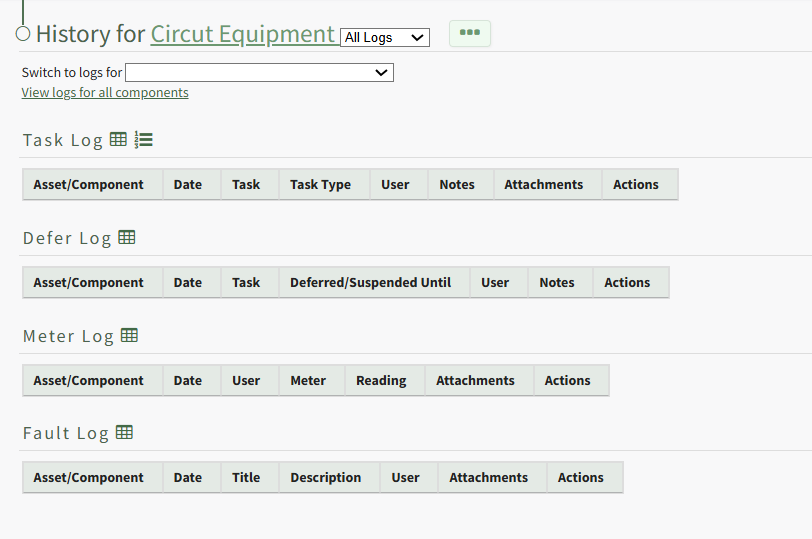
Historical logs for specific components of the asset can be selected on the "Switch to logs for" dropdown menu. The dropdown menu below shown below allows the user to toggle the view between any of the asset’s components and subcomponents.

The three-dot icon to the right of the log view filter opens the History Page Context Menu with options for quick actions. Those options are explained in the table below.
History Page Context Menu Option Explanation Table | |||||||||||||||||||||||||
Option | Explanation | ||||||||||||||||||||||||
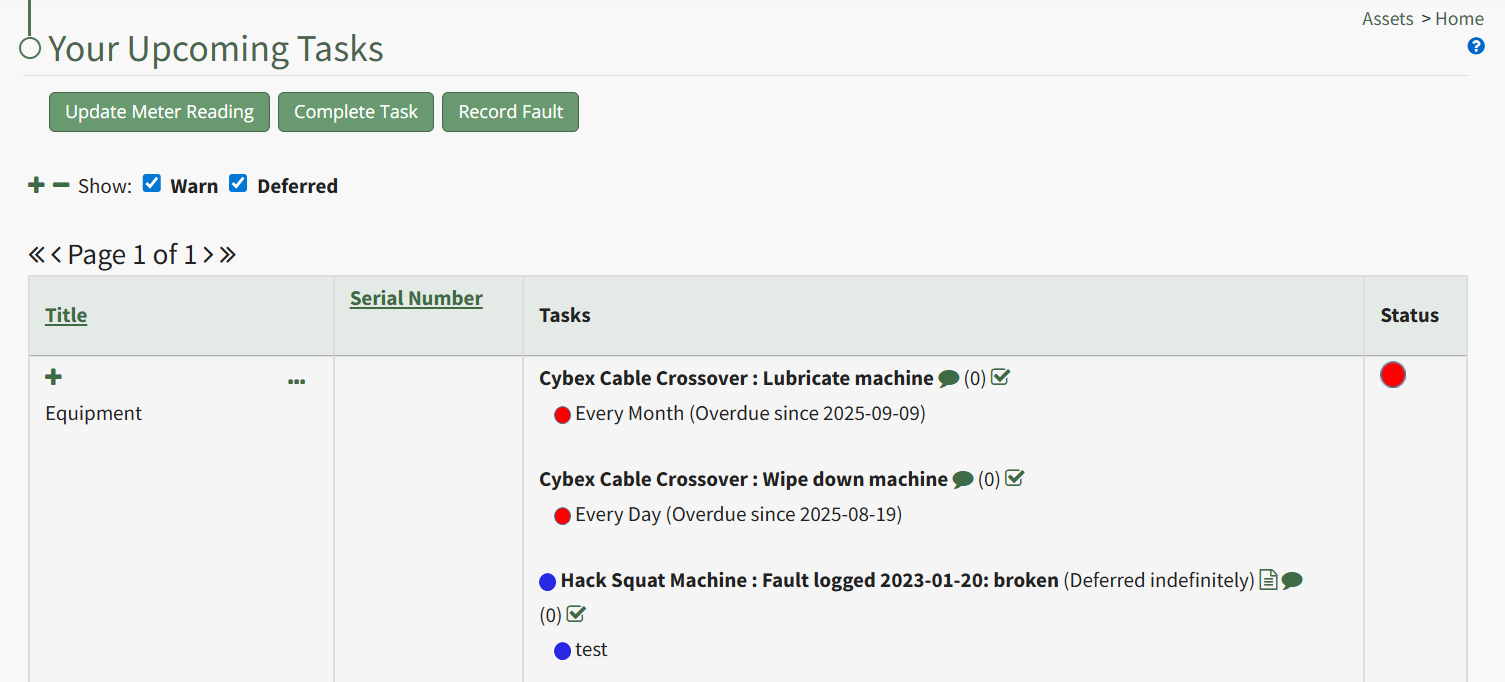
Complete Task | Selecting Complete from the context menu will open a modal that prompts you to select the asset the task is associated with. The completed task(s) can be selected via checkbox on the Complete Task Modal. How To: Log a Task has been CompletedIn order to log that a task has been completed and is current/up to date (a green task status), go to the Upcoming Task Table on the Home Page of the Assets Module. Select the “Complete Task” button from the top of the Your Upcoming Tasks Page.
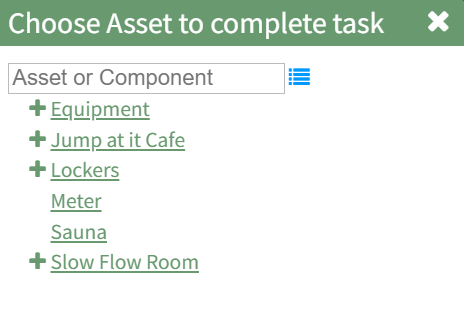
The Choose Asset Modal will prompt you to identify which asset you want to log data for. Click the bulleted list icon to access your assets. Selecting the plus sign “+” icon will expand the components under the asset. Selecting “Complete Task” from the three dot (…) context menu to the right of the asset / component title will open the same modal for the specified asset.
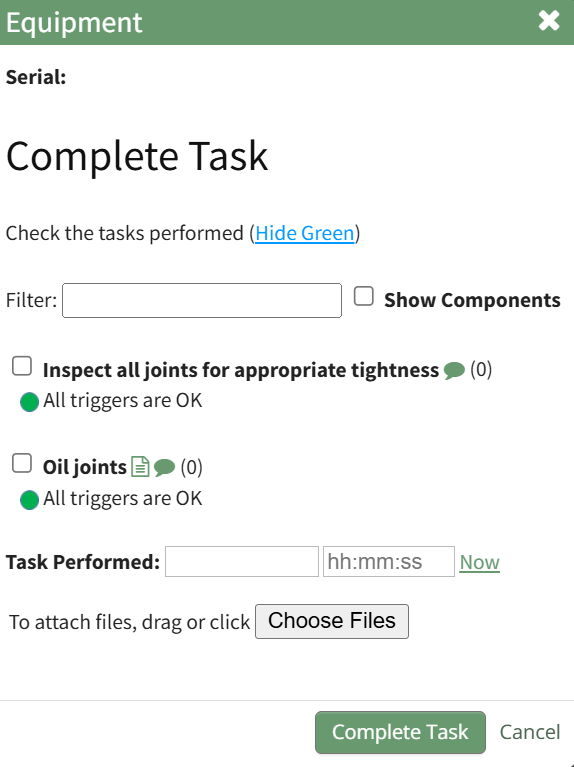
Select the appropriate asset, opening the asset's Complete Task Modal. Click the green View All clickable link to list all tasks associated with the selected asset, including tasks that are current / up to date (green status).
Serial numbers and the asset description will show at the top of the modal. Clicking the “Show Subcomponents” checkbox shows any subcomponent tasks associated with the asset, expanding the modal when selected. Beneath the task in bold is a note that indicates the parameters for the task, referred to as a trigger in KAStrack. Triggers refer to the task behavior, frequency or usage standards that KAStrack will applies to tasks to determine their schedule for completion. To log the task, select the checkbox of the completed task. You can manually enter the date (MM/DD/YYYY format) and time (hh:mm:ss format) that the task was completed, or select “Now” in order to input the current date and time. Click the “Complete Task” button to save the changes and complete the task. Click cancel to return to the Assets Module Homepage. | ||||||||||||||||||||||||
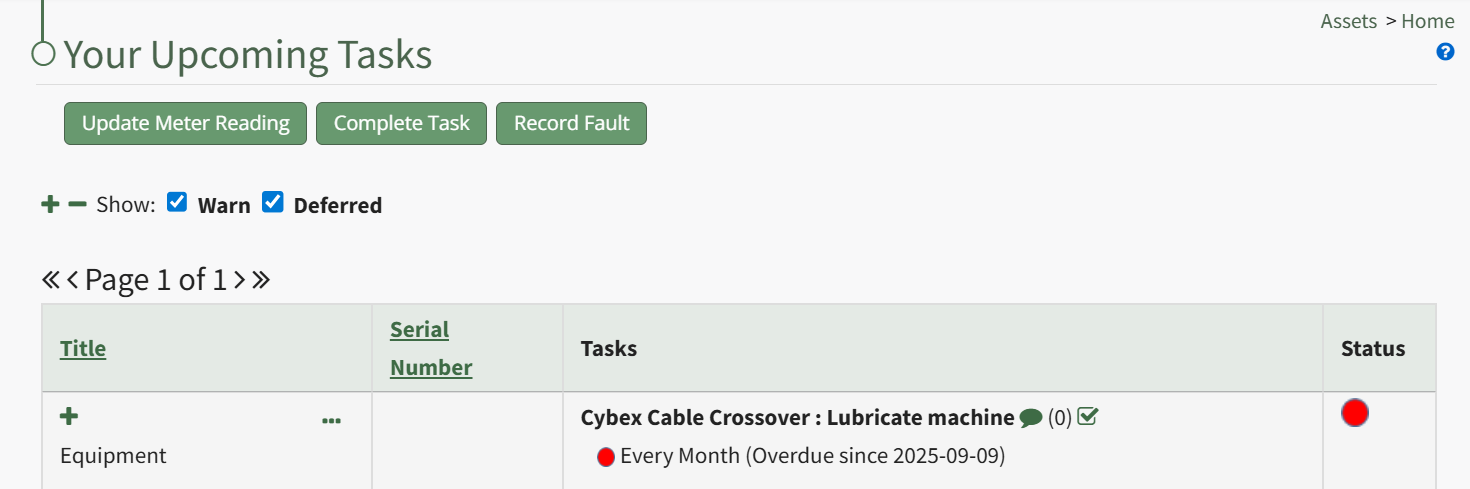
Record Fault | Selecting Record Fault from the context menu will open a modal that prompts you to select the asset the fault is associated with. The fault can then be recorded through the Record Fault Modal. How To: Record a FaultLogging faults allows your company to track trending data in KAStrack by recording incidents and any data associated with this issue/failure. In order to record fault with an equipment issue/failure, go to the Upcoming Task Table on the Asset Module Homepage and select the "Record Fault" button beneath the page header.
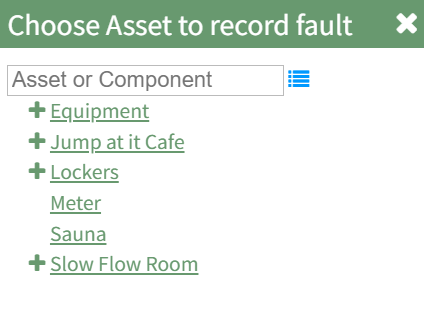
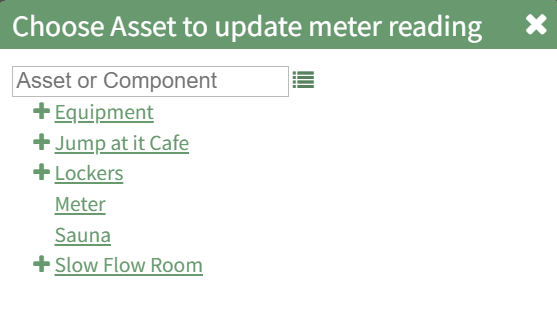
The Choose Asset Modal will prompt you to identify which asset you want to log data for. Click the bulleted list icon to access your assets. Selecting the plus sign “+” icon will expand the components within the Asset. Selecting “Record Fault” from the three dot (…) context menu will open the same modal for the specified asset.
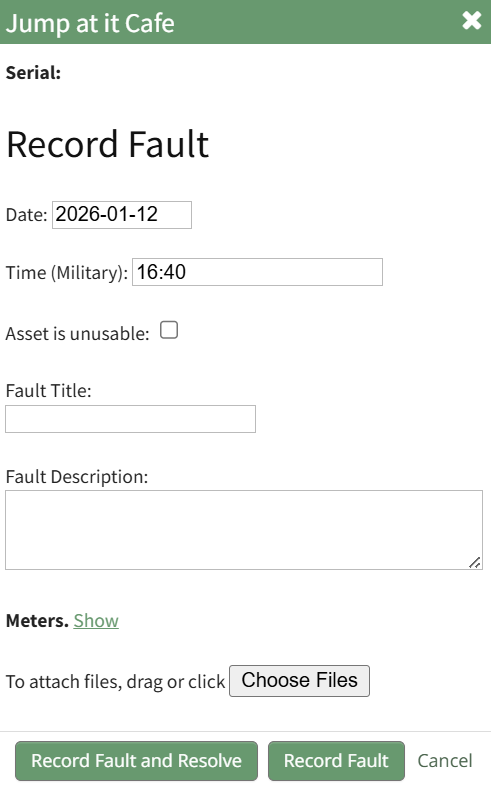
Select the appropriate asset, opening the Record Fault Modal.
Select the “Log Fault” button to record the incident. Select the “Log Fault and Resolve” button to complete two actions in one step: log the issue and indicate that it has been addressed. Click cancel to return to the Assets Module Homepage. | ||||||||||||||||||||||||
Update Meter Reading | Selecting Update Meter Reading from the context menu will open a modal that prompts you to select the asset the meter is associated with. The appropriate meter can then be selected from the Update Meter Reading Modal. How To: Update a Meter ReadingIn order to update an asset's meter reading, go to the Assets Module Home Page opening the Upcoming Tasks Table. Click the “Update Meter Reading" button from the Asset Module Homepage.
The Choose Asset Modal will prompt you to identify which asset you want to log data for. Click the bulleted list icon to access your assets. Selecting the plus sign “+” icon will expand the components within the Asset. Selecting “Update Meter Reading” from the Upcoming Task Table Context Menu will open the same modal for the specified asset.
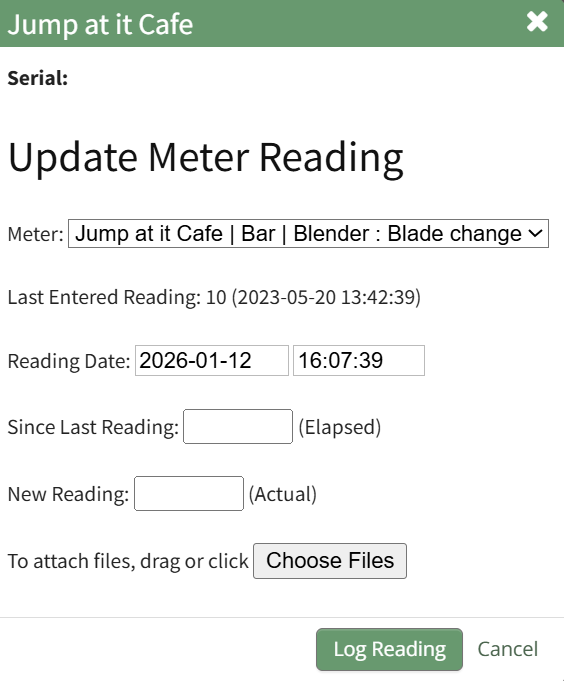
Select the appropriate asset, opening the Update Meter Reading Modal.
The meters associated with the asset/component selected show in a dropdown menu. Select the meter whose meter data you wish to record. The most recent meter reading shows in the Update Meter Reading Modal as the “Last Entered Reading.” KAStrack automatically inputs the current date and time. The user can enter an elapsed value (if preferred) and KAStrack will input the new actual, or the user can input the new meter reading and the elapsed value will be automatically input. Attach any files (if there are checklists, forms, etc.) associated with the meter reading. Select the “Log Reading” button to update the meter usage. Click cancel to return to the Assets Module Homepage. | ||||||||||||||||||||||||
Task Schedule |
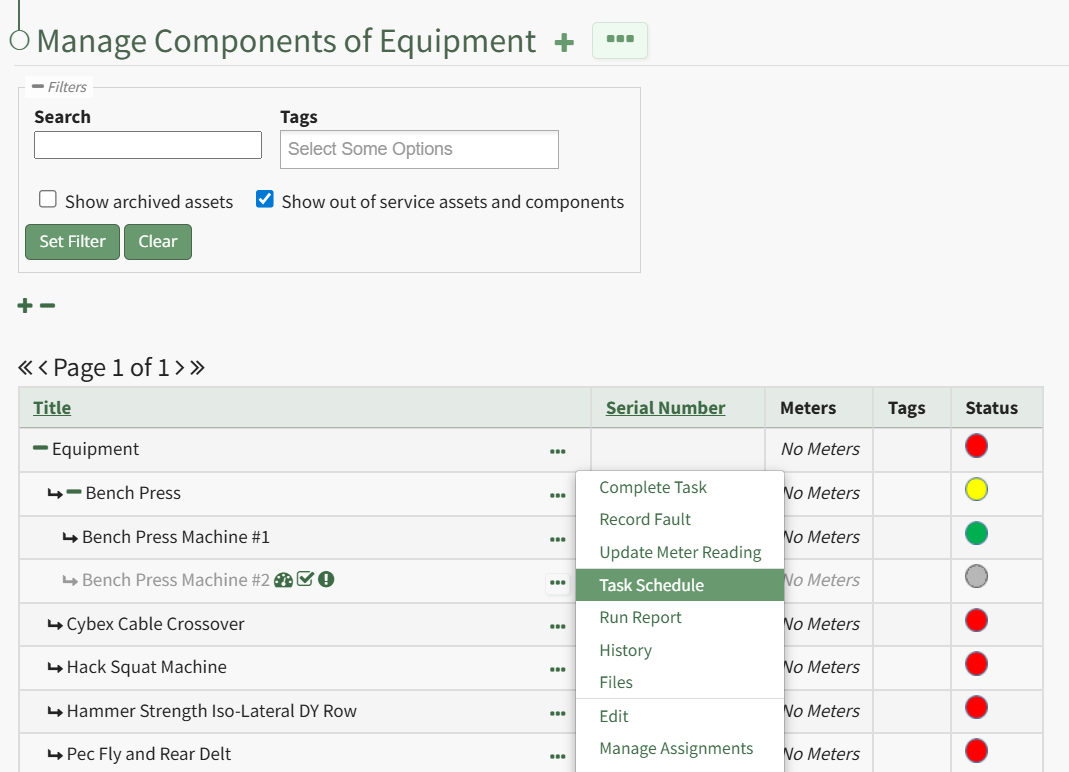
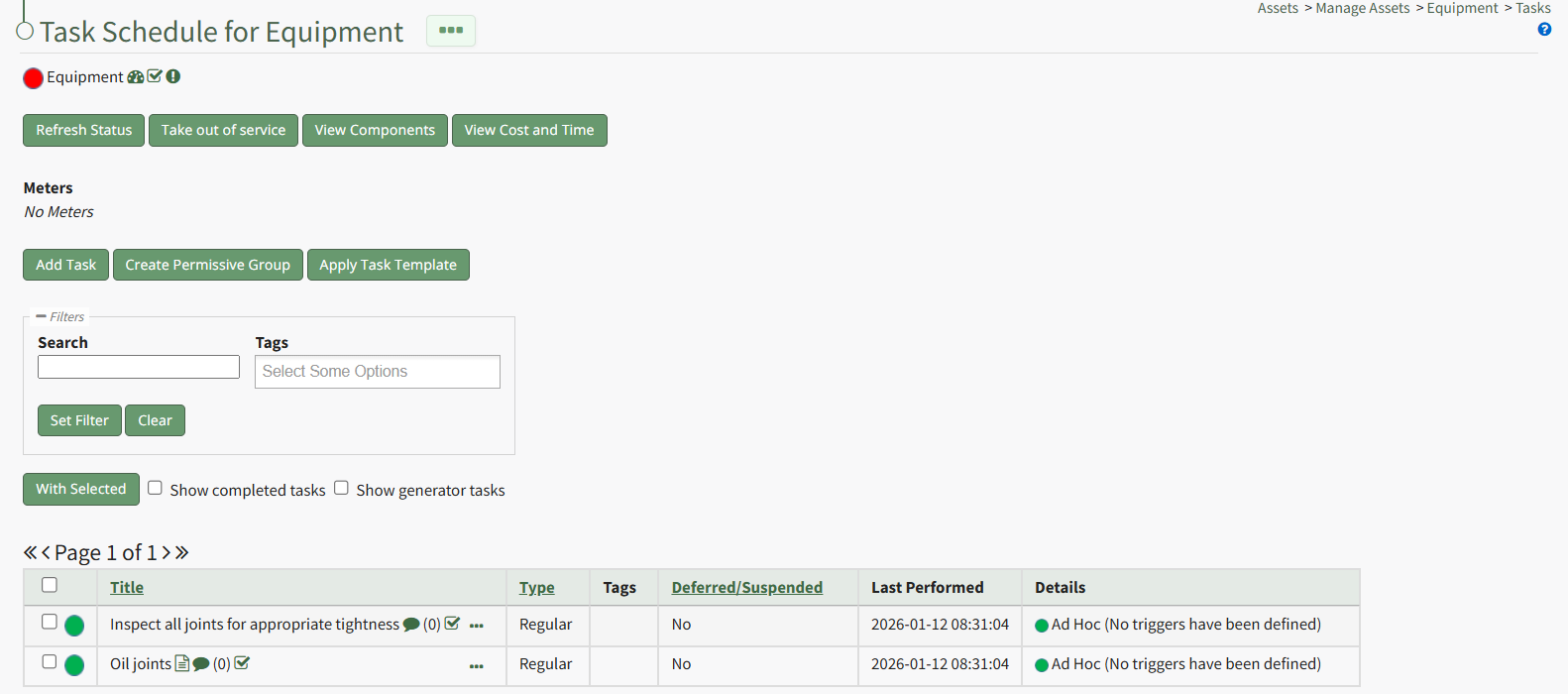
Selecting "Task Schedule" on the context menu opens an asset's Task Schedule, where new tasks can be added and existing tasks can be managed. How To: View an Asset's Task ScheduleTo view an asset's task schedule, open the Manage Assets Page in the Assets Module on the Main Menu. Use filters as needed and identify the asset/component whose task schedule you wish to view. Click the three-dot icon to the right of the asset title opening the Asset Management Context Menu.
Select the "Manage Components" option, opening the Manage Asset Components Page. Select the three-dot icon to the right of the asset/component you wish to add interim notes to and select Task Schedule from the context menu.
This opens the asset's Task Schedule Page.
| ||||||||||||||||||||||||
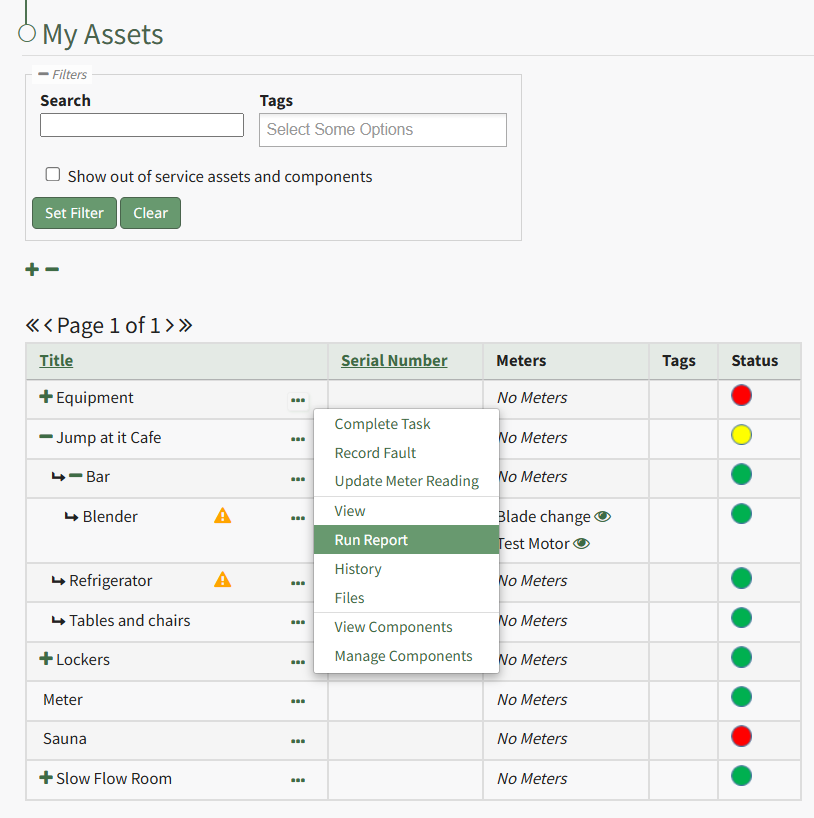
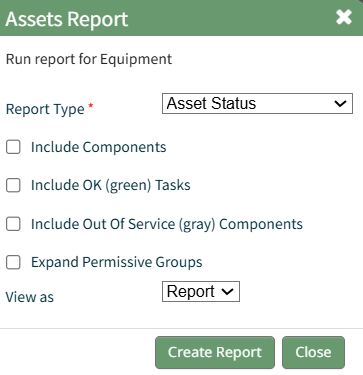
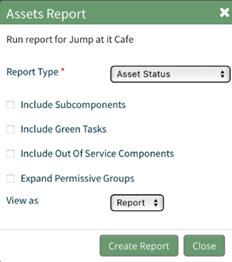
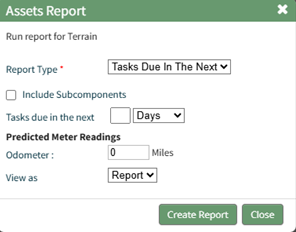
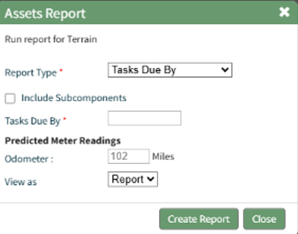
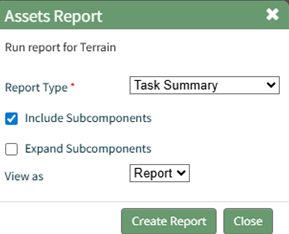
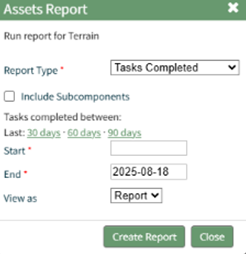
Run Report | Selecting “Run Report” from the context menu open the Assets Report Modal, allowing the user to select between five customizable Asset Reports. How To: Run an Asset ReportTo run an asset report, open the My Asset Page in the Assets Module on the Main Menu. Use filters as needed and identify the asset/component you want to run a report on. Click the three-dot icon to the right of the asset title opening a context menu.
Select "Run Report" from the context menu opening the Assets Report Modal with options for running various types of reports.
Reports can be run for an asset in its entirety, specific components or subcomponents. They type of report can be selected from a dropdown menu on the Assets Report Modal. An explanation of report types is included in the table below.
Select the "Create Report" button after completing the inputs on the Assets Report Modal and the system will generate your report in the viewing preference you selected. | ||||||||||||||||||||||||
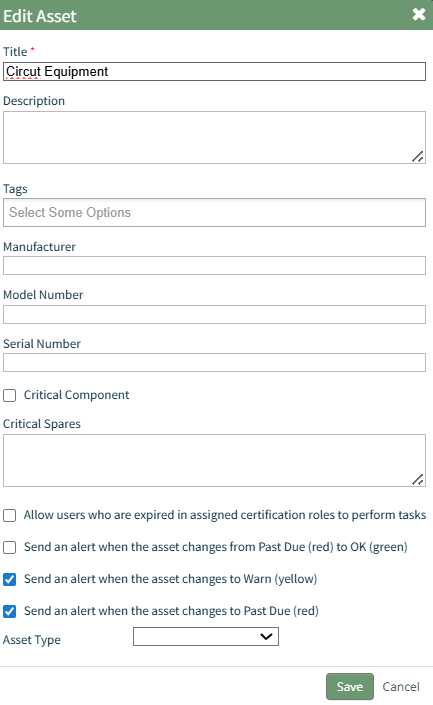
Edit | Select "Edit” from the to open the Edit Asset modal, which allows the user to edit the key information regarding the asset and an asset's alert preferences. How To: Edit an AssetTo edit an asset, open the Manage Assets Page in the Assets Module on the Main Menu. Use filters as needed and identify the asset/component whose details you want to edit. Click the three-dot icon to the right of the asset title opening the Asset Management Context Menu. 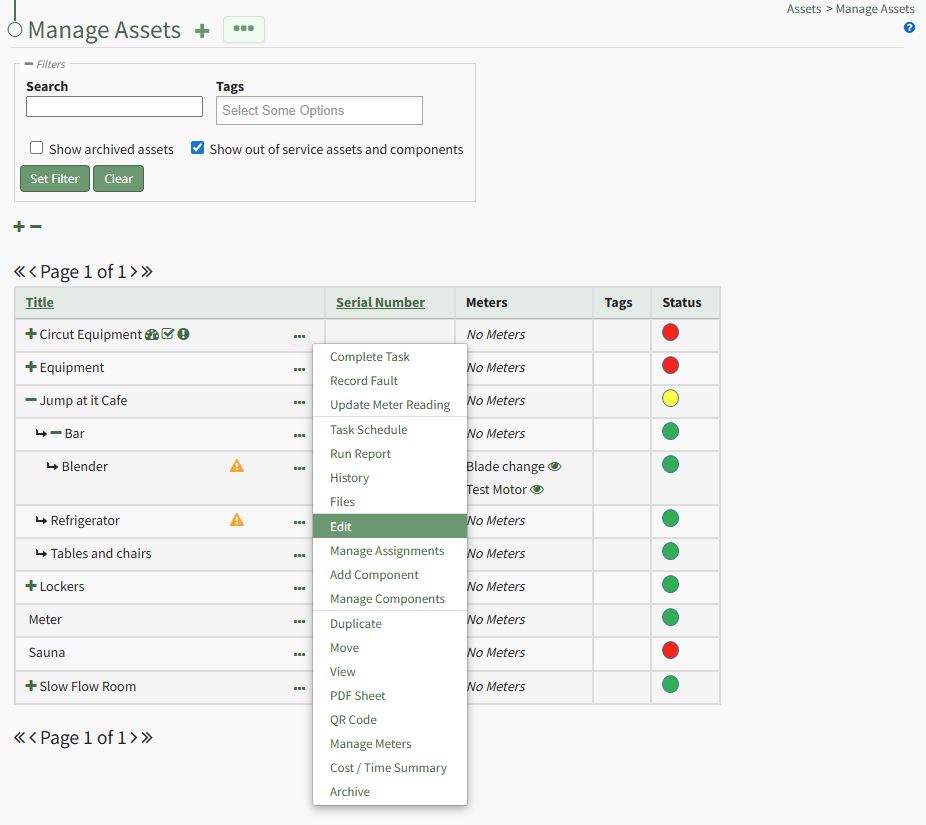
Select "Edit" from the context menu opening the Edit Asset Modal.
Key details about the asset can be added directly from this modal, an asset type can be assigned, and alert preferences can be altered as desired. Click the "Save" after making the desired changes.
A popup confirms that the asset edits have been saved. | ||||||||||||||||||||||||
Manage Assignments | Selecting "Manage Assignments" on the context menu opens the Asset Assignments Modal which allows individual users and certification roles to be assigned to an asset. How To: Assign / Unassign Users and Certification Roles to an AssetTo assign or unassign users and certification roles for a specific asset, open the Manage Asset Pages in the Assets Module on the Main Menu. Use filters as needed and identify the asset/component you want to assign/unassign users and roles to. Click the three-dot icon to the right of the asset title opening a context menu.
Select "Manage Assignments" from the context menu opening the Asset Assignments Modal.
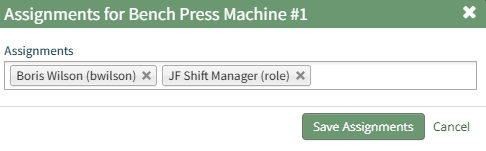
Click in the textbox beneath Assignments and a dropdown menu will allow you to assign the asset to multiple individuals or certification roles.
To unassign an individual, click the X icon to the right of the user name or certification role. When done, select the "Save Assignments" button.
A popup confirms that the asset assignments were saved. | ||||||||||||||||||||||||
Add Component | Selecting "Add Component" on the context menu opens the New Component Modal, which allows new components to be added to an asset. How To: Add Components to a Parent AssetTo add components to an asset, open the Manage Assets Page in the Assets Module from the Main Menu. In order to create components, the parent asset must have already been created. How To: Create a New AssetTo create a new asset, open the Manage Assets Page in the Asset Module and click the plus sign (+) icon to open the New Asset modal.
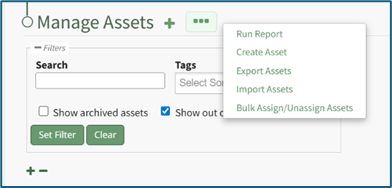
You can also access the New Asset Modal by clicking the three dot (…) icon and selecting “Create Asset” from the context menu.
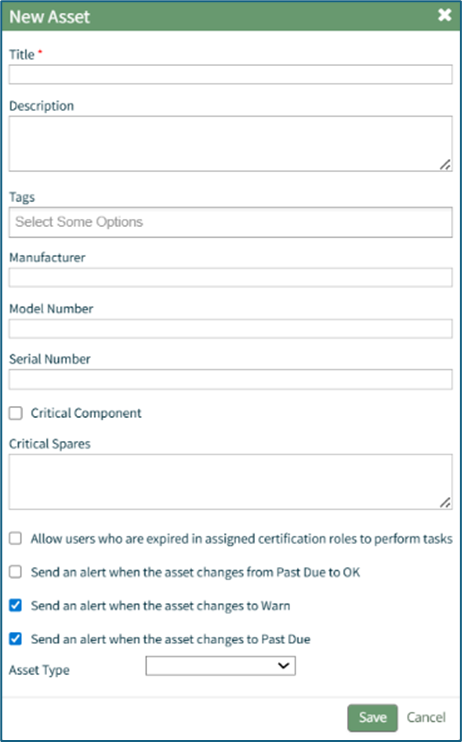
The New Asset Modal requires the entry of an Asset Title. Optional fields include an asset description, tags, manufacturer, model number, serial number, and critical spares. Select the "Critical Component" checkbox to designate this asset as a critical component. This term is subjective for your organization to define. Designating an asset as a critical component will result in a hazard symbol being used as a visual indicator.
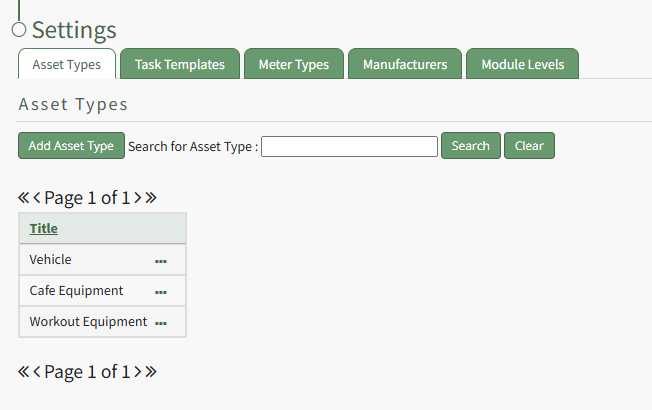
Critical items are prioritized and show separately on the Assets Module Summary. An entire asset is designated as a critical. All components and associated tasks will also have a critical component designation. KAStrack’s default setting prevents users with an expired certification role from performing tasks (such as completing tasks, recording faults, and updating meter readings. Select the “Allow users who are expired in assigned certification roles to perform tasks” checkbox to allow a user to perform tasks regardless of their assigned certification role status. The remaining three checkbox options all relate to asset status alert preferences. The “Send an alert when the asset changes from Past Due to OK” checkbox will send an alert via email to the assigned users when the task status changes from past due (red) to current/up to date (green). The “Send an alert when the asset changes to Warn” checkbox will send an alert via email to all users assigned to the asset when the task status changes from current/up to date (green) to warn (yellow). The “Send an alert when the asset changes to Past Due” checkbox will send an alert via email to all users assigned to the asset when the task status changes to past due (red). Asset Types are customizable to your company and are created on the Settings Page of the Asset Module. Once an asset type has been created, you can select one from the dropdown menu in the New Asset Modal to enable additional filtering capabilities. Asset Types allows your organization to add customizable fields unique to individual assets. How To: Create a New Asset TypeTo create a new asset type, open the Asset Types Tab on the Settings Page of the Assets Module.
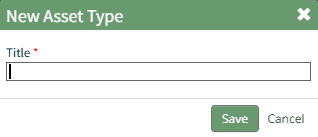
Selecting the “Add Asset Type” button opens the New Asset Type modal.
Input the title of the New Asset Type and click “Save”. The newly created Asset Type will now show in the table on the Asset Type tab on the Settings page and is ready for you to add fields to. How To: Add Fields to an Asset Type{{@496}} Select the “Save” button at the bottom of the New Asset Modal to create the new asset or click “Cancel” to close the modal without saving and return to the Manage Assets Page. After an asset is created, it will appear in the Manage Asset Table where it can be managed.
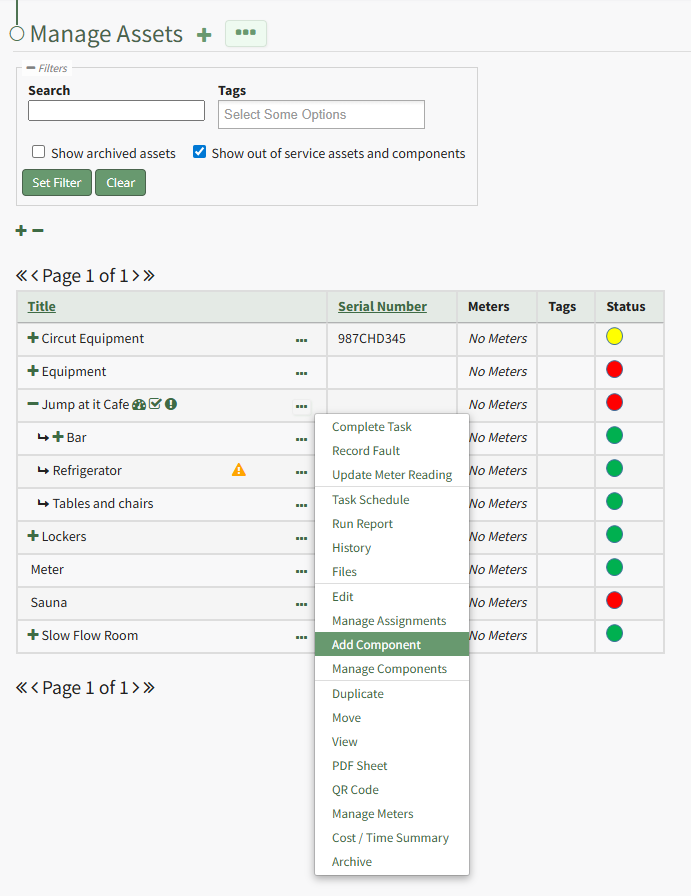
Identify the pre-existing asset (or component) that you would like to place this new component under, and click the three dot (…) icon to the right of the asset name in the Manage Assets table opening the Manage Asset Context Menu. Select "Add Component" opening the New Component Modal.
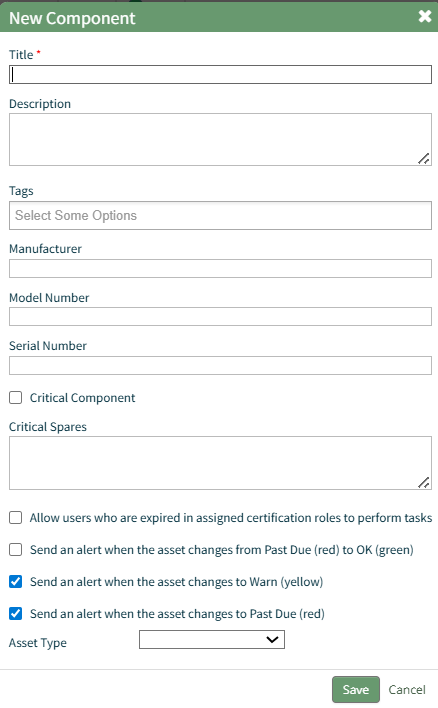
The fields on the New Component modal ask for the same information on the New Asset Modal. For a detailed description of the fields, refer to the How To Create a New Asset page. Select the “Save” button and the component will appear underneath its asset in the Manage Asset table (if the view is expanded) where it can be managed. Subcomponents/additional child components can also be created for components if desired. Select the three dot (…) menu to the right of the component you would like to add an additional subcomponent in the asset’s hierarchal structure.
| ||||||||||||||||||||||||
Manage Components | Selecting “Manage Components” from the context menu will open the Manage Asset Components Page where assets and their components can be managed. Only users with appropriate permissions will have access to this page. | ||||||||||||||||||||||||




The actions associated with the icons used on the History Page of the Assets Module are explained on the table below.
Asset History Page Icon Explanation Table | |
Icon | Associated Action |
| Clicking the spreadsheet icon on the History Page will convert the selected table on the History Page to a datatable. Datatables enable you to sort information by column header. Refreshing the browser will revert back to the original tabular view. |
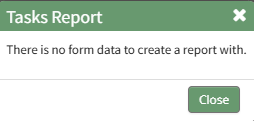
| Clicking the numbered list icon to the right of the Task Log header on the History Page will open a Task Reports Modal that allows you to run a report on the asset tasks. Form data must be present within the table in order for KAStrack to be able to generate a report. How To: Run Reports on Historical Task DataTo run reports on historical task records, open the relevant asset's Asset History Page. How To: View an Asset's Historical LogsAn asset's historical data can be accessed from an asset's History Page. To access an asset's history, go to the My Assets Page in the Assets Module on the Main Menu. Use the filters as needed to identify the access whose history you wish to view, and click the three-dot icon to the right of the asset name. This opens a context menu.
Select "History" from the context menu opening the Asset History Page.
Click the numbered list icon to the right of the Task Log header opening the Tasks Reports Modal.
|
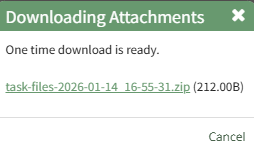
| Clicking the download icon in the Attachments Column of a Log Tab will open the Downloading Attachments Modal, which generates a clickable link when the one-time download is ready. Clicking the download link downloads the attachment associated with a historical log to your personal device. How To: Download Historical Task AttachmentsTo download attachments associated with historical tasks, open the History Page of the relevant asset. How To: View an Asset's Historical LogsAn asset's historical data can be accessed from an asset's History Page. To access an asset's history, go to the My Assets Page in the Assets Module on the Main Menu. Use the filters as needed to identify the access whose history you wish to view, and click the three-dot icon to the right of the asset name. This opens a context menu.
Select "History" from the context menu opening the Asset History Page.
Select the download icon in the Attachments Column of the Log Table opening a Download Attachments Modal that generates a clickable link.
Click the link and the task record's attachment will be downloaded to your personal device. |
| Clicking the eyeball icon in the Actions Column of a Log Table will open the Task Details Module which displays recorded meter readings and files associated with the task. |
| Clicking the dialogue icon opens the Interim Notes Modal which shows all interim notes associated with the historical record.
How To: View Interim Notes Associated with Historical TasksTo view interim notes associated with historical tasks, open the relevant asset's History Page. How To: View an Asset's Historical LogsAn asset's historical data can be accessed from an asset's History Page. To access an asset's history, go to the My Assets Page in the Assets Module on the Main Menu. Use the filters as needed to identify the access whose history you wish to view, and click the three-dot icon to the right of the asset name. This opens a context menu.
Select "History" from the context menu opening the Asset History Page.
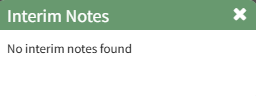
Click the Dialogue Icon in the Actions Column to the right of the task whose interim notes you wish to view opening the Interim Notes Modal which displays any interim notes made on the historical task record.
If no interim notes were made on the task, the modal will indicate that no interim notes were found.
|
| Clicking the upload icon in the Actions Column of the Log Table will open the Upload Files Modal, allowing you to upload files to a logged task after the fact. How To: Upload Files to a Task after a Task has been CompletedTo upload files to a task after a task has been completed, open the relevant asset's History Page. How To: View an Asset's Historical LogsAn asset's historical data can be accessed from an asset's History Page. To access an asset's history, go to the My Assets Page in the Assets Module on the Main Menu. Use the filters as needed to identify the access whose history you wish to view, and click the three-dot icon to the right of the asset name. This opens a context menu.
Select "History" from the context menu opening the Asset History Page.
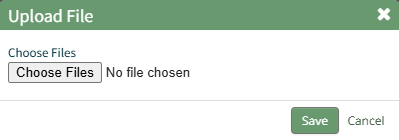
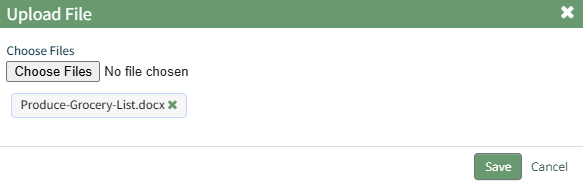
Click the upload icon in the Actions Column to the right of the task record you wish to upload a file to opening the Upload File Modal.
Click the Choose Files button and select the file you wish to upload from your personal device.
Click "Save" after selecting your file.
The file now shows in the Attachments Column of the Log Table. |
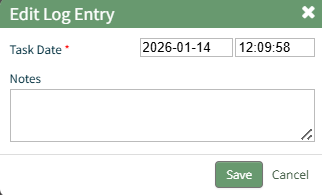
| Clicking the Pencil/Page Icon opens the Edit Log Entry Modal which allows you to change the date and time of task completion and include any notes. How To: Edit the Date / Time of Task Completion for Historical TasksTo edit the date/time of task completion for historical task records, open the relevant asset's History Page.
Select the paper pencil icon in the Actions Column to the right of the historical task record you wish to edit.
This opens the Edit Log Entry Modal where the date and time can be edited and additional notes can be included. Select "Save" and the system returns you to the asset's History Page. |
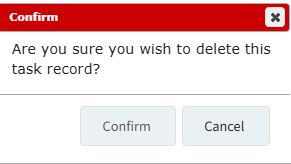
| Clicking the trashcan icon opens the Delete Record Confirmation modal which states, "Are you sure you wish to delete this record?" How To: Delete Historical Task RecordsTo delete the historical records associated with an asset task, open the asset's History Page. How To: View an Asset's Historical LogsAn asset's historical data can be accessed from an asset's History Page. To access an asset's history, go to the My Assets Page in the Assets Module on the Main Menu. Use the filters as needed to identify the access whose history you wish to view, and click the three-dot icon to the right of the asset name. This opens a context menu.
Select "History" from the context menu opening the Asset History Page.
Click the trashcan icon in the Actions Column of the Log Table for the task record you wish to delete open the Delete Task Record Confirmation Modal.
Select "Confirm" and a popup confirms the record has been removed.
It is no longer visible in the log table. |










No comments to display
No comments to display