
My Assets Page
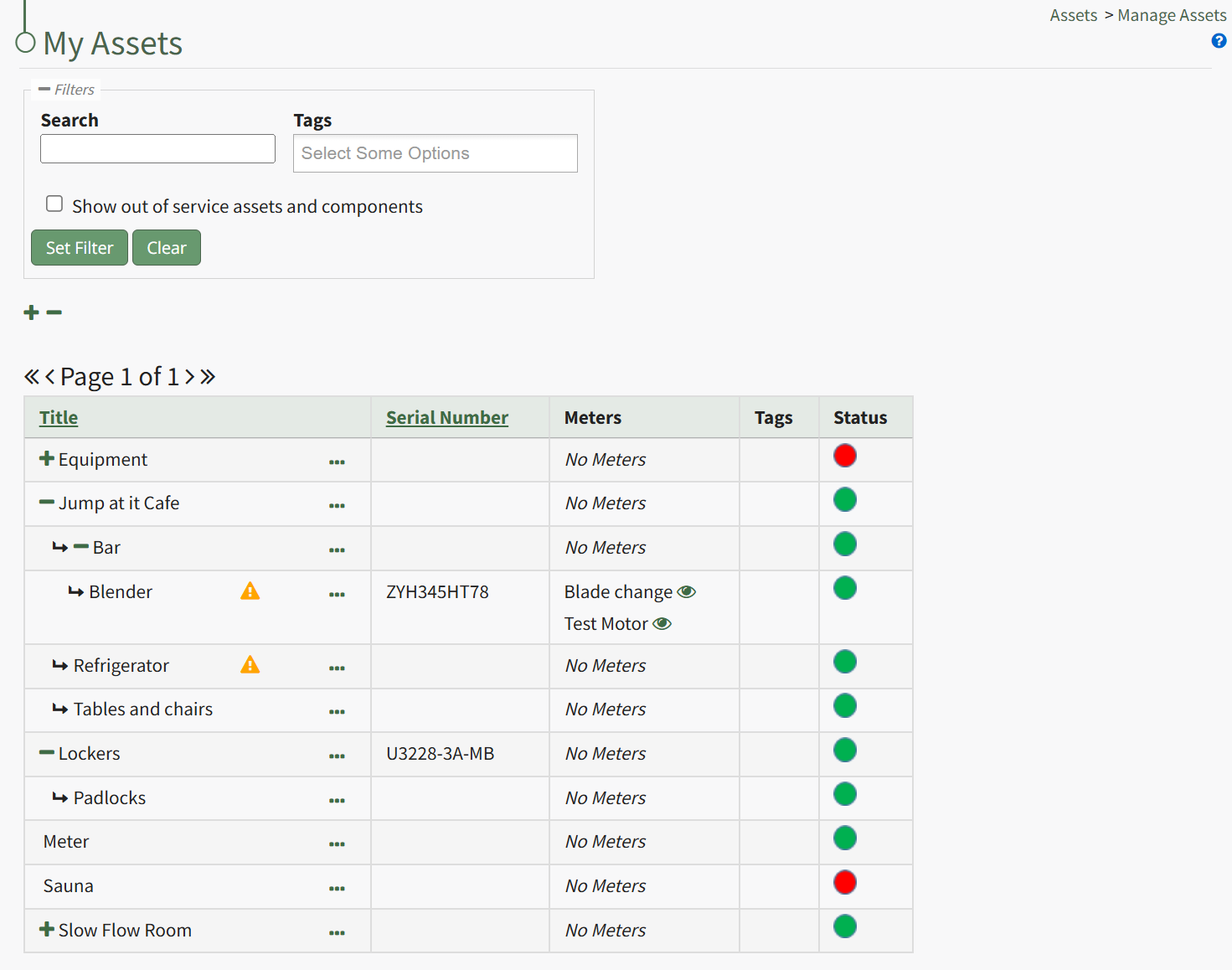
The My Assets Page in the Assets Module displays all assets and all subcomponents that are assigned to the user in tabular format (whereas the Homepage only shows a user’s upcoming tasks). The My Assets Table displays a summary of the asset that includes the title, serial number, meters, tags, and task status. Specific color icons indicate task status in the status column.
Clicking the blue question icon in the right-hand corner opens the Assets Module Status Legend.
The yellow hazard icon that is displayed to the right of an asset/component title indicates that the asset has a critical item designation. This is a subjective designation in KAStrack to be used at the discretion of your company. Critical items are prioritized on shown first on the Asset Module Summary Widget visible on the Dashboard.
A user can search for assets/components via the filter box at the top of the screen. Users can search by asset title or tags.
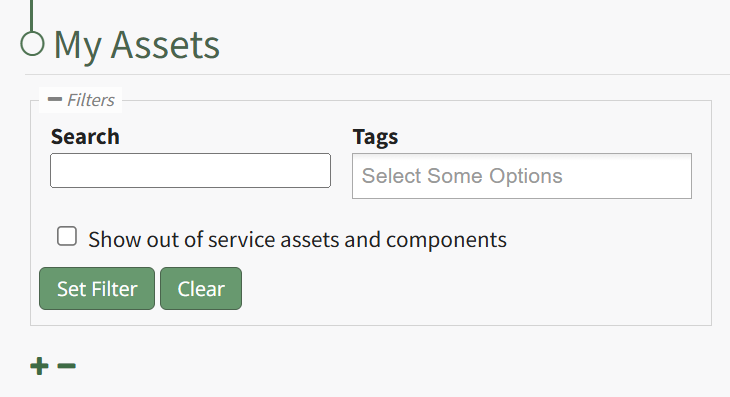
The “Show out of service assets” checkbox in the filter box includes out of service assets and components in a search.
My Assets Page Icon Explanation Table | |
Icon | Associated Action |
| Selecting the plus sign icon expands the view of the Upcoming Task Table, showing tasks organized by subcomponents and not just the parent asset. |
| Selecting the minus sign icon collapses the View of the Upcoming Task Table, grouping all subcomponent tasks together and listing them under the parent asset. |
| When the eyeball icon is visible, it indicates that there is a meter associated with the asset/component. Selecting the eyeball icon opens a View Meter Modal that states any tasks associated with the meter. |


To the right of an asset or subcomponent title in the My Assets table is a three-dot icon that opens to the My Assets Context Menu that when clicked, displayed options available for asset management.
My Assets Context Menu Option Explanations | |
Option | Explanation |
Complete Task | Selecting “Complete Task” on the context menu opens the Complete Task Modal, allowing a user to record necessary details and mark the task as complete. How To: Log a Task has been Completed{{@484}} |
Record Fault | Selecting “Record Fault” on the context menu opens the Record Fault Modal, allowing a user to record any necessary details about a fault. How To: Record a Fault{{@483}} |
Update Meter Reading | Selecting “Update Meter Reading” on the context menu opens the Update Meter Reading Modal, allowing a user to record details regarding a meter reading. How To: Update a Meter Reading{{@482}} |
View | Selecting “View” from the context menu opens an Asset Summary Modal with a summary of the asset/component information. The read-only modal displays details, any associated meters, subcomponents, assignments, and tasks associated with an asset. How To: View an Asset's Summary Modal{{@765}} |
Run Report | Selecting “Run Report” from the context menu open the Assets Report Modal, allowing the user to select between five customizable Asset Reports. How To: Run an Asset Report{{@768}} |
History | Selecting “History” from the context menu opens the Asset History Page with historical entries for the components/subcomponents that were selected. The Asset History Page contains four historical logs - tasks completed, tasks deferred, as well meter and fault logs. How To: View an Asset's Historical Logs{{@766}} |
Files | Selecting “Files” from the context menu will open the Files Modal and display any files attached to the asset or component. Only users with appropriate permissions will be able to access files associated with an asset or task. How To: View Files Associated with an Asset/Component{{@777}} |
View Components | Selecting "View Components" from the context menu will open the Asset Components Page. The context menu options for the Asset Components Page are limited in comparison to the Manage Asset Components Page but enables appropriate access to information for various module levels. How To: View an Asset's Components{{@767}} |
Manage Components | Selecting “Manage Components” from the context menu will open the Manage Asset Components Page where assets and their components can be managed. Only users with appropriate permissions will have access to this page. |