Dispatch: Module Pages
- Dispatch Home Page
- Dispatch Details Page
- Dispatch Pending Approvals Page
- Dispatch Settings: Approver Filtering Tab
- Dispatch Settings: Distribution Lists Tab
- Dispatch Settings: Defaults Tab
- Dispatch Settings: Module Levels Tab
Dispatch Home Page
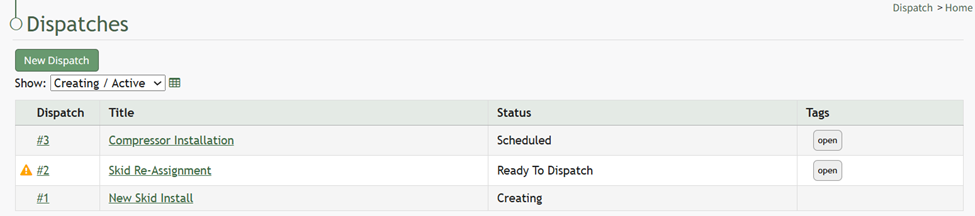
The Dispatch Home Page contains the Dispatch Table, which displays the dispatch's number, title, status, and any tags attached.
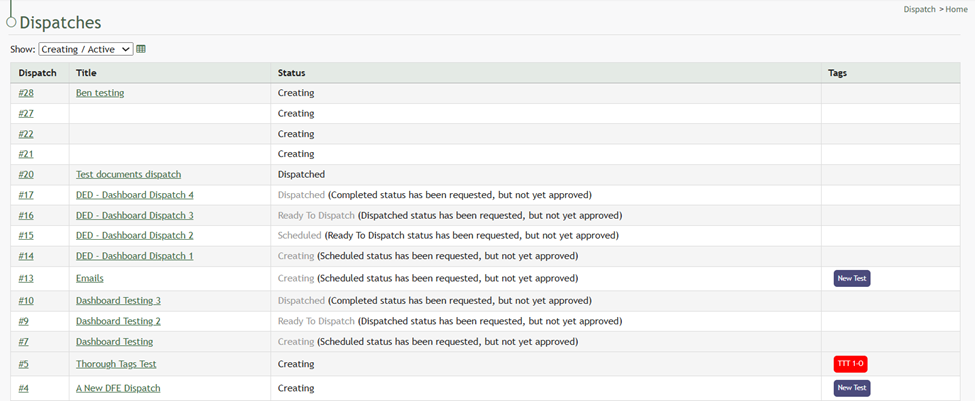
Dispatches shown on the Home Page Table can be filtered by status: all, creating, scheduled, ready to dispatch, dispatched, completed, canceled, and archived.
The spreadsheet icon converts the home page to a datatable, where columns can be sorted alphabetically and searched for easy of use.

Refresh the page to revert back to the original table view.
Clicking the dispatch number or title will lead to the specified dispatch details page.
The dispatch status is grey when the dispatch is pending approval.
Dispatch Details Page
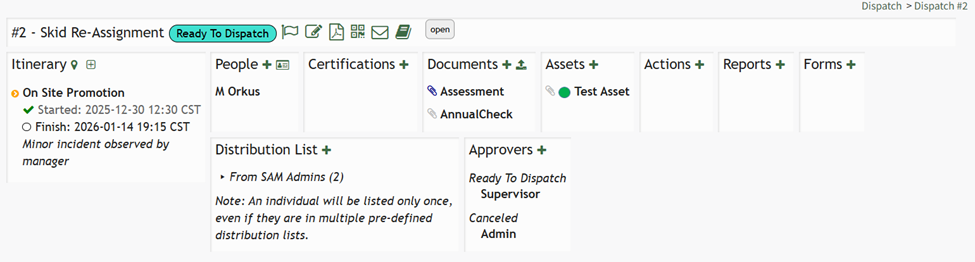
Each dispatch has its own Dispatch Details Page.
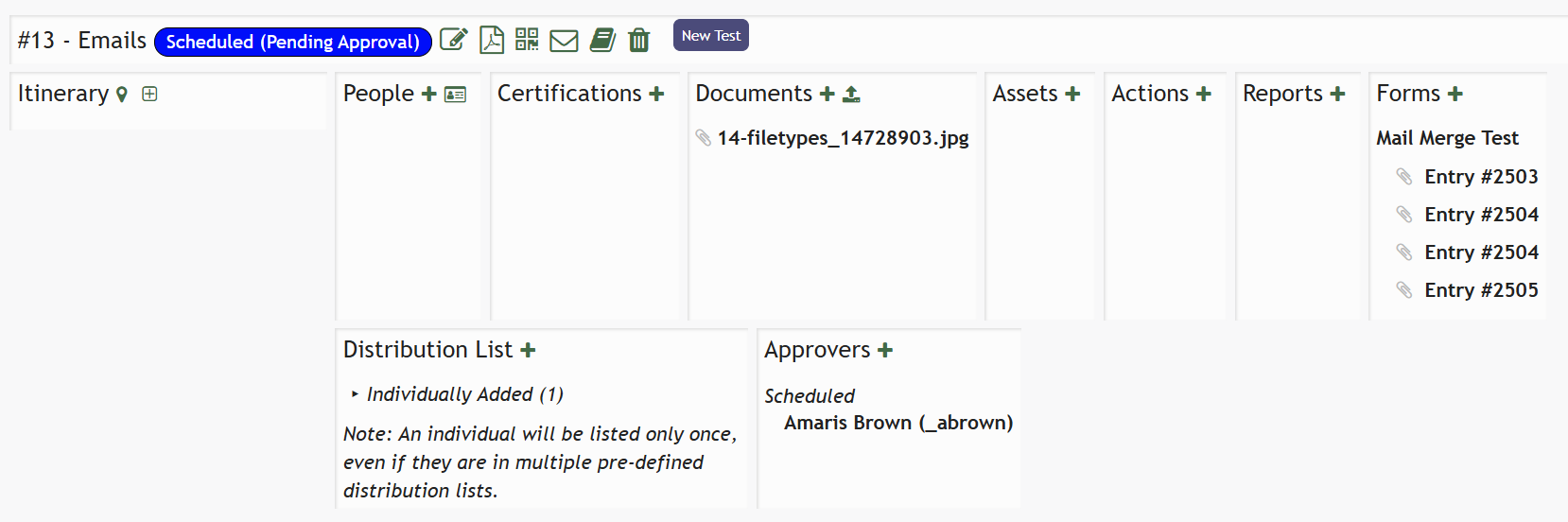
Any relevant users, certification roles, documents, assets, actions, reports or forms can be added to an individual dispatch. This information is compiled to generate the read-only Dispatch Order PDF.
The header of the Dispatch Details Page states the Dispatch ID number, title, and status. If approval is pending for the dispatch, it will be indicated here. To the right of the status are icons that serve as action quick links. Any tags associated with the Dispatch are displayed to the right of the icons.
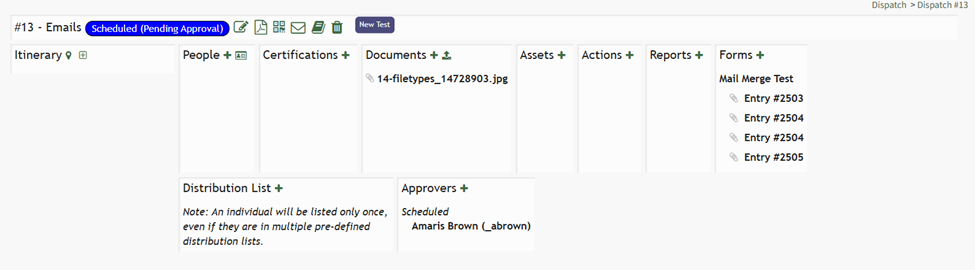
There are ten possible sections that can be utilized on a dispatch. A description of each section is included in the table below.
Dispatch Detail Page Section Explanations | |||||||||||||||||||||||||||||||||||||||||||||||||
Section | Explanation | ||||||||||||||||||||||||||||||||||||||||||||||||
Itinerary | The itinerary section can be added to the dispatch details page, outlining any activity and waypoints associated with the dispatch. How To: Add a Waypoint to an ItineraryTo add a waypoint to a dispatch itinerary, open the specific dispatch whose itinerary you wish to edit by adding a waypoint. Go to the Dispatch Module Home Page and alter the filter view as needed. Click the Dispatch Number or Title to open the specific dispatch page.
This opens the Dispatch Details Page.
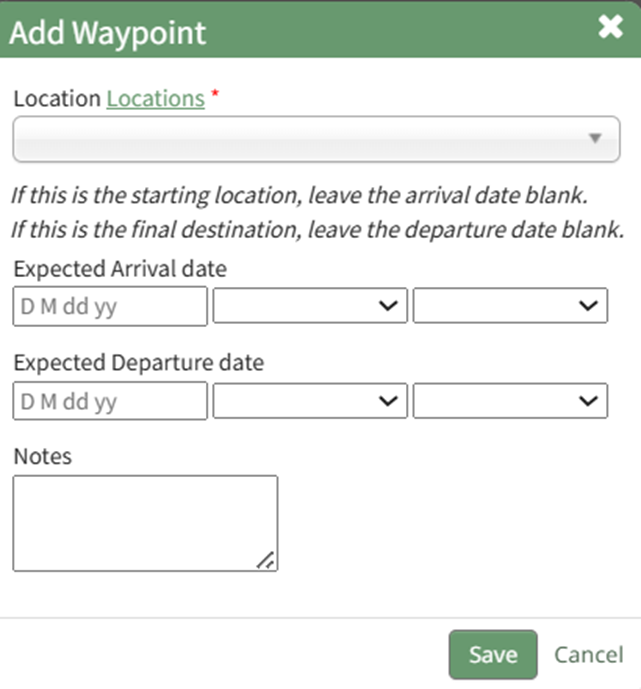
Select the location icon to the right of the Itinerary header, opening the Add Waypoint Modal.
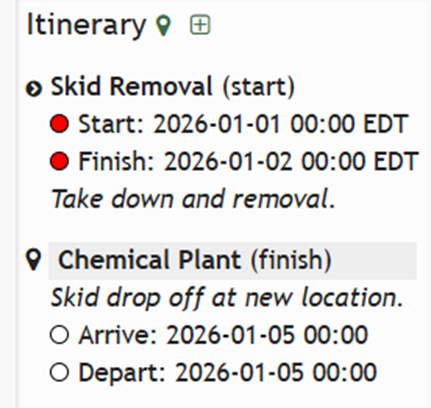
Select a specific location from the Waypoint Location from the dropdown menu or select on-off location if applicable. If one-off is selected, the modal expands so the specific location can input into a textbox. If this waypoint is the starting location or final destination, leave the arrival date / departure date blank. Customized locations can be added to the dropdown menu by clicking the “Locations” clickable link. This opens the Locations Database in the Database Module. WIKI LINK HOW TO ADD DISPATCH LOCATIONS TO THE LOCATIONS DATABASE FORM Include the expected arrival date, departure date, and any notes relevant to the waypoint. Select the “Save” button and the new waypoint now shows on the itinerary.
How To: Add an Activity to a Dispatch ItineraryTo add an activity to the dispatch itinerary, go to the Home Page of the Dispatch Module. Click the ID or Title of the specific dispatch you wish to add an activity to.
This opens the Dispatch Details Page.
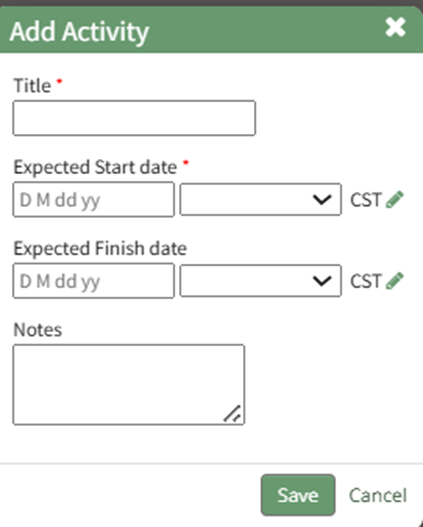
Select the plus sign box icon to the right of the Itinerary header, opening the Add Activity Modal.
Input the new activity title, expected start and finish dates, as well as any relevant activity note. Selecting the pencil icon will allow you to edit time zones as needed. Select “Save” and the Activity now shows on the Dipatch Details Page.
| ||||||||||||||||||||||||||||||||||||||||||||||||
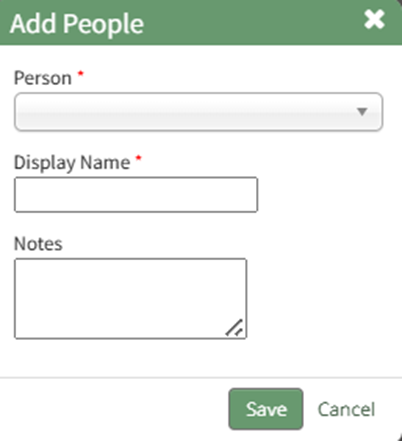
People | People can be added to the dispatch details page. How To: Add People to a DispatchTo add people to a dispatch, open the specific dispatch you wish to add people to. Go to the Dispatch Module Home Page and alter the filter view as needed. Click the Dispatch Number or Title to open the specific dispatch details page.
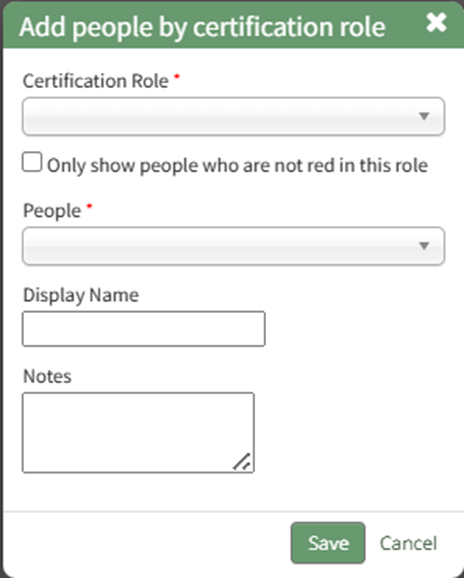
People can be added to a dispatch by selecting the plus sign icon to the right of the People column header or by selecting the identification icon. Selecting the identification icon will allow you to add people through their certification role.
To Add People to a Dispatch through PeopleSelect the plus sign to the right of the People Section header. This opens the Add People Modal.
Select the KAStrack user to be added to the dispatch from the dropdown menu. There is an External User option if the individual is a not a KAStrack user. The system will automatically input the First , Last and username as the Display Name. This can be edited. Add any notes regarding the user being added to the dispatch as desired. Select “Save” and the user is added to the dispatch page. To Add People to a Dispatch through their Certification RoleTo add people to a dispatch through a certification role, select the identification card Icon to the right of the plus sign in the People Column. This opens the Add People by Certification Role Modal.
First, select the desired Certification Role from the dropdown menu. Selecting the checkbox will only show people who are not red in this role. The People associated with the selected certification role will now be displayed in the the People dropdown menu. The Display Name will auto populate with the First, Last, and username of the individual. Edit as desired to indicate the display name and add relevant notes. Select “Save” and return to the dispatch page. Once added, hovering your cursor over the displayed name shows icons that open the individual user page, that edit the People attachment, and delete the People attachment from the dispatch details. | ||||||||||||||||||||||||||||||||||||||||||||||||
Certifications | Certifications that are added to the dispatch details page shows the compliance status of all people that have been added for that particular dispatch with respect to the certification. How To: Add Certifications to a DispatchTo add certifications to a dispatch, open the specific dispatch you wish to add certifications to. Go to the Dispatch Module Home Page and alter the filter view as needed. Click the Dispatch Number or Title to open the specific dispatch details page.
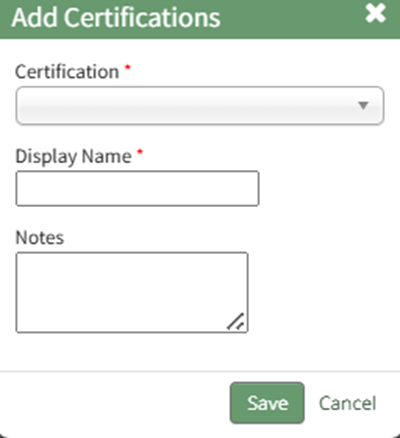
Certifications can be added to a dispatch by selecting the plus sign icon to the right of the Certifications column header.
This opens the Add Certifications Modal.
Certifications can be selected from the dropdown menu. Edit the display name as desired, and add any notes relevant to the certification. Select “Save” and the certification now shows on the dispatch. | ||||||||||||||||||||||||||||||||||||||||||||||||
Documents | Documents can be added to the dispatch details page. How To: Add KAStrack Documents Module Files to a DispatchTo add documents to a dispatch, open the specific dispatch you wish to add documents to. Go to the Dispatch Module Home Page and alter the filter view as needed. Click the Dispatch Number or Title to open the specific dispatch details page.
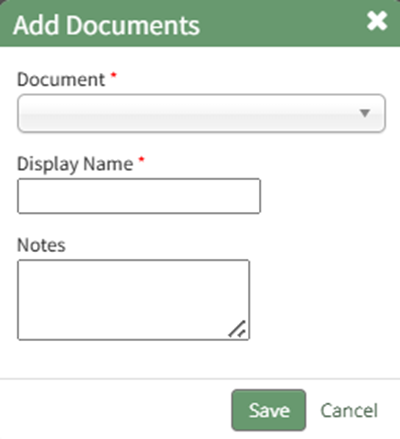
Documents can be added to a dispatch by selecting the plus sign icon to the right of the Documents column header.
This opens the Add Documents Modal.
Select the appropriate document to be added to the dispatch from the drop-down menu. Only the documents the user has permissions to view and access will be displayed. Edit the display name as desired and input any notes regarding the document. Select the “Save” button and the document will be added to the dispatch. Once added, hovering your cursor over the displayed name shows icons that view the attached file, that edit the Documents attachment, and delete the Documents attachment from the dispatch details. | ||||||||||||||||||||||||||||||||||||||||||||||||
Assets | Assets can be added to the dispatch details page. How To: Add Assets to a DispatchTo add assets to a dispatch, open the specific dispatch you wish to. Go to the Dispatch Module Home Page and alter the filter view as needed. Click the Dispatch Number or Title to open the specific dispatch details page.
Assets can be added to a dispatch by selecting the plus sign icon to the right of the Assets column header.
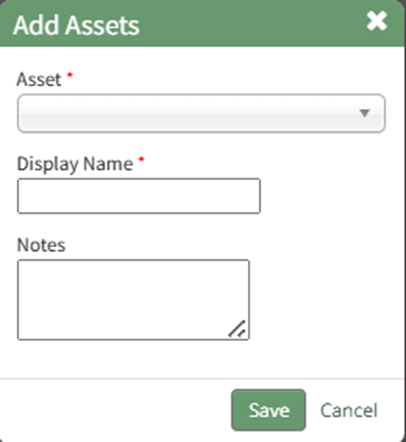
Selecting the plus sign icon opens the Add Assets Modal.
Select the asset you wish to add to the dispatch from the dropdown menu. Edit the display name if desired. Include any notes relevant to the asset and select the “Save” button. The asset will now show on the Dispatch Details Page. | ||||||||||||||||||||||||||||||||||||||||||||||||
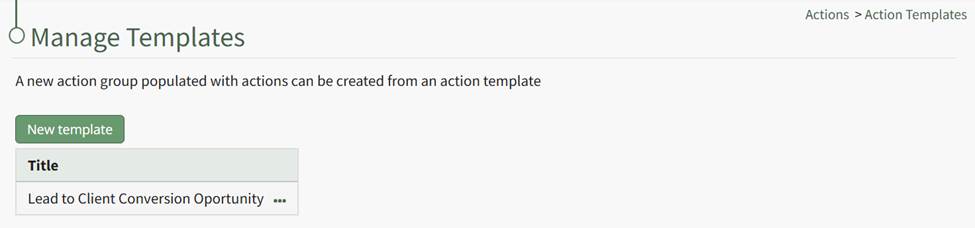
Actions | Actions can be added to the dispatch details page. How To: Add Actions to a DispatchTo add actions to a dispatch, the action group template being linked to the dispatch must already have been created. How To: Create a New Action Group TemplateTo create a New Action Group Template, select Templates from the Actions Module Main Menu, opening the Manage Templates Page.
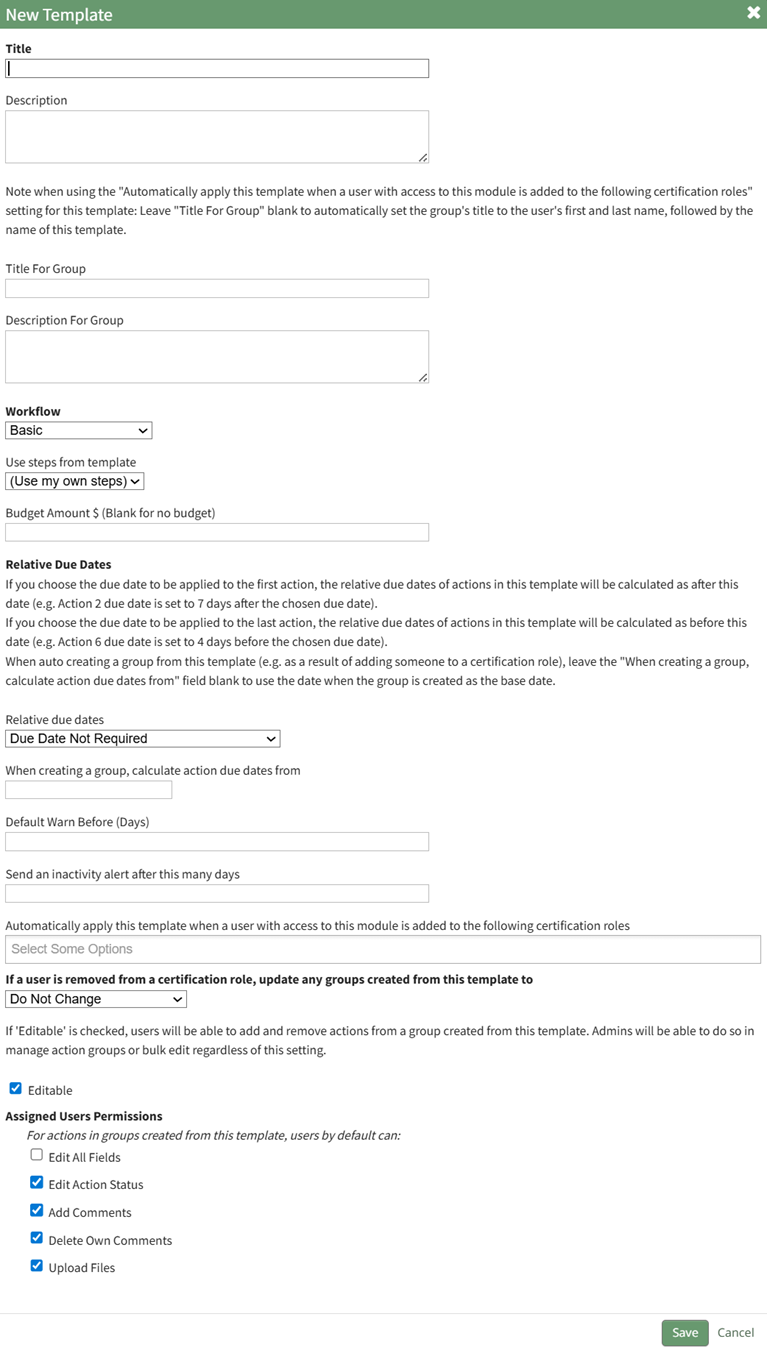
Select the “New Template” button, opening the New Template Modal.
There are several fields associated with the creation of an action group template.
After inputting the appropriate information into the modal, select “Save”. The new Action Group Template will be displayed on the Templates Page in the Action Group Templates Table. To add actions to a dispatch, open the specific dispatch you wish to add an action to. Go to the Dispatch Module Home Page and alter the filter view as needed. Click the Dispatch Number or Title to open the specific dispatch details page.
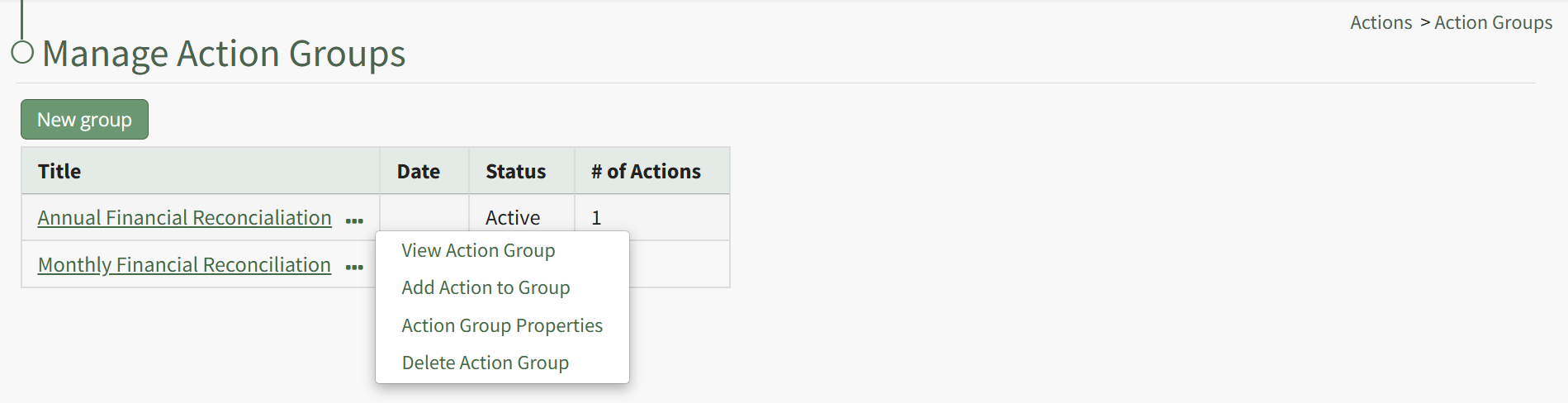
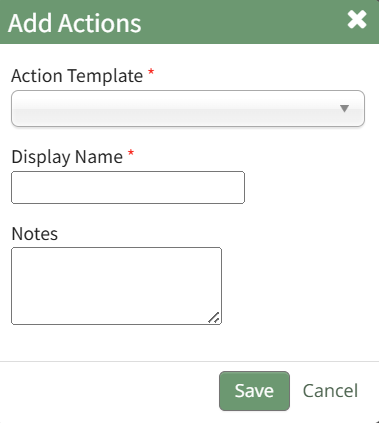
Actions can be added to a dispatch by selecting the plus sign icon to the right of the Actions section header. Selecting this icon opens the Add Actions Modal.
Select the appropriate pre-created action group template from the drop-down menu. Input the name you want displayed on the dispatch details page. Include any notes relevant to the asset and select the “Save” button. The action group will now show on the Dispatch Details Page. | ||||||||||||||||||||||||||||||||||||||||||||||||
Reports | Reports can be added to the dispatch details page. How To: Add Reports to a DispatchTo add reports to a dispatch, open the specific dispatch you wish to add reports to. Go to the Dispatch Module Home Page and alter the filter view as needed. Click the Dispatch Number or Title to open the specific dispatch details page.
Reports can be added to a dispatch by selecting the plus sign icon to the right of the Reports column header.
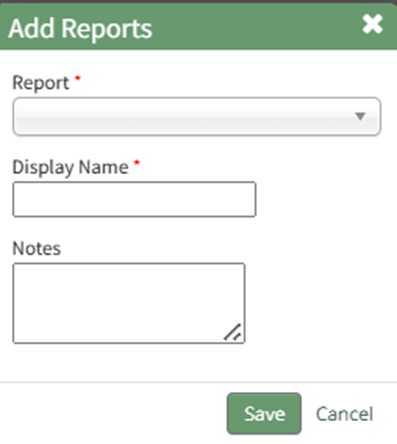
Selecting the plus sign icon to the right of Reports opens the Add Reports Modal.
Select the report you wish to add to the dispatch from the dropdown menu. Edit the display name if desired. Include any notes relevant to the report and select the “Save” button. The report will now show on the Dispatch Details Page. | ||||||||||||||||||||||||||||||||||||||||||||||||
Forms | Forms can be added to the dispatch details page. How To: Add Forms to a DispatchTo add forms to a dispatch, open the specific dispatch you wish to add forms to. Go to the Dispatch Module Home Page and alter the filter view as needed. Click the Dispatch Number or Title to open the specific dispatch details page.
Forms can be added to a dispatch by selecting the plus sign icon to the right of the Forms column header.
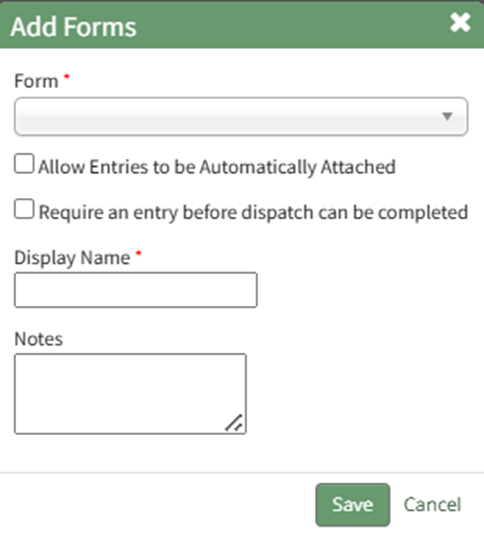
Selecting the plus sign icon to the right of Forms opens the Add Forms Modal.
Select the form you wish to add to the dispatch from the dropdown menu. Select the “Allow Entries to be Automatically Attached” of you would like the entries on this form to be linked to the Dispatch Details Page. Select the “Require an entry before dispatch can be completed” checkbox if you would like to require that a form entry is submitted before the dispatch can be marked as completed. Edit the display name if desired. Include any notes relevant to the report and select the “Save” button. The form will now show on the Dispatch Details Page. | ||||||||||||||||||||||||||||||||||||||||||||||||
Distribution List | Users and certification roles can be added to the dispatch distribution list. How To: Add Distribution Lists to a DispatchDistribution Lists are the individuals designated to receive a PDF copy of the dispatch orders, sent through the KAStrack Communications Module. They can be pre-defined in the Dispatch Module To add distribution lists to a dispatch, open the specific dispatch you wish to add a distribution list to. Go to the Dispatch Module Home Page and alter the filter view as needed. Click the Dispatch Number or Title to open the specific dispatch details page.
Distribution Lists can be added to a dispatch by selecting the plus sign icon to the right of the Distribution List column header.
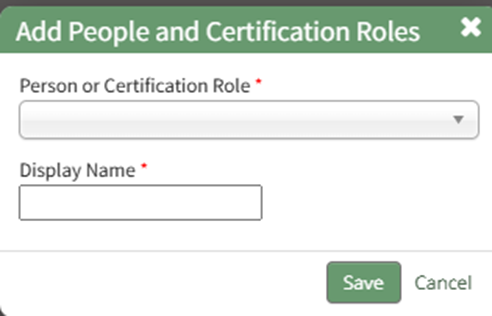
Selecting the plus sign icon to the right of Distribution List opens the Add People and Certification Roles Modal.
Pre-defined distribution lists, users, and certification roles can all be selected via the dropdown menu. Pre-existing distributions lists can be created within this module. How To: Create a Pre-Defined Distribution ListTo create a new pre-defined distribution list, go to the Distribution Lists Tab on the Settings Page of the Dispatch Module.
Click the “New Distribution List” button above the Pre-Defined Distribution List Table opening the New Distribution List Modal.
Input the Title of the new distribution list. Clicking the Members field will open a dropdown menu of all Users and Certification Roles that can be added to the Distribution Lists. Multiple selections can be made. Select the “Save” button and the new distribution list will now show in the Pre-Defined Distribution List Table.
Edit the display name if desired and select the “Save” button. The individuals on the distribution list will now show on the dispatch details page. An individual will only be listed once even if they are in multiple pre-defined distribution lists. Pre-defined Distribution Lists can be created on the Settings Page of the Dispatch Module and added to the dispatch. How To: Create a Pre-Defined Distribution ListTo create a new pre-defined distribution list, go to the Distribution Lists Tab on the Settings Page of the Dispatch Module.
Click the “New Distribution List” button above the Pre-Defined Distribution List Table opening the New Distribution List Modal.
Input the Title of the new distribution list. Clicking the Members field will open a dropdown menu of all Users and Certification Roles that can be added to the Distribution Lists. Multiple selections can be made. Select the “Save” button and the new distribution list will now show in the Pre-Defined Distribution List Table.
| ||||||||||||||||||||||||||||||||||||||||||||||||
Approvers | Approvers can be added to a dispatch and approval can be required for any dispatch status change. How To: Add Approvers to a DispatchTo add approvers to a dispatch, open the specific dispatch you wish to add approvers to. Go to the Dispatch Module Home Page and alter the filter view as needed. Click the Dispatch Number or Title to open the specific dispatch details page.
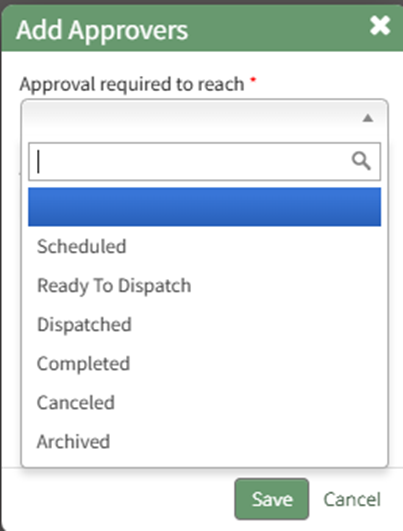
Approval can be required for any dispatch status change (Scheduled, Ready to Dispatch, Dispatched, Completed, Canceled, and Archived). Approvers can be added to a dispatch by selecting the plus sign icon to the right of the People column header.
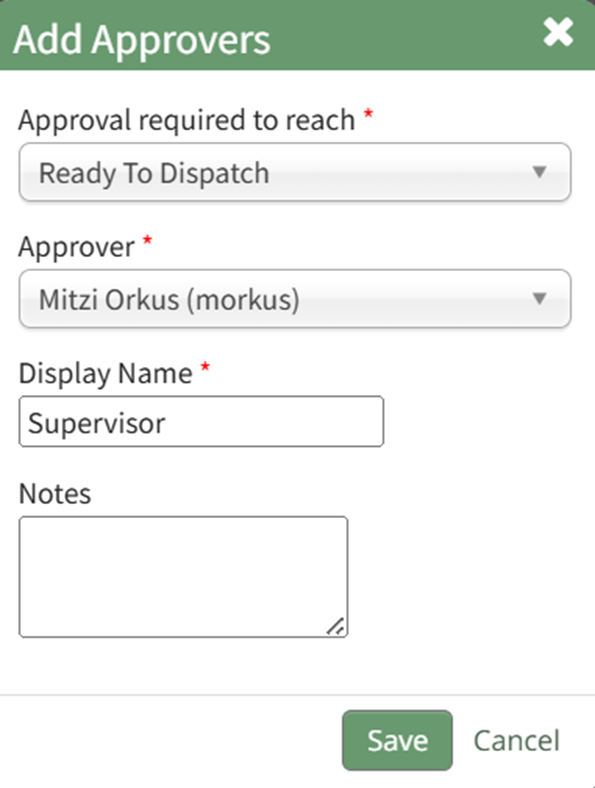
Selecting the plus sign icon to the right of Approvers opens the Add Approvers Modal.
The first dropdown menu opens to dispatch statuses.
Select what part of the dispatch process needs approval. Use the second dropdown menu to select the user or role that needs to approve the status change. Edit the display name if desired and select the “Save” button. The approvers and the status their approval is required to reach are now displayed on the Dispatch Details Page. Once added, hovering your cursor over the displayed name shows icons that edit and delete the approver attachment to the dispatch details. | ||||||||||||||||||||||||||||||||||||||||||||||||














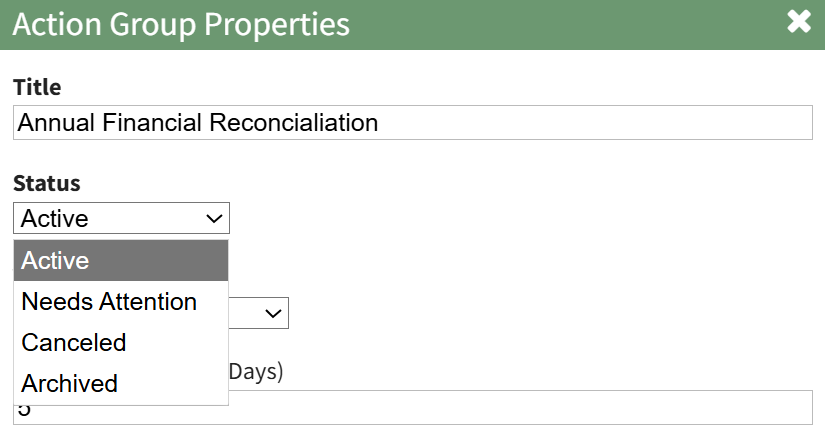
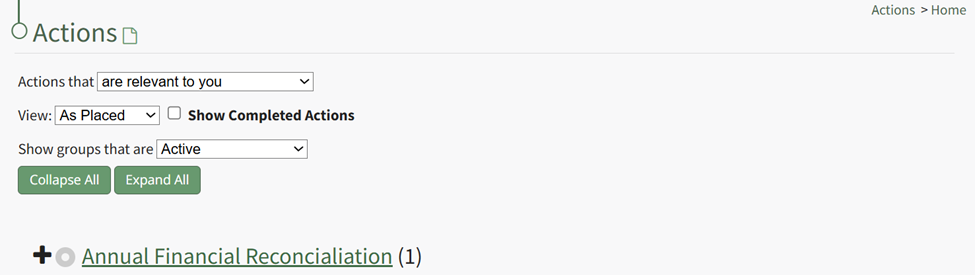
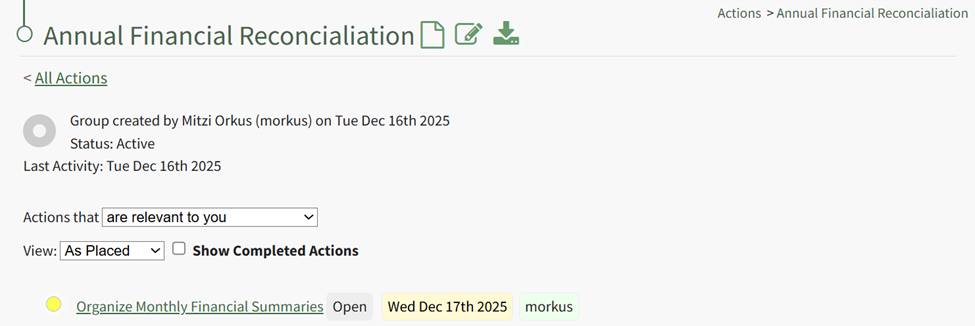
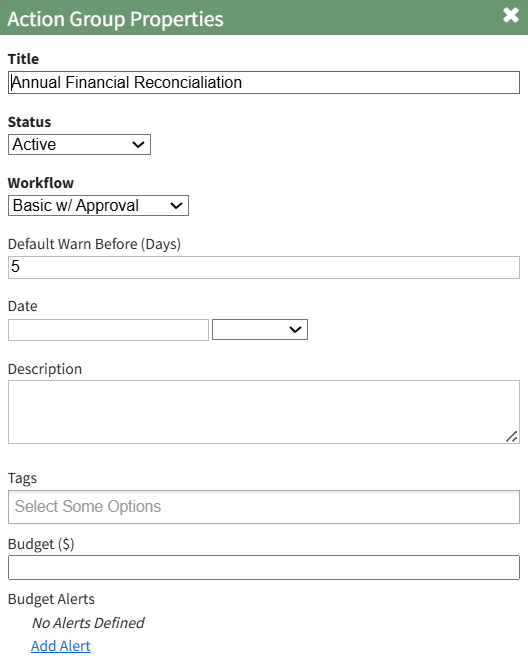










An explanation of all icons used on the Dispatch Details Page are included in the table below.
Dispatch Detail Page Icon Explanations | ||||||||||||||||||||||||||||||||||||||||||||||||||
Location | Icon / Option | Explanation | ||||||||||||||||||||||||||||||||||||||||||||||||
Header Row |
| Selecting the edit icon from the header row will open the Edit Dispatch Modal where the dispatch title, tags, status, and incident viewing privileges can be edited. How To: Edit a DispatchTo edit a dispatch, go to the Home Page of the Dispatch Module. Click the ID or Title of the specific dispatch you wish to edit.
This opens the Dispatch Details Page.
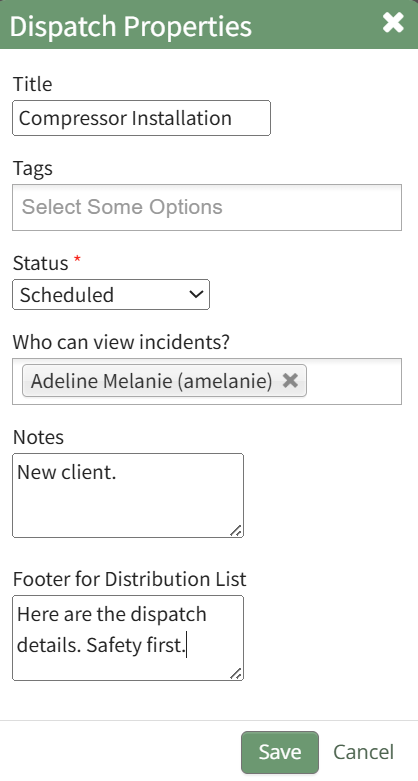
Click the edit dispatch properties icon to the right of the dispatch status opening the Dispatch Properties Modal.
Edit the dispatch title, add/remove tags, change the dispatch status, indicate who has incident visibility, add notes or a footer for the distribution list. Select the “Save” button and your edits have been saved. | ||||||||||||||||||||||||||||||||||||||||||||||||
Header Row |
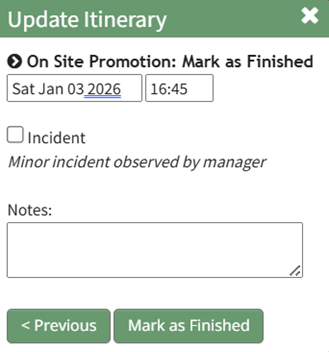
| Selecting the flag icon will open the Update Itinerary Modal, which can be used to mark a waypoint as departed or arrived. How To: Update Waypoint Arrival/Departure StatusTo update a waypoint with actual arrival/ departure data, go to the Home Page of the Dispatch Module. Click the ID or Title of the specific dispatch you need to indicate an incident for.
This opens this dispatch details page.
Select the flag icon on the header row to open the Update Itinerary Modal.
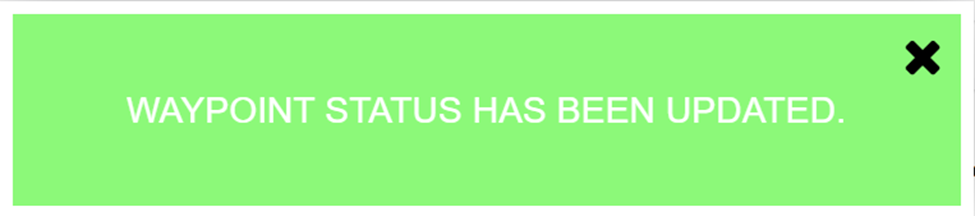
The current time/date are automatically input into the modal but can be edited if needed. Incidents and notes can be included. Select the “Mark as Finished” modal and a confirmation pop up states, “Waypoint status has been updated."
| ||||||||||||||||||||||||||||||||||||||||||||||||
Header Row |
| Selecting the PDF icon will open a View Document Modal showing the Dispatch Order. The Dispatch Order can be downloaded and printed from this modal. How To: View a Dispatch OrderTo view a dispatch order, go to the Home Page of the Dispatch Module. Click the ID or Title of the specific dispatch whose dispatch order you wish to view.
This opens the Dispatch Details Page.
Click the PDF icon to the right of the dispatch status opening the View Document Modal, which displays the Dispatch Order. The Dispatch Order can be downloaded and printed from this modal. | ||||||||||||||||||||||||||||||||||||||||||||||||
Header Row |
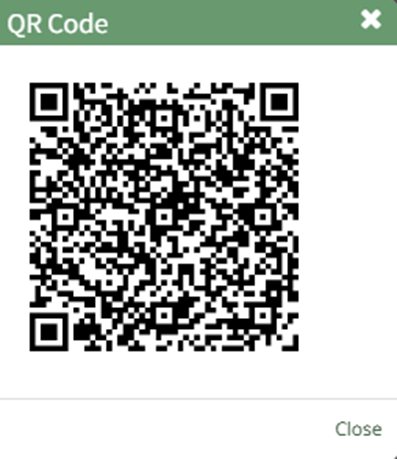
| Selecting the QR Code icon will open the QR Code Modal. How To: Access a Dispatch QR CodeTo access a dispatch QR code, go to the Home Page of the Dispatch Module. Click the ID or Title of the specific dispatch whose QR code you wish to access.
This opens the Dispatch Details Page.
Click the QR Code icon to the right of the dispatch status opening the QR Code Modal.
Select the “Close” button to return to the Dispatch Details Page. | ||||||||||||||||||||||||||||||||||||||||||||||||
Header Row |
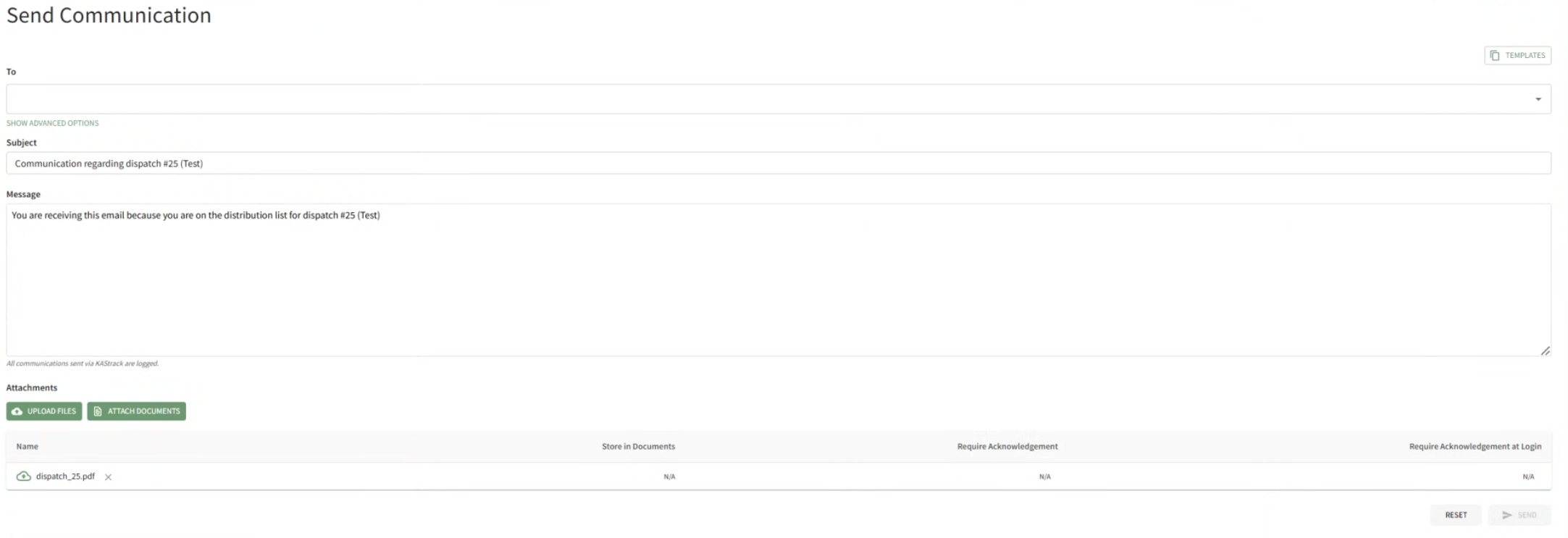
| Selecting the envelope icon will open the Send Communications Page in the Communications Module. The individuals in the distribution list have been input into the To: field and the specific Dispatch Orders are attached. How To: Send a Dispatch Order via EmailTo send a dispatch order, go to the Home Page of the Dispatch Module. Click the ID or Title of the specific dispatch whose dispatch order you wish to send out.
This opens the Dispatch Details Page.
Click the envelope icon to the right of the dispatch status opening the Send Communications Page in the Communications Module.
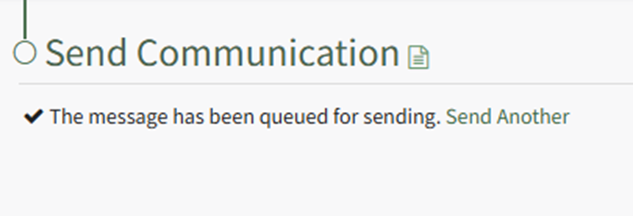
The distribution list for the dispatch has automatically been included in the To: field, A generic subject and message are included. The specific dispatch orders have already been attached to the email. Select the “Send” button, and a check confirms that the message has been qued for sending.
| ||||||||||||||||||||||||||||||||||||||||||||||||
Header Row |
| Selecting the book icon will open the Dispatch Log which provides a record with a date and time stamp for any user activity in the dispatch. How To: Access a Dispatch LogTo access a specific dispatch log with record of all dispatch activity, go to the Home Page of the Dispatch Module. Click the ID or Title of the specific dispatch whose log you wish to access.
This opens the Dispatch Details Page.
Click the book icon in the header row opening the Dispatch Log Page. Click the Dispatch Title in the header to return to the Dispatch Details Page. | ||||||||||||||||||||||||||||||||||||||||||||||||
Header Row |
| Selecting the trashcan icon will open the Dispatch Delete Confirmation Modal, which states the dispatch title as asks for confirmation before permanent deletion. How To: Delete a DispatchTo delete a dispatch, go to the Home Page of the Dispatch Module. Click the ID or Title of the specific dispatch you wish to delete.
This opens the Dispatch Details Page.
Click the trashcan icon in the header row opening the Dispatch Deletion Confirmation Modal.
The modal states, “Are you sure you wish to delete this dispatch? This cannot be undone!” Select the “Delete” button and the dispatch has been permanently deleted. | ||||||||||||||||||||||||||||||||||||||||||||||||
The following icons are displayed in the individual dispatch details sections. | ||||||||||||||||||||||||||||||||||||||||||||||||||
Itinerary |
| Selecting the Location Icon to the right of the Itinerary Section header opens the Add Waypoint Modal, allowing waypoints to be added to the dispatch itinerary. The location icon to the left of a waypoint title indicates the information pertains to a waypoint and not a dispatch activity. How To: Add a Waypoint to an ItineraryTo add a waypoint to a dispatch itinerary, open the specific dispatch whose itinerary you wish to edit by adding a waypoint. Go to the Dispatch Module Home Page and alter the filter view as needed. Click the Dispatch Number or Title to open the specific dispatch page.
This opens the Dispatch Details Page.
Select the location icon to the right of the Itinerary header, opening the Add Waypoint Modal.
Select a specific location from the Waypoint Location from the dropdown menu or select on-off location if applicable. If one-off is selected, the modal expands so the specific location can input into a textbox. If this waypoint is the starting location or final destination, leave the arrival date / departure date blank. Customized locations can be added to the dropdown menu by clicking the “Locations” clickable link. This opens the Locations Database in the Database Module. WIKI LINK HOW TO ADD DISPATCH LOCATIONS TO THE LOCATIONS DATABASE FORM Include the expected arrival date, departure date, and any notes relevant to the waypoint. Select the “Save” button and the new waypoint now shows on the itinerary.
| ||||||||||||||||||||||||||||||||||||||||||||||||
Itinerary |
| Selecting the plus sign box icon in the Itinerary Section opens the Add Activity Modal, allowing for an activity to be added to the dispatch itinerary. How To: Add an Activity to a Dispatch ItineraryTo add an activity to the dispatch itinerary, go to the Home Page of the Dispatch Module. Click the ID or Title of the specific dispatch you wish to add an activity to.
This opens the Dispatch Details Page.
Select the plus sign box icon to the right of the Itinerary header, opening the Add Activity Modal.
Input the new activity title, expected start and finish dates, as well as any relevant activity note. Selecting the pencil icon will allow you to edit time zones as needed. Select “Save” and the Activity now shows on the Dipatch Details Page.
| ||||||||||||||||||||||||||||||||||||||||||||||||
Itinerary |
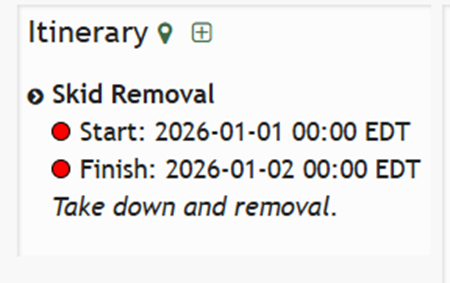
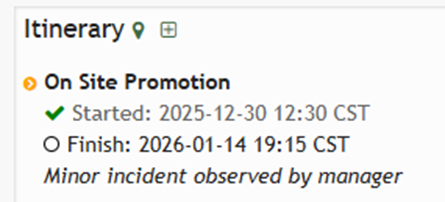
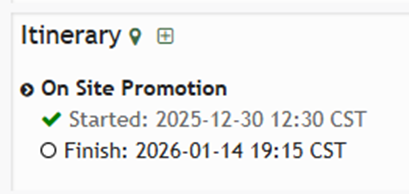
| The dark right arrow icon to the left of an activity title indicates an incident free dispatch activity. | ||||||||||||||||||||||||||||||||||||||||||||||||
Itinerary |
| The yellow right arrow icon to the left of an activity title indicates that there was an incident with a dispatch activity. How To: Indicate a Dispatch IncidentTo indicate there was a dispatch incident, go to the Home Page of the Dispatch Module. Click the ID or Title of the specific dispatch you need to indicate an incident for.
This opens the Dispatch Details Page.
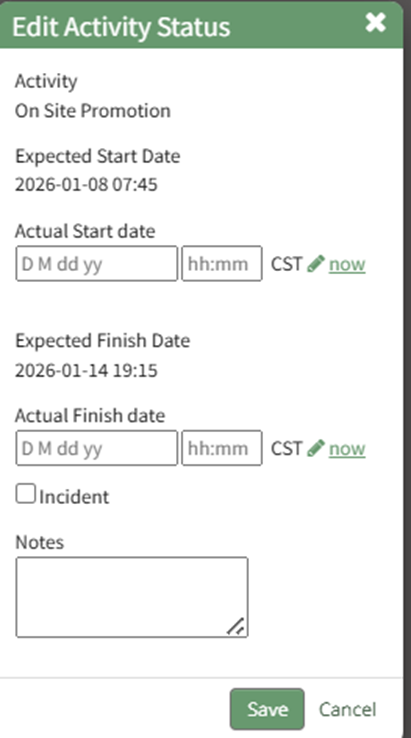
Hover the cursor over the itinerary activity. Select the clock icon to opening the Edit Activity Status Modal to edit start or finish information.
Select the “Incident” checkbox and click the “Save” button. The yellow icon to the right of the Itinerary Activity title indicates that there was an incident.
| ||||||||||||||||||||||||||||||||||||||||||||||||
Itinerary |
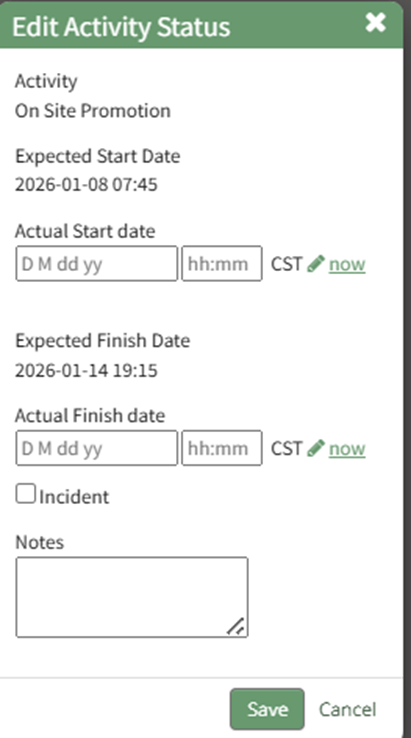
| Selecting the clock icon in the to the right of an activity in the Itinerary section open the Edit Activity Status Modal, allowing the expected start and finish date/times to be updated to actual start and finish date/times. Selecting the clock icon to the right of a waypoint in the Itinerary Sections opens the Edit Waypoint modal, allowing expected arrival and departure date/times to be updated with actual arrival and departure date / times. How To: Update Estimated Activity Status with Actual Date / TimeTo update an estimated activity status with actual date and times, go to the Home Page of the Dispatch Module. Click the ID or Title of the specific dispatch whose activity status you wish to update.
This opens the Dispatch Details Page.
Select the clock icon to opening the Edit Activity Status Modal to edit start or finish information.
Edit start and/or finish dates, as well as any relevant activity notes. Select the “Save” button.
The checkmark indicates the actual start time has been entered on the dispatch details page. | ||||||||||||||||||||||||||||||||||||||||||||||||
All Sections |
| To the right of each section header is a plus sign icon. Selecting the plus sign icon opens the Add Modal, allowing additional entries to be added to each section. People, Certifications, Documents, Assets, Actions, Reports, and Forms can all be attached to a dispatch on the Dispatch Details Page. The plus sign icon is also used to add distribution lists and approvers to a dispatch. | ||||||||||||||||||||||||||||||||||||||||||||||||
All Sections |
| Selecting the edit icon to the right of an attachment name will open a modal to edit the specific attachment. How To: Edit a Dispatch AttachmentTo edit a specific attachment on a dispatch, go to the Home Page of the Dispatch Module. Click the ID or Title of the specific dispatch whose attachment information you wish to edit.
This opens the Dispatch Details Page.
Hover your cursor over the attachment you wish to edit (in any section on the dispatch display page) and the edit icon will appear to the right of the attachment display name. Select the edit the icon opening the Edit Modal. Make the desired changes and select the “Save” button for attachment changes to be processed. | ||||||||||||||||||||||||||||||||||||||||||||||||
All Sections |
| Selecting the trashcan icon to the right of an attachment name will open a modal to delete that specific attachment. How To: Delete a Dispatch AttachmentTo delete a specific attachment from a dispatch details page, go to the Home Page of the Dispatch Module. Click the ID or Title of the specific dispatch with the attachment you wish to delete.
This opens the Dispatch Details Page.
Hover your cursor over the attachment you wish to remove (in any section on the dispatch display page) and the trashcan icon will appear to the right of the attachment display name. Select the trashcan icon opening the Deletion Confirmation Modal, confirming that you wish to delete the dispatch attachment. Click the “Confirm” button and the user will be removed from the dispatch display page. | ||||||||||||||||||||||||||||||||||||||||||||||||
All Sections |
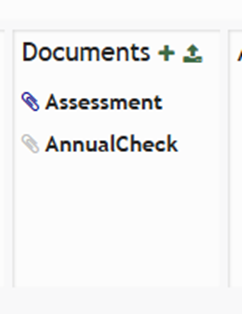
| The light gray paperclip icon indicates that the document attached to the dispatch details page will be included via a QR code in the Dispatch Orders. | ||||||||||||||||||||||||||||||||||||||||||||||||
All Sections |
| The dark paperclip icon indicates that the document attached to the dispatch details page will be appended at the end of the Dispatch Orders. This can cause the dispatch order page length to increase significantly. How To: Include Document Attachments in Dispatch OrdersTo include a document attachment with the Dispatch Order, go to the Home Page of the Dispatch Module. Click the ID or Title of the specific dispatch with the attachment you wish to delete.
This opens the Dispatch Details Page.
Click the gray paperclip to the left of the document name changing the paperclip color to dark blue.
The selected file will now be included in the Dispatch Order. | ||||||||||||||||||||||||||||||||||||||||||||||||
All Sections |
| The information icon indicates that there is additional information available. Click on the icon to see the additional message. | ||||||||||||||||||||||||||||||||||||||||||||||||
People Section |
| The identification icon opens the Add People by Certification Role Modal, allowing for an additional method to add individuals to a dispatch. How To: Add People to a DispatchTo add people to a dispatch, open the specific dispatch you wish to add people to. Go to the Dispatch Module Home Page and alter the filter view as needed. Click the Dispatch Number or Title to open the specific dispatch details page.
People can be added to a dispatch by selecting the plus sign icon to the right of the People column header or by selecting the identification icon. Selecting the identification icon will allow you to add people through their certification role.
To Add People to a Dispatch through PeopleSelect the plus sign to the right of the People Section header. This opens the Add People Modal.
Select the KAStrack user to be added to the dispatch from the dropdown menu. There is an External User option if the individual is a not a KAStrack user. The system will automatically input the First , Last and username as the Display Name. This can be edited. Add any notes regarding the user being added to the dispatch as desired. Select “Save” and the user is added to the dispatch page. To Add People to a Dispatch through their Certification RoleTo add people to a dispatch through a certification role, select the identification card Icon to the right of the plus sign in the People Column. This opens the Add People by Certification Role Modal.
First, select the desired Certification Role from the dropdown menu. Selecting the checkbox will only show people who are not red in this role. The People associated with the selected certification role will now be displayed in the the People dropdown menu. The Display Name will auto populate with the First, Last, and username of the individual. Edit as desired to indicate the display name and add relevant notes. Select “Save” and return to the dispatch page. | ||||||||||||||||||||||||||||||||||||||||||||||||
People Section |
| Selecting the people icon will open the user page (in the People Module) of the individual attached to the dispatch details page. | ||||||||||||||||||||||||||||||||||||||||||||||||
Certifications Section |
| Selecting the eyeball icon in the Certifications Section will open the Certification Status modal, which uses the People Module Certification and Competency Legend to designate the certification status. | ||||||||||||||||||||||||||||||||||||||||||||||||
Documents Section |
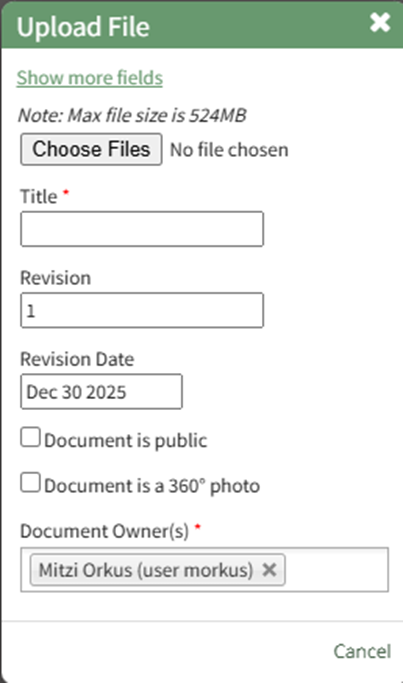
| Selecting the upload icon in the Documents section will open the Add New File Modal so that the file can be attached to the dispatch. How To: Upload a File as a Dispatch DocumentTo upload a PDF as a dispatch document, open the specific dispatch you wish to add a file to. Go to the Dispatch Module Home Page and alter the filter view as needed. Click the Dispatch Number or Title to open the specific dispatch page.
Files can be uploaded and added to a dispatch by selecting the upload icon to the right of the plus sign icon next to the Documents column header.
Selecting the Upload Icon opens the Upload File Modal. Select the “Choose File” button to upload the appropriate file from your personal device.
Input the File Title, revision number and revision date. If the document is designated as public and available for anyone to access, select the “Document is public” checkbox. If the file being uploaded is a 360 degree photo, select the “Document is a 360 degree photo” checkbox. Indicate the document owners. Select the “Save” button and a confirmation modal confirms the document was uploaded. It is now visible on the dispatch page in the documents column. | ||||||||||||||||||||||||||||||||||||||||||||||||
Documents Section |
| Selecting the eyeball icon in the Documents Section opens the File Viewer Modal, providing access to the files directly from the Dispatch Display Page. | ||||||||||||||||||||||||||||||||||||||||||||||||
To the right of an asset attachment is the three-dot icon which opens the Assets Section Context Menu. | ||||||||||||||||||||||||||||||||||||||||||||||||||
Assets Section | Go To Asset | Selecting "Go To Asset" on the Asset Section context menu opens the asset's Manage Assets Components Page. | ||||||||||||||||||||||||||||||||||||||||||||||||
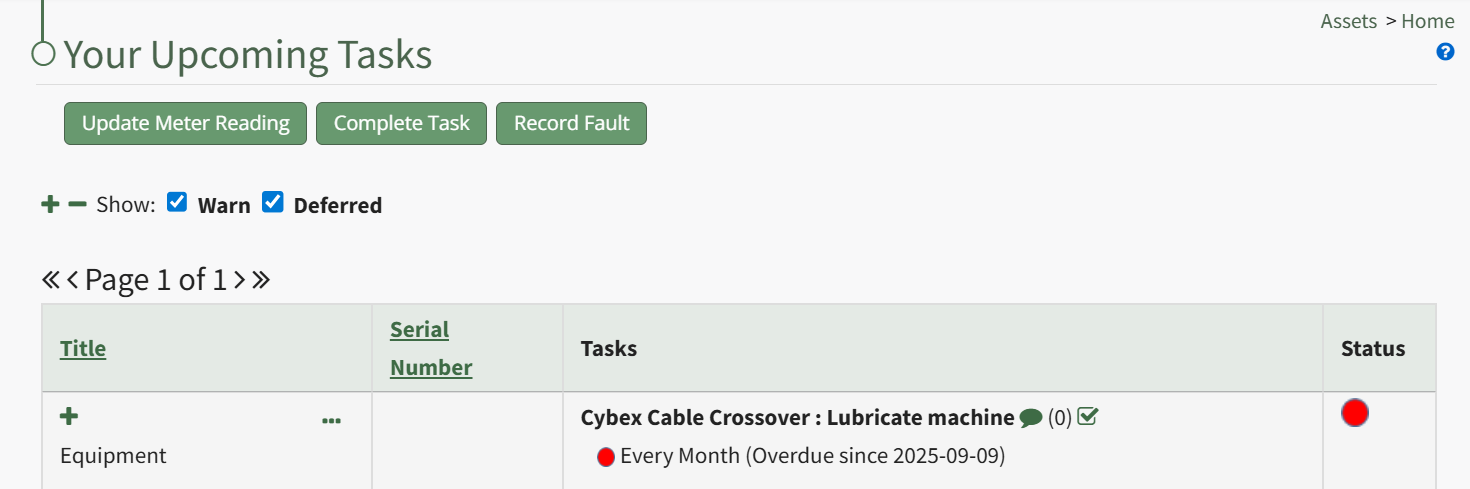
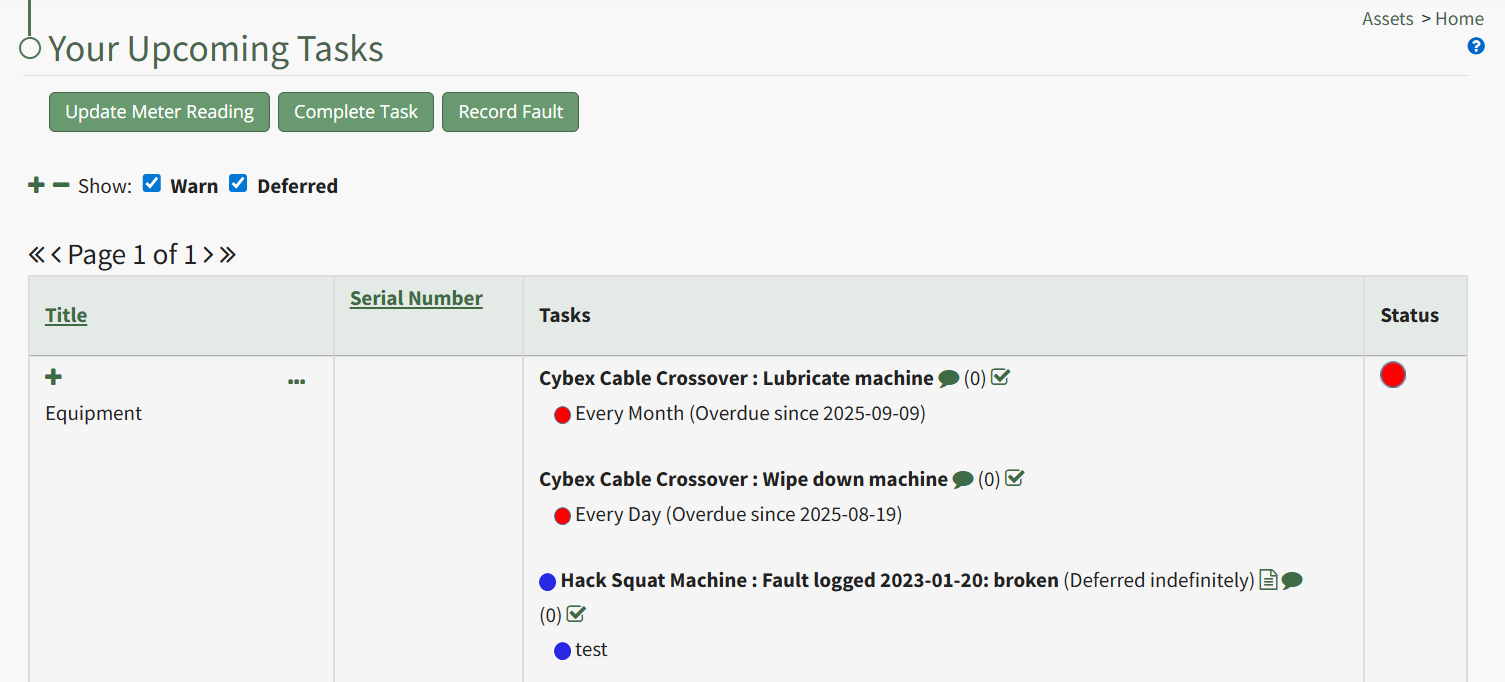
Assets Section | Enter Meter Readings | Selecting "Enter Meter Reading" on the Asset Section context menu opens the Asset Meter Modal, allowing a meter reading to be input directly in the Dispatch Module. How To: Update a Meter ReadingIn order to update an asset's meter reading, go to the Assets Module Home Page opening the Upcoming Tasks Table. Click the “Update Meter Reading" button from the Asset Module Homepage.
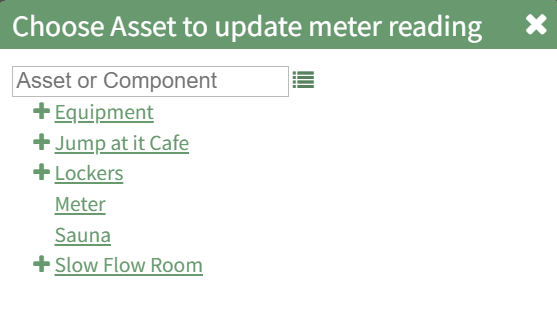
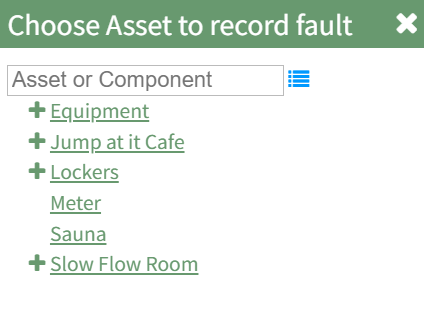
The Choose Asset Modal will prompt you to identify which asset you want to log data for. Click the bulleted list icon to access your assets. Selecting the plus sign “+” icon will expand the components within the Asset. Selecting “Update Meter Reading” from the Upcoming Task Table Context Menu will open the same modal for the specified asset.
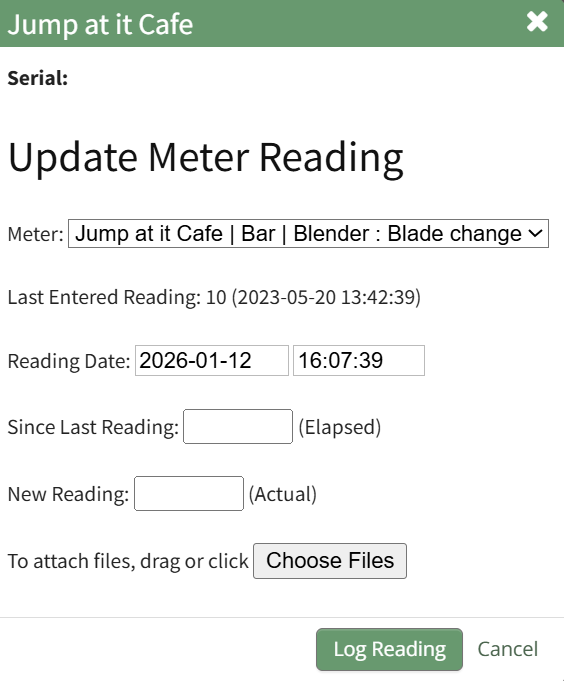
Select the appropriate asset, opening the Update Meter Reading Modal.
The meters associated with the asset/component selected show in a dropdown menu. Select the meter whose meter data you wish to record. The most recent meter reading shows in the Update Meter Reading Modal as the “Last Entered Reading.” KAStrack automatically inputs the current date and time. The user can enter an elapsed value (if preferred) and KAStrack will input the new actual, or the user can input the new meter reading and the elapsed value will be automatically input. Attach any files (if there are checklists, forms, etc.) associated with the meter reading. Select the “Log Reading” button to update the meter usage. Click cancel to return to the Assets Module Homepage. | ||||||||||||||||||||||||||||||||||||||||||||||||
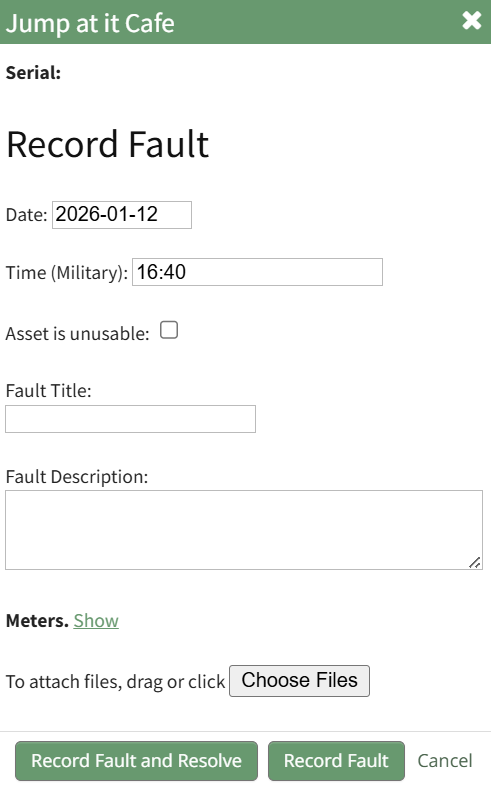
Assets Section | Report Fault | Selecting "Report Fault" on the Asset Section context menu opens the Asset Fault Modal, allowing a fault to be reported for an asset directly in the Dispatch Module. How To: Record a FaultLogging faults allows your company to track trending data in KAStrack by recording incidents and any data associated with this issue/failure. In order to record fault with an equipment issue/failure, go to the Upcoming Task Table on the Asset Module Homepage and select the "Record Fault" button beneath the page header.
The Choose Asset Modal will prompt you to identify which asset you want to log data for. Click the bulleted list icon to access your assets. Selecting the plus sign “+” icon will expand the components within the Asset. Selecting “Record Fault” from the three dot (…) context menu will open the same modal for the specified asset.
Select the appropriate asset, opening the Record Fault Modal.
Select the “Log Fault” button to record the incident. Select the “Log Fault and Resolve” button to complete two actions in one step: log the issue and indicate that it has been addressed. Click cancel to return to the Assets Module Homepage. | ||||||||||||||||||||||||||||||||||||||||||||||||
Assets Section | Edit Attachment | Selecting "Edit Attachment" on the Asset Section context menu opens the Edit Assets Modal, allowing an asset's display name to be edited and relevant asset notes to be included. How To: Edit a Dispatch AttachmentTo edit a specific attachment on a dispatch, go to the Home Page of the Dispatch Module. Click the ID or Title of the specific dispatch whose attachment information you wish to edit.
This opens the Dispatch Details Page.
Hover your cursor over the attachment you wish to edit (in any section on the dispatch display page) and the edit icon will appear to the right of the attachment display name. Select the edit the icon opening the Edit Modal. Make the desired changes and select the “Save” button for attachment changes to be processed. | ||||||||||||||||||||||||||||||||||||||||||||||||
Assets Section | Delete Attachment | Selecting "Delete Attachment" on the Asset Section context menu opens the Asset Deletion Confirmation Modal which states, "Are you sure you want to remove ASSET NAME?" | ||||||||||||||||||||||||||||||||||||||||||||||||
Assets Section |
| To the left of the Asset attachment's displayed name is the Asset Task Status icon, which uses the Asset Task Status Legend to visually communicate the asset's status. | ||||||||||||||||||||||||||||||||||||||||||||||||
Actions Section |
| Selecting the Page Icon in the Actions Section opens the New Action Group from Template Modal, allowing new action groups to be created from pre-defined templates. How To: Create a New Action Group TemplateTo create a New Action Group Template, select Templates from the Actions Module Main Menu, opening the Manage Templates Page.
Select the “New Template” button, opening the New Template Modal.
There are several fields associated with the creation of an action group template.
After inputting the appropriate information into the modal, select “Save”. The new Action Group Template will be displayed on the Templates Page in the Action Group Templates Table. | ||||||||||||||||||||||||||||||||||||||||||||||||
Reports Section |
| Selecting the triangular Play Icon in the Reports Section runs the report and opens it in the Reports Module. | ||||||||||||||||||||||||||||||||||||||||||||||||
Forms Section |
| Selecting the Clipboard Icon in the Forms Section opens the Add Form Entry Modal, allowing a form entry to be submitted directly in the Dispatch Module. | ||||||||||||||||||||||||||||||||||||||||||||||||
Forms Section |
| Selecting the PDF Icon to the right of a form entry opens the View Entry Modal which will display the Entry PDF directly in the Dispatch Module. | ||||||||||||||||||||||||||||||||||||||||||||||||















































Dispatch Pending Approvals Page
The Pending Approval Page houses the Pending Approvals Table, which includes any dispatch whose status change is pending until approved.
How To: Approve a Pending Dispatch Status Change
To approve or reject a dispatch status change, go to the Pending Approvals Page in the Dispatch Module.

Click the dispatch number or title of the dispatch whose status is pending approval, opening the Dispatch Details Page.
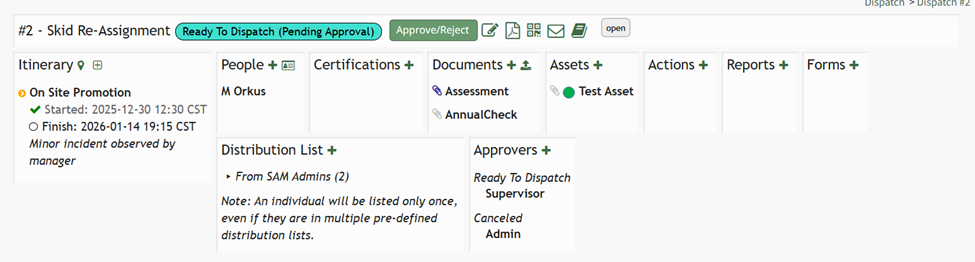
An Approve/Reject button now shows to the right of the dispatch number and title. Click the “Approve/ Reject” button opening the Approval Required Modal.
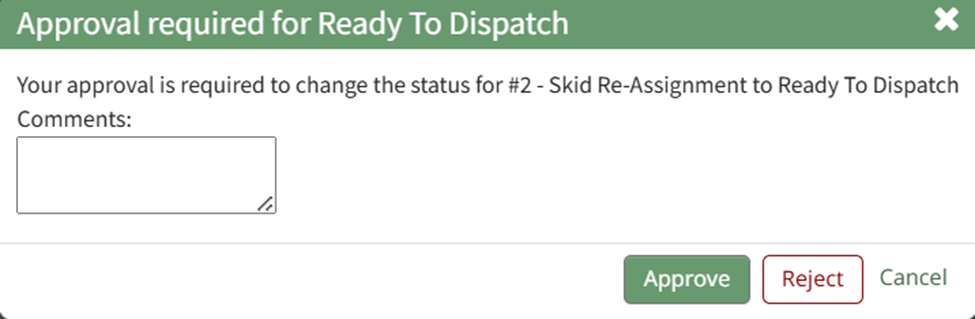
Input any comments relevant to approval / rejection and select the appropriate button.
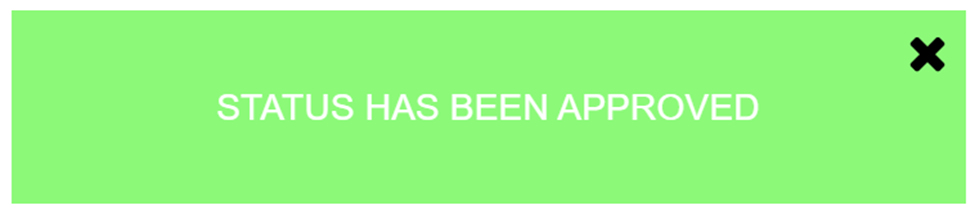
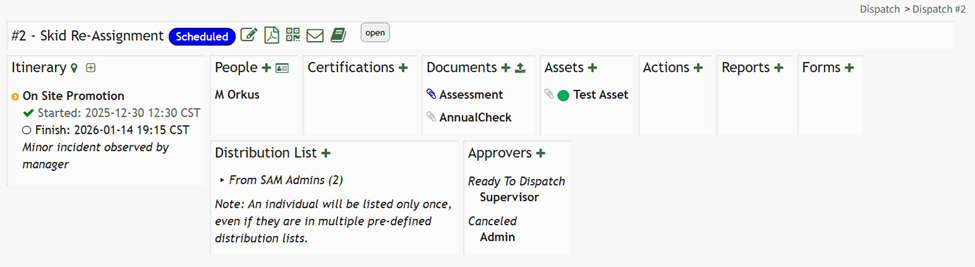
If you approve the status change, a confirmation pop up states, “Status has been approved,” and the new status shows on the Dispatch Details Page.
If you rejected the status, a confirmation pop up states, “Status has been rejected.”

The Dispatch Details Page reverts back to the previous status and the dispatch no longer shows on the pending approval page until another attempt to change the status.

The pending approval page is read only, with the exception of the dispatch number and title are clickable links that will open the specific dispatch’s details page.
Dispatch Settings: Approver Filtering Tab
The Approver Filtering Tab of the Settings Page in the Dispatch Module is where users and certification roles can be identified as potential approvers before a dispatch status change.
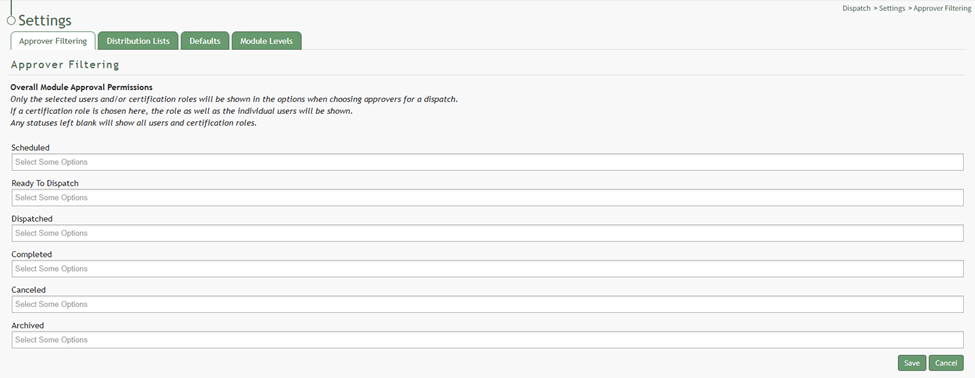
The People or Certification Roles selected under each status (scheduled, ready to dispatch, dispatched, completed, canceled, archived) will be the options available on the dropdown menu when choosing approvers for a dispatch.
If a certification role is chosen for overall module approval permissions, the role as well as the individual users will be shown. If you leave a status blank, the dropdown menu will show all users and certification roles.
To customize the users and certification roles visible in the dropdown menu when selecting approvers for a dispatch status, update the Approver Filtering Tab.
How To: Edit Users and Certification Roles Available as Dispatch Approvers
To edit the users and certification roles that are available via dropdown menu as dispatch approvers, open the Approver Filtering Tab of the Settings Page in the Dispatch Module.
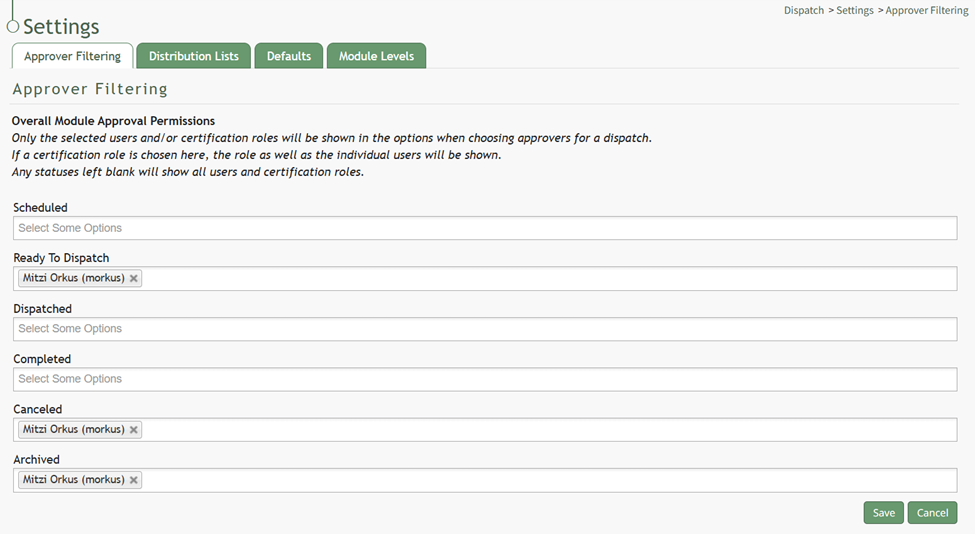
Click below the status to open the dropdown menu. Add People or Certification Roles as desired. If certification roles are selected, both the role and the users associated with it will be shown on the dropdown menu.
If the status is left blank, all users and certification roles will show on the dropdown menu.
Select the “Save” button when finished and a popup will confirm that the filter was saved.
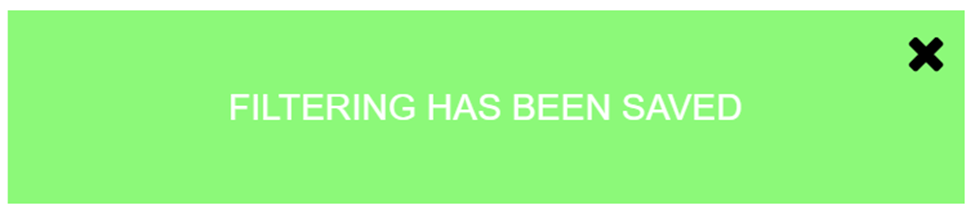
The filter will remain this way until altered.
Dispatch Settings: Distribution Lists Tab
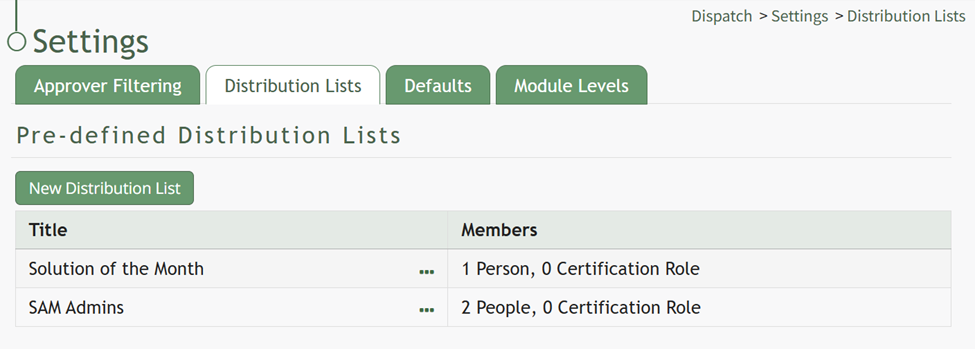
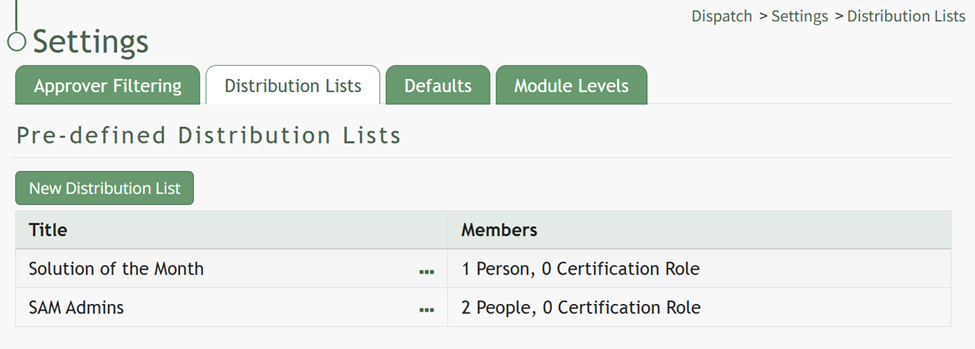
The Distribution Lists Tab on the Settings Page of the Dispatch Module is where new pre-defined distribution lists are created. Distribution List members can be People (Users) or Certification Roles. The Pre-defined Distribution List Table shows the title of the distribution list as well as the number of people and certification roles that are members of the distribution list.
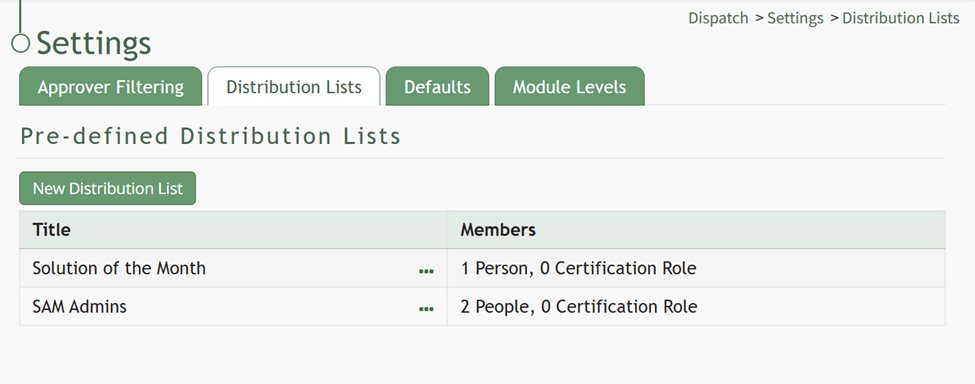
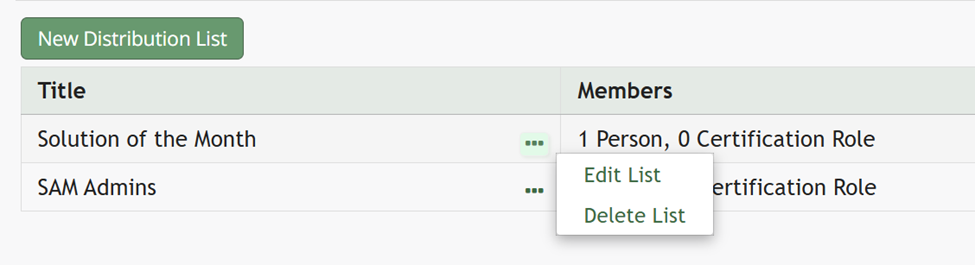
Selecting the three dot icon to the right of the distribution list title opens a context menu. Context menu options are explained on the table below.
Pre-Defined Distribution List Table Context Menu Option Explanations | |
Options | Explanation |
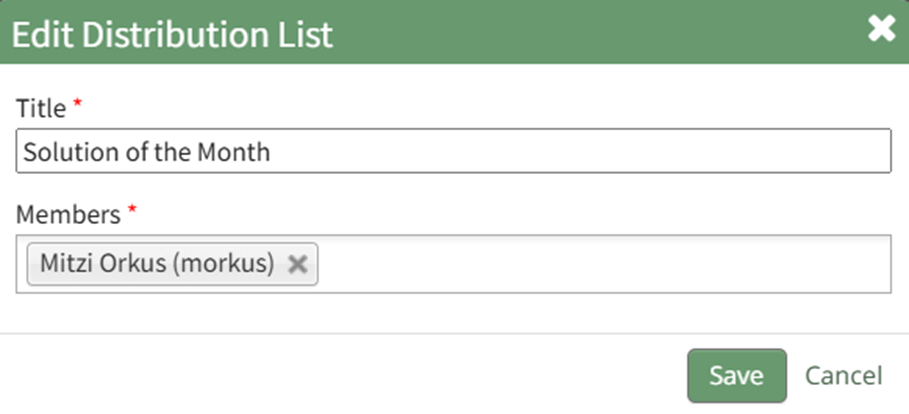
Edit List | Selecting Edit List from the context menu opens the Edit Distribution List Modal. How To: Edit a Pre-Defined Distribution ListTo edit a pre-defined distribution list, go to the Distribution List Tab on the Settings Page of the Dispatch Module.
Selecting the three-dot icon to the right of the distribution list title you wish to edit will open the Pre-Defined Distribution List Table Context Menu.
Select “Edit List” opening the Edit Distribution List Modal.
Edit the title or members of the distribution list as desired. Select the “Save” button. The edits made to the distribution list will now be visible in the Pre-Defined Distribution List Table. |
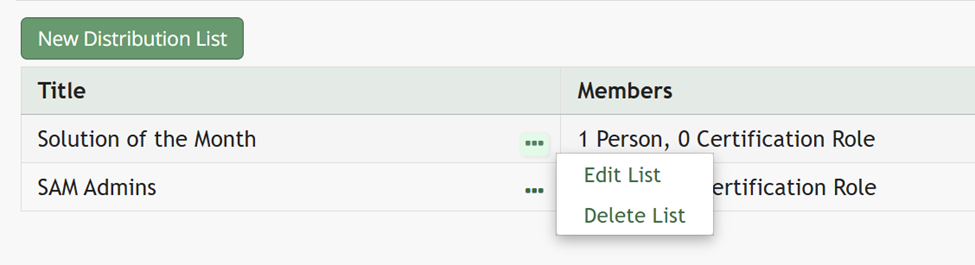
Delete List | Selecting Delete List from the context menu opens the Delete Distribution List Confirmation Modal which lists the title of the distribution list being deleted and asks, “Are you sure you want to delete this Distribution List?” How To: Delete a Distribution ListTo delete a pre-defined distribution list, go to the Distribution List Tab on the Settings Page of the Dispatch Module.
Selecting the three-dot icon to the right of the distribution list title you wish to delete will open the Pre-Defined Distribution List Table Context Menu.
Select “Delete List” opening the Delete Distribution List Confirmation Modal. 
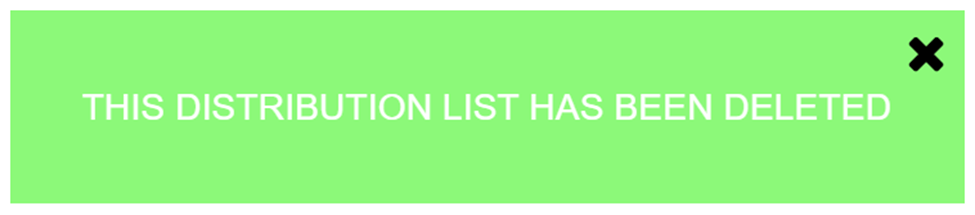
The modal identifies the title of the distribution list being deleted and states, “Are you sure you want to delete this Distribution List?” Click the “Delete” button and a pop up confirms that the Distribution List was deleted.
The distribution list has been removed from the pre-defined distribution list table. |

Clicking the New Distribution List button beneath the header opens the New Distribution List Modal which is used in the creation of new pre-defined distribution lists.
How To: Create a Pre-Defined Distribution List
To create a new pre-defined distribution list, go to the Distribution Lists Tab on the Settings Page of the Dispatch Module.

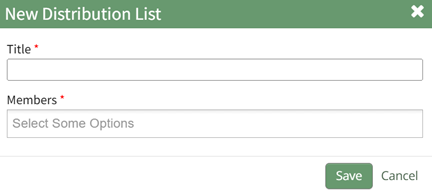
Click the “New Distribution List” button above the Pre-Defined Distribution List Table opening the New Distribution List Modal.
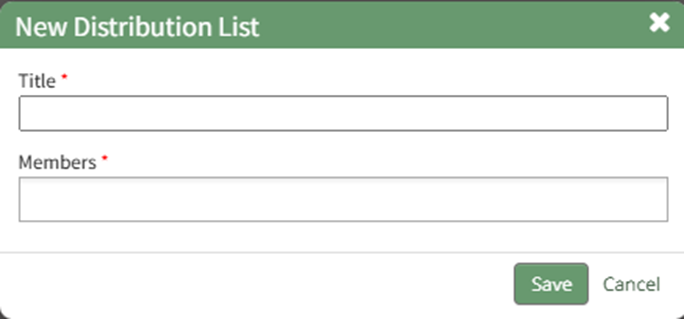
Input the Title of the new distribution list. Clicking the Members field will open a dropdown menu of all Users and Certification Roles that can be added to the Distribution Lists. Multiple selections can be made.
Select the “Save” button and the new distribution list will now show in the Pre-Defined Distribution List Table.
Dispatch Settings: Defaults Tab
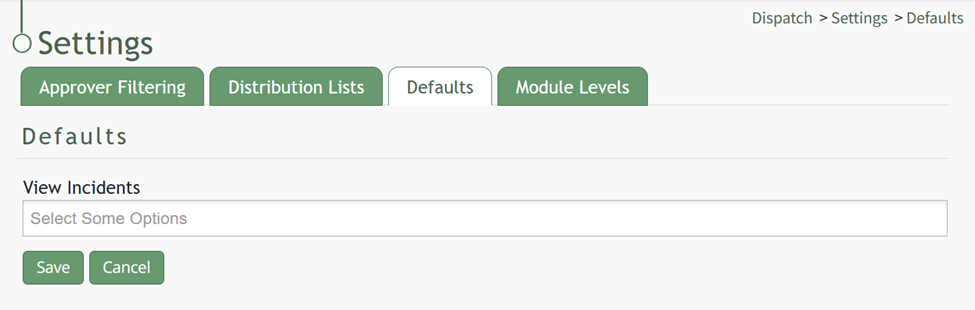
The Dispatch Settings Page Defaults Tab allows permission to be given to view dispatch incidents. You can select individual users, certification roles, or access levels that will be given default permission to View Incidents.
How To: Give Default Permission to Approve all Incidents
To give individuals, certification roles or access levels the ability to view all dispatch incidents, go to the Dispatch Module Settings Page Defaults Tab.
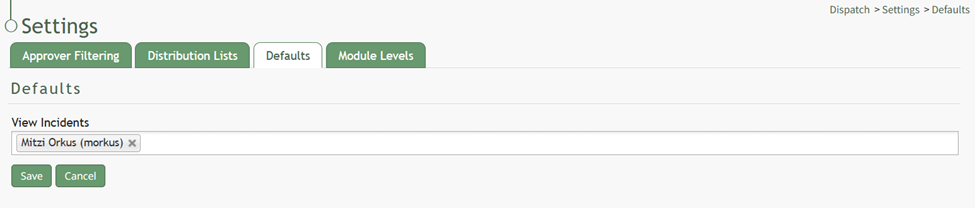
Placing your cursor in the text box opens a dropdown menu with all individuals users, certification roles, and access levels. Multiple selections can be made. If you would like all KAStrack users to have permission to view dispatch incidents, select “Everyone” as an option.
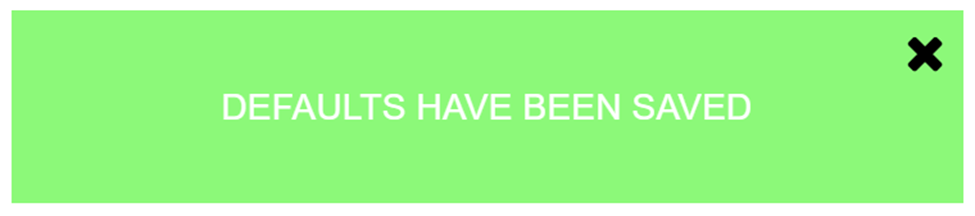
Select the “Save” button and a confirmation modal states, “Defaults Have Been Saved.”
Select “Everyone” if you would like all KAStrack users to be allowed to view Dispatch Incidents.
Dispatch Settings: Module Levels Tab
The Module Levels Tab of Settings Page can be accessed from the Main Menu. The system default module levels for the module are visible in the Module Levels Table. New module levels with customizable permissions can be created and managed on this tab.
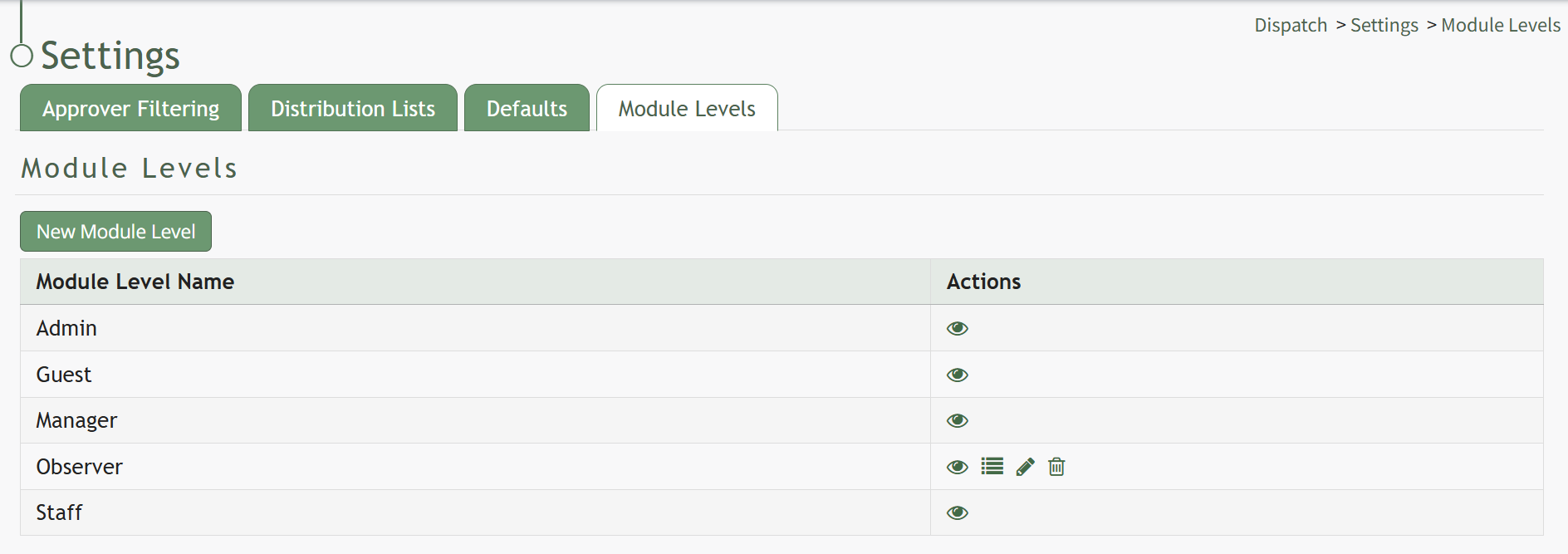
There are four system default module levels associated with the Dispatch Module. An explanation of the permissions associated with each default module level are shown in the Dispatch Module Level Permissions Table below.
System default module levels cannot be customized.
Dispatch Module Level Permissions | |
Module Level | Permissions |
Admin | Manage roles (role permissions, assign hidden roles, delete / edit / view / add roles), Distribution Lists (delete / edit / list distribution lists), Approve Filtering, Defaults, Distribute, Dispatches (upload / download document, edit / add attachement, delete / edit / add waypoint, edit waypoint status, view log / qr code / pdf, edit / view / new / delete dispatch, set any dispatch status, attach to pdf, create action group, add form entry, list manage permissions, send to dist list, edit / delete activity, edit activity status |
Guest | View Log, View PDF, View Dispatch |
Manager | Dispatches (upload / download document, edit / add attachement, delete / edit / add waypoint, edit waypoint status, view log / qr code / pdf, edit / view / new / delete dispatch, set any dispatch status, attach to pdf, create action group, add form entry, list manage permissions, send to dist list, edit / delete activity, edit activity status |
Staff | View Log, View QR code, View PDF, View Dispatch |
New Module Levels can be created in order to customize module level permissions to suit your organization's needs. An explanation of the icons associated with customized module levels have been provided in the table below.
Module Level Customization Icons | |
Icon | Explanation |
| The eyeball icon allows you to view users assigned to the module level as well as the permissions assigned to them. |
| The bulleted list icon allows you to assign permissions to customized module levels. |
| The pencil icon opens the Edit Module Level Modal. |
| The trashcan icon opens the Delete Module Level Confirmation Modal. |



How To: Create a New Module Level (Dispatch Module)
To create customized module levels in the Dispatch Module, go to the Module Levels Tab on the Settings Page of the Dispatch Module.
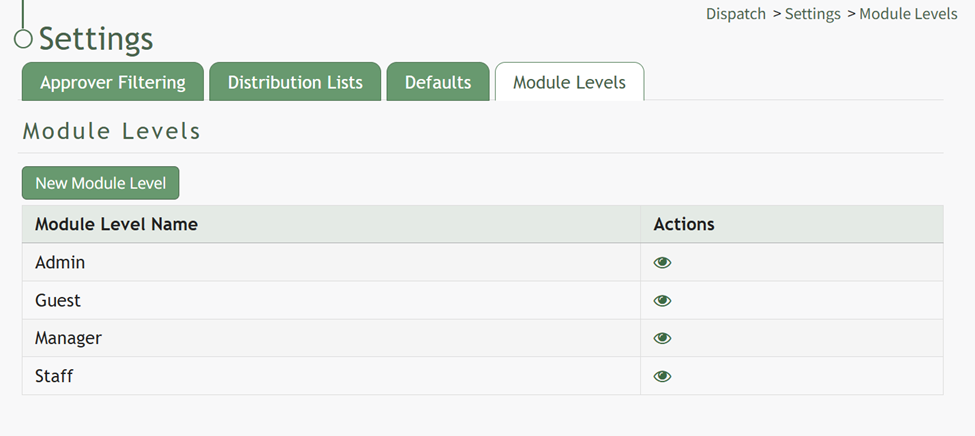
Select the “New Module Level” button opening the New Module Level Modal.
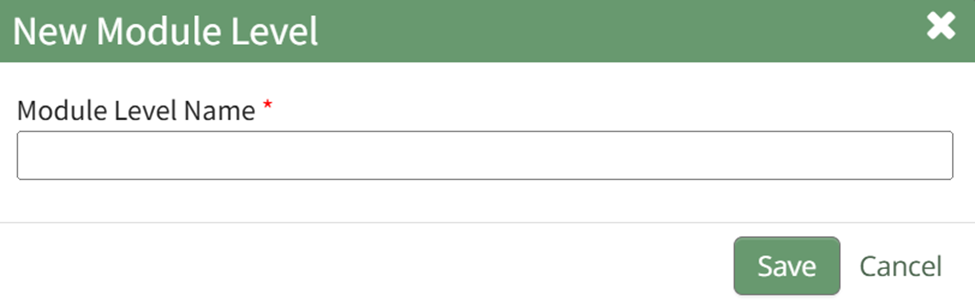
Input the New Module Level Name and select “Save”. The new module level now appears on the Module Level Table with action icons explained in the table below.
Module Level Customization Icons | |
Icon | Explanation |
| The eyeball icon allows you to view users assigned to the module level as well as the permissions assigned to them. |
| The bulleted list icon allows you to assign permissions to customized module levels. |
| The pencil icon opens the Edit Module Level Modal. |
| The trashcan icon opens the Delete Module Level Confirmation Modal. |



Select the Bulleted List Icon to open the Permissions Modal.
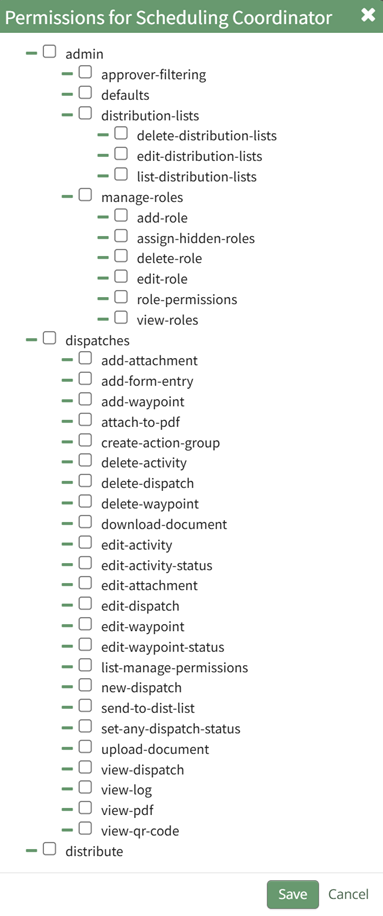
Select all permissions appropriate for the new module level and select “Save”.
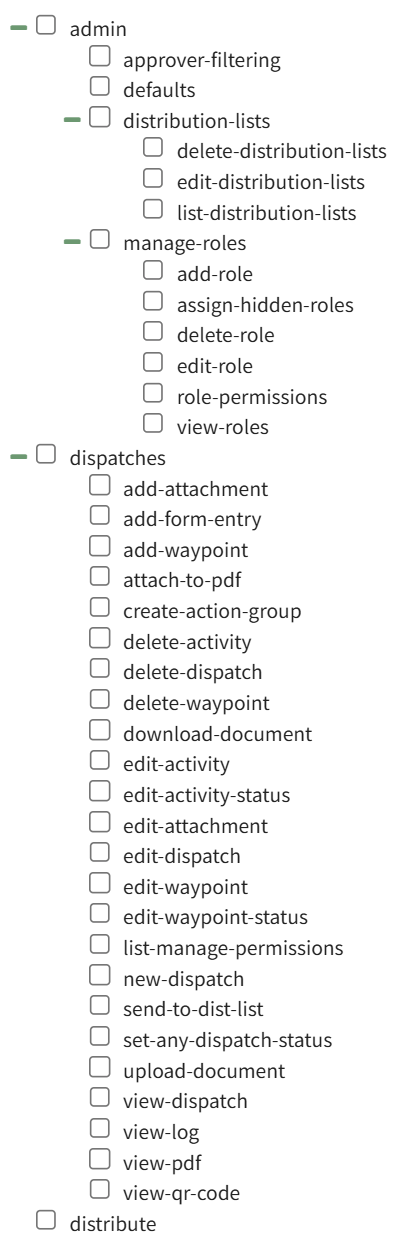
A complete list of all permissions associated with the Dispatch Module have been provided below.